
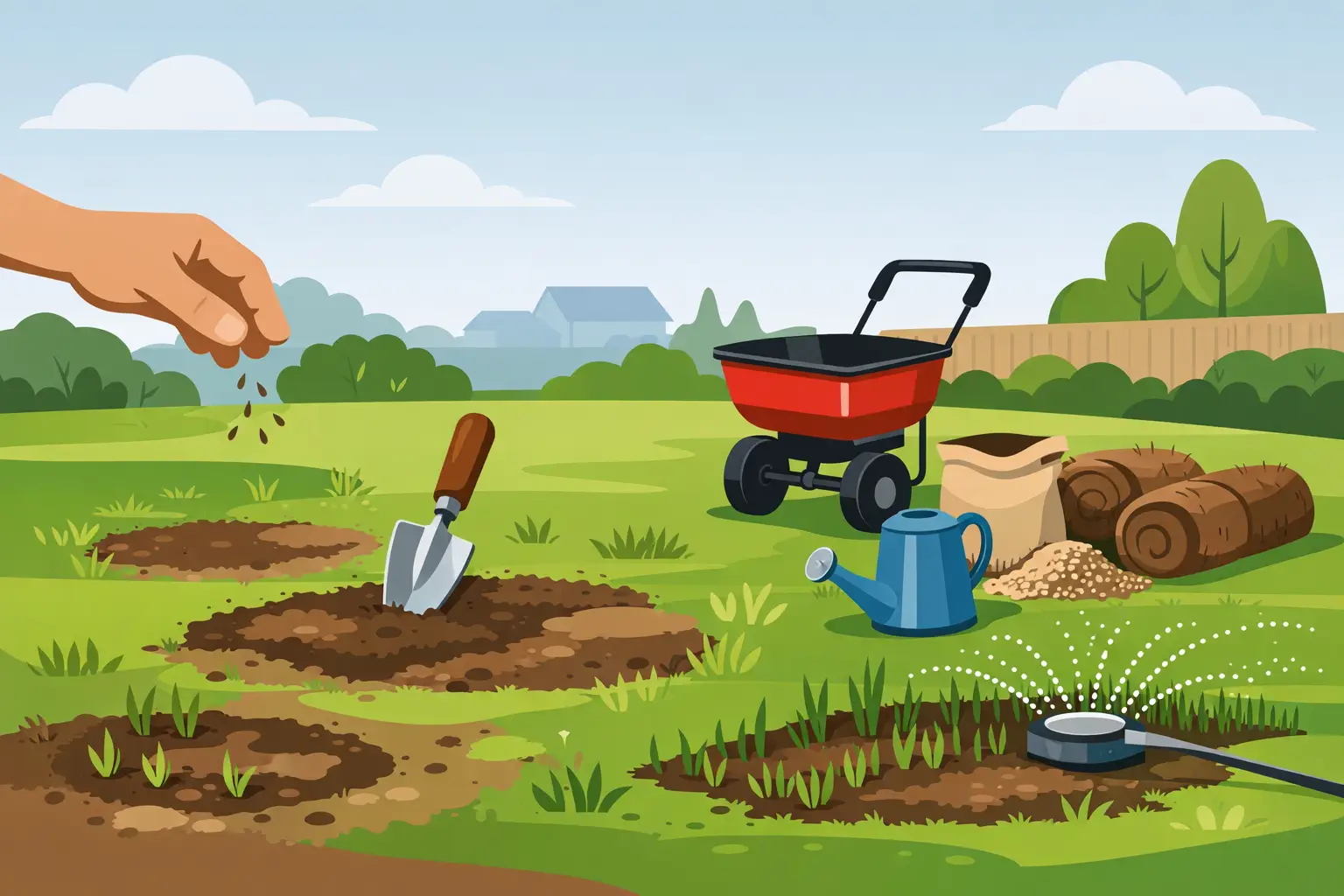
A newly seeded lawn can look promising one week and frustratingly uneven the next: thick green growth in one area, bare soil in another, and thin strips along the edge. If you are asking, why is lawn seeding patchy, the answer is rarely just bad seed. Patchy establishment usually comes down to preparation, timing, moisture, seed-to-soil contact, or a combination of all four.
The good news is that most patchy lawns can be improved without starting again. The key is to work out what stopped the seed from germinating or establishing, then correct the cause before spreading more seed.
Why is lawn seeding patchy after germination?
Grass seed does not need much to germinate, but young grass needs the right conditions to survive. A lawn can emerge unevenly when parts of the ground dry faster, receive more shade, have compacted soil, or simply did not receive an even share of seed.
It is also worth remembering that lawns do not always come up all at once. Different grass varieties germinate at different speeds, and a cooler patch of soil can lag behind a sunny area by several days or even weeks. Before reseeding straight away, check whether the sparse area has tiny new shoots beginning to appear. If it does, give it time and keep the soil consistently moist.
If bare spots remain after the main lawn has established, look more closely at the underlying ground rather than just adding extra seed. Repeatedly sowing seed over a poor surface often creates the same patchy result.
Uneven seed coverage and poor soil contact
Seed needs direct contact with fine, loose soil. When it sits on top of clods, thatch, stones, old grass debris, or a hard crust, it may germinate briefly but struggle to root. Birds can also pick up exposed seed, while wind and heavy watering can wash it into corners or low spots.
Uneven spreading is common on small lawns where seed is thrown by hand. One pass may look even from standing height, yet leave some sections with far too little seed. Overcrowding is not the answer either. Seed spread too heavily competes for water, light and nutrients, creating weak, fine growth that can thin out later.
For a more even result, prepare a smooth surface and divide the seed quantity into two portions. Spread one portion in one direction, then the other at right angles. Lightly rake the seed in or press it into the soil with a roller or the back of a rake. The aim is contact, not deep burial. Most lawn seed only needs a very light covering of soil.
Soil problems that create bare areas
Soil is often the real reason a lawn grows well in some places and poorly in others. New seed cannot make up for hard, waterlogged, nutrient-starved or poorly levelled ground.
Compacted soil
Compaction is common where people walk regularly, machinery has crossed the site, or the ground has been used for building work. Water may sit on the surface or run away instead of soaking in. Roots then stay shallow, and seedlings dry out quickly when warm or windy weather arrives.
Loosen compacted areas before reseeding. On a small patch, a garden fork can be enough. On a larger lawn, proper aeration and soil cultivation may be needed. Avoid working wet clay soil, as this can compact it further and leave hard lumps once it dries.
Poor drainage or low spots
A low area that remains wet after rain is not a good place for standard lawn seed to establish. Seeds can rot, wash away, or develop weak roots in constantly saturated soil. Conversely, raised or sloping sections may dry out so quickly that seedlings fail before they get established.
Correcting levels and drainage makes a lasting difference. This may involve bringing in suitable topsoil, reshaping the surface, or addressing where water is coming from. It depends on the site, but the goal is always the same: a lawn area that holds enough moisture without staying boggy.
Thin, stony or infertile soil
Subsoil exposed after excavation, construction or stump removal is often low in organic matter and difficult for grass to establish in. Stones and buried debris also prevent a smooth finish and leave dry, weak patches over time.
Remove rubble and large stones, then improve the top layer with quality lawn soil or compost blended into the existing ground. A starter fertiliser can support early root development, but use it as directed. Too much fertiliser can damage young grass or encourage fast top growth before the roots are ready.
Watering mistakes during establishment
Watering is one of the biggest reasons a lawn looks patchy. During germination, the top layer of soil must stay evenly damp. Not soaked, and not allowed to dry out for long periods. A single hot, dry afternoon can be enough to stop newly sprouted seedlings in the most exposed areas.
Light watering once or twice a day may be needed during dry weather, especially in the first two to three weeks. Early morning is the best time for the main watering. If a second watering is needed, keep it light and avoid leaving the lawn wet overnight, which can encourage disease.
Heavy watering is just as unhelpful. A strong spray can move seed, create channels in loose soil and leave clumps of grass in one place. Use a gentle sprinkler pattern and check that all sections of the lawn are actually receiving water. Areas beside fences, under eaves, and along boundaries are easily missed.
Once the grass is up and rooted, gradually water less often but more deeply. This encourages roots to grow down rather than relying on frequent surface moisture.
Timing, weather and shade matter
In Hawke’s Bay, lawn seeding can be affected by dry spells, strong winds, late frosts and very warm conditions. Autumn is often the most forgiving time to seed because soil is still warm while evaporation is lower. Spring can also work well, but seedlings may face competition from weeds and rapid changes in weather.
Seeding in the heat of summer is possible only when watering can be managed carefully. Seedlings dry out quickly, and exposed ground may need more attention than most households can realistically give. Winter seeding is slower and less reliable when soil temperatures are low.
Shade changes the equation too. Grass beneath mature trees, beside tall buildings or close to dense hedges receives less sunlight and faces root competition for moisture. A standard sunny-lawn mix may establish thinly in these places. Pruning to improve light, choosing a more shade-tolerant seed blend, or reconsidering whether lawn is the right finish for that area can produce a better long-term result.
Birds, pests and everyday traffic
Fresh seed is attractive to birds, particularly when it has been left on the surface. Covering seed lightly and keeping the ground moist helps reduce losses. Temporary netting can help on small areas, provided it is secured safely and removed before grass becomes tangled in it.
Insects, grubs and fungal disease can occasionally contribute to patchiness, but they are less common than preparation and watering issues. Look for signs such as grass lifting easily from the soil, chewed roots, brown patches spreading beyond the seeded area, or birds repeatedly pecking at the same section. These clues may point to a pest problem rather than a seeding problem.
Foot traffic can also ruin new growth before it has rooted. Keep pets, children, wheelbarrows and regular shortcuts off the area where possible. The first mow should wait until the grass is well established and roughly 7 to 10 centimetres high. Use a sharp mower blade and remove only the top third of the leaf, rather than cutting it short.
How to repair a patchy seeded lawn
Start by identifying whether the bare areas are caused by dry soil, poor drainage, shade, compaction or missing seed. Rake away dead material and loosen the top few centimetres of soil. Add a light layer of suitable lawn soil where the surface is low or poor, level it carefully, then reseed using the same or a compatible grass blend.
Press the seed into the surface, water gently, and keep the patch consistently damp until it has germinated and begun to root. Do not feed heavily or mow too soon. Small repairs often blend in well when they receive the same care as the rest of the lawn.
Where the lawn is thin across a large area, overseeding may be more practical than patching each spot. This works best after aerating, removing excess thatch and improving the surface with a light topdressing. If the ground has major drainage, levelling or soil issues, addressing those first will save time and seed.
A level, well-prepared lawn gives every seed the same chance to grow. Taking the time to fix the ground beneath the bare spots is what turns a short-lived green cover into a lawn that stays thick, tidy and usable.
Leave a Reply