
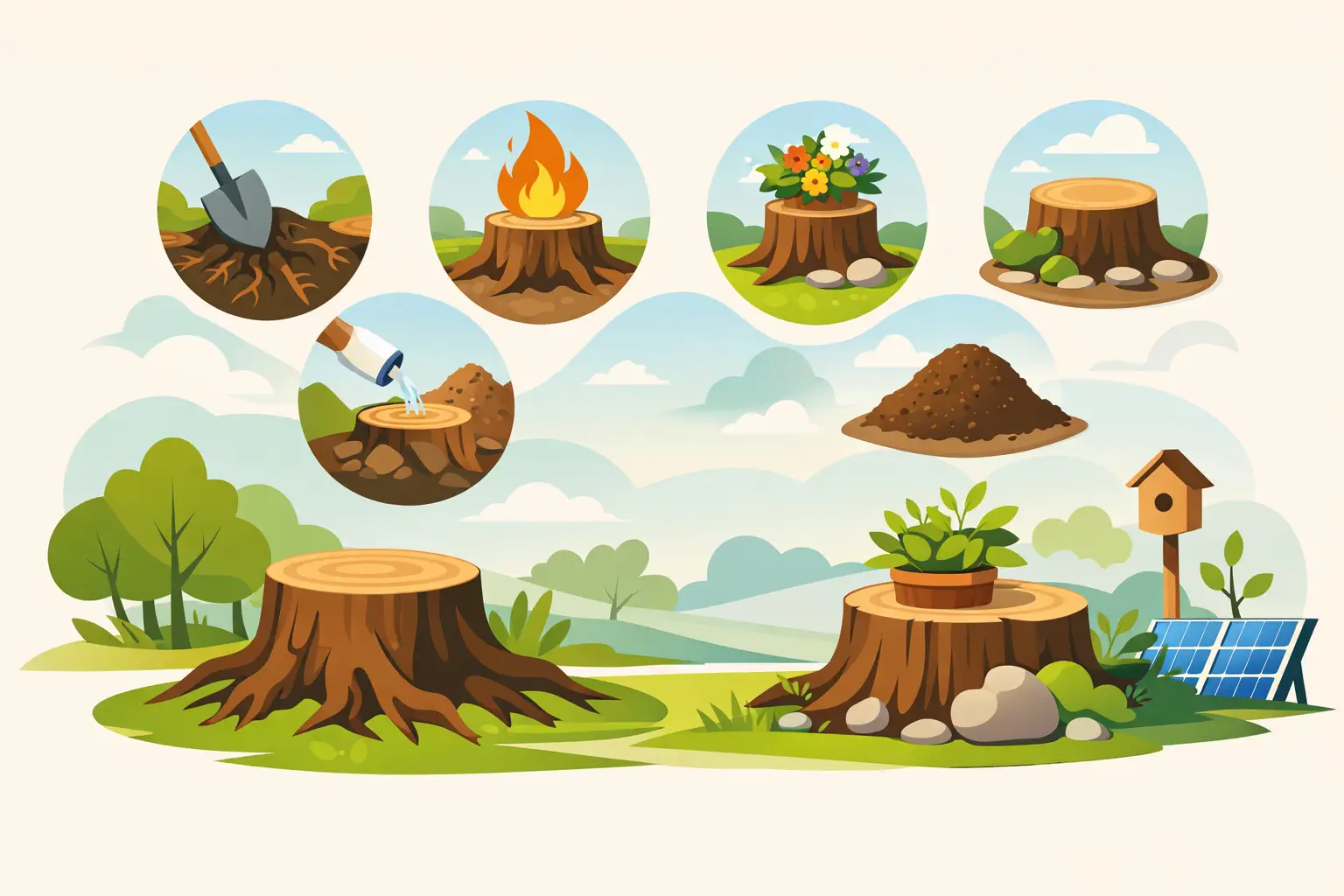
A tree may be gone, but the stump can still dictate what happens next in your garden. It can obstruct mowing, attract unwanted growth, create a trip hazard and get in the way of a new lawn, path or planting area. While grinding is often the quickest option, there are several stump grinding alternatives worth considering when your plans, budget or site access call for a different approach.
The right choice depends on where the stump sits, how large it is, the tree species, whether roots are affecting nearby structures, and what you want to do with the space afterwards. A stump in a back corner of a large section is very different from one beside a driveway, fence, lawn or commercial entry.
Why the stump’s location matters
Before choosing a method, consider the end use of the area. If you want a clean lawn, new garden bed, paving, edging or a functional outdoor structure, the stump and surface roots may need to be removed completely. If it is tucked into an established garden and does not affect access, a lower-impact option may suit.
Also look for services around the stump. Water pipes, drainage, power cables and irrigation lines can change the scope of the job. Large roots close to retaining walls, footpaths, sheds or foundations should be assessed carefully. Removing them without a plan can disturb soil or damage nearby construction.
1. Full stump and root removal
Full removal involves excavating the stump, major roots and surrounding soil. This is the most thorough alternative to grinding and is usually the best choice when you are preparing for construction, installing hardscaping or creating a new level lawn area.
An excavator can make short work of accessible stumps, particularly on open sites where there is room to operate safely. The trade-off is that excavation leaves a larger hole and can disturb more of the garden than grinding. The hole needs to be backfilled, compacted and finished properly before turf, plants or paving go in.
For a new driveway, retaining wall, garden edging, shed pad or path, full removal can save problems later. Roots left below ground may not always be an issue, but they can make excavation and levelling more difficult where a firm, even base is needed.
2. Hand digging for small stumps
For a young tree or small ornamental stump, hand removal can be practical. The process involves digging around the root ball, cutting through roots with the right tools and lifting the stump out. It takes effort, but it can be a sensible approach where machinery cannot access the site or where you want to minimise damage to nearby planting.
This method is best reserved for genuinely small stumps. Once the root system is wide, woody or close to solid ground, the work becomes much harder than many property owners expect. Digging for hours only to find another heavy root beneath the soil is frustrating, and it can leave the lawn or garden looking worse than before.
A professional can usually assess quickly whether hand removal is realistic or whether mechanical help will provide a cleaner result.
3. Letting the stump decay naturally
Leaving a stump to break down is the lowest-cost option upfront. Over time, fungi, moisture and insects will soften the wood and return it to the soil. Depending on the species and size of the stump, however, natural decay can take many years.
This can work in a quiet garden corner, on a rural property or in an area being managed for wildlife habitat. A weathered stump may provide shelter for insects and small creatures, while its gradual breakdown adds organic material to the soil.
The downside is appearance and practicality. A decaying stump can still be difficult to mow around, may produce new shoots, and can become a hiding place for pests. If termites are a concern in your area, it is sensible to avoid leaving decaying timber close to buildings. It is not the best fit for a tidy front garden, rental property or commercial site where presentation and safe access matter.
4. Turn the stump into a garden feature
Some stumps can be repurposed rather than removed. A low, stable stump might become a rustic seat, a base for a bird bath or pot, or the centre of a planted garden bed. Hollowed stumps can sometimes be used as planters for flowers, ferns or trailing plants.
This option works best when the stump has character, is located where it looks intentional, and is sound enough to remain safe. It is less suitable if the timber is splitting, soft, close to a walkway or likely to interfere with normal garden maintenance.
A planted feature still needs ongoing attention. As the stump decays, it may settle or lose its shape. Think of it as a short-to-medium-term garden element, not a permanent structure.
5. Build a raised bed over the area
Where a stump is not in the way of access, a raised garden bed can disguise it and turn an awkward patch into a useful planting space. This is often a practical choice for established gardens where disturbing roots could affect nearby trees, shrubs or irrigation.
The bed should be designed with enough depth for healthy root growth and good drainage. Avoid simply piling a thin layer of soil over the stump, particularly if you are planning to grow vegetables or larger shrubs. As the timber breaks down, the soil can sink and create an uneven surface.
A properly built raised bed with edging, fresh soil and considered planting can make the area look planned rather than covered up. It also gives you flexibility to match the new feature to existing paths, lawn edges and garden materials.
6. Cut it low and cover it with mulch
If the stump is well away from paths and mowing lines, cutting it as low as possible and covering the area with mulch can be an acceptable holding solution. This is useful when a larger garden clean-up is planned for later or when you are improving the property in stages.
Mulch helps soften the look of the stump and keeps the area more consistent with the rest of the garden. It will not stop decay from taking time, and it will not remove the root system. You may also need to trim regrowth if the stump is from a species that readily reshoots.
This approach is best viewed as a temporary landscaping decision rather than a complete removal method.
7. Chemical stump treatments
Chemical treatments are sometimes promoted as an easy answer, but they are rarely the fastest or cleanest solution. Products intended to accelerate decomposition can still take months or longer to work, especially on dense hardwood stumps. They do not remove the stump from the ground, and the site remains unusable until the wood has softened enough to break apart.
There are environmental considerations as well. Any treatment needs to be used exactly as directed and kept away from desired plants, waterways, pets and children. For many residential gardens, waiting for a chemical product to work can be less practical than arranging grinding, removal or a landscaping solution that improves the space immediately.
Choosing between stump grinding alternatives
Start with the job you need the garden to do. Full excavation is generally the right route for building work, new paving and complete redevelopment. Hand digging can suit small stumps in tight spaces. Natural decay, mulch or a planted feature can work where the stump is out of the way and there is no need for a clear, level surface.
Grinding remains a popular choice because it removes the visible stump quickly with less ground disturbance than excavation. But it does not suit every property, especially where access is limited or where all roots need to come out for a future project. There is no one-size-fits-all answer.
A good site assessment should cover access for equipment, stump size, root spread, nearby services, soil condition and the finish you want. It should also include what will happen to the hole, grindings, surplus soil and surrounding lawn or garden once the stump work is complete.
For Hawkes Bay property owners, Kandu Gardens can look at the wider picture, not just the stump itself. That may mean removing it for a clean slate, preparing the area for lawn and planting, or integrating it into a practical garden upgrade that suits the property.
The best result is the one that leaves your outdoor area safer, easier to maintain and ready for what you want to create next.
Leave a Reply