
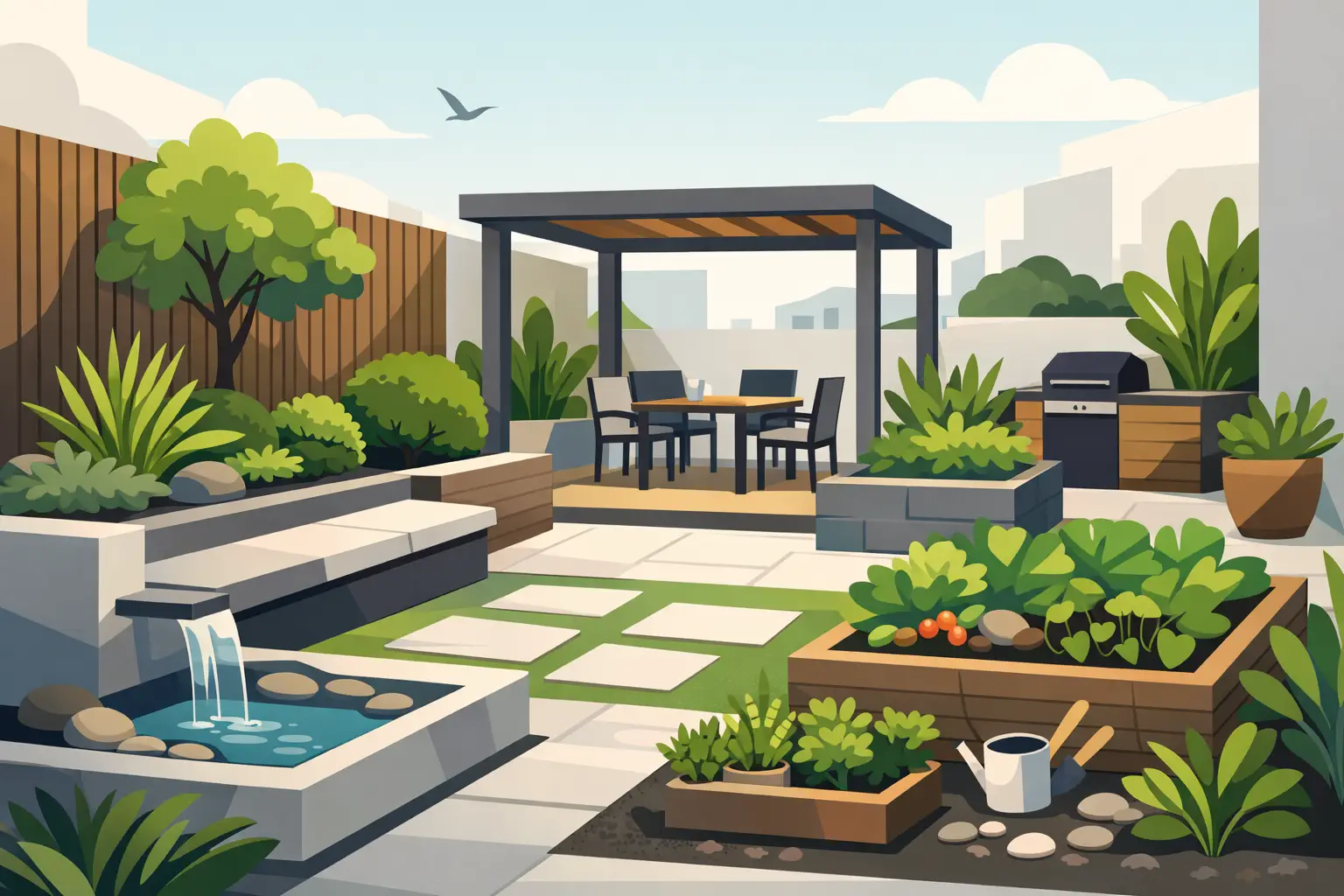
A small courtyard has nowhere to hide a poor layout. Every path, plant, pot and paved edge is close enough to see from the house, so small courtyard landscaping needs to do more than look good in a photo. It needs to make the space easier to use, simpler to maintain and more enjoyable through changing seasons.
The good news is that a compact courtyard can often feel more finished than a large garden. With clear zones, well-chosen materials and planting that suits the conditions, even a narrow side area or enclosed patio can become a proper outdoor room.
Start small courtyard landscaping with the job of the space
Before choosing pavers or plants, decide what the courtyard needs to do most often. A courtyard designed for quiet morning coffee needs something different from one used for outdoor meals, children, entertaining or access to a clothesline and bins.
Trying to fit every possible feature into a small area usually creates a cramped result. Pick one main purpose and one supporting purpose. For example, a dining setting with a narrow planting border, or a private sitting corner with clear access to the back door. This decision guides the whole layout and stops money being spent on features that look impressive but rarely get used.
It also helps to be honest about maintenance. A courtyard with several raised beds, lawn, water features and clipped hedges may look appealing at handover, but it needs ongoing attention. For busy homeowners, fewer plant varieties and larger, well-prepared garden beds are usually the better long-term choice.
Measure circulation before selecting finishes
In a tight outdoor area, the clear route through the space matters as much as the destination. Doors need to open freely, garden tools need to get through, and people should not have to squeeze around furniture to reach the house or gate.
Mark out your proposed furniture and paths with string, cardboard or a garden hose before work starts. Sit at the table position, walk from the gate to the door, and check where a wheelie bin or hose will travel. These simple checks can prevent a costly layout change later.
A straight path can make a narrow courtyard feel longer and more organised. A gently offset path can work where the goal is to soften a hard, rectangular space. Either way, keep edges crisp. Proper edging between paving, lawn and garden beds makes the area look cared for and reduces soil, mulch and gravel spilling where they should not.
Build levels only when they earn their place
Raised planters, steps and decks can add depth, but they also take up valuable floor area. They work best when they solve a real problem, such as improving drainage, creating a comfortable seating edge or lifting planting into better view from indoors.
If the courtyard is already small, one defined level with a generous planting strip is often more useful than several little tiers. The same principle applies to retaining walls and screens: build them where they improve privacy, safety or use, not simply to add features.
Make privacy comfortable, not closed in
Many courtyards are overlooked by neighbouring homes or exposed to a driveway, footpath or commercial area. Privacy is often the first request, but a tall solid fence around every boundary can make the space feel boxed in and reduce airflow.
The most effective approach is usually targeted screening. Identify the actual sightline from a neighbour’s window or nearby property, then screen that view with slatted timber, a light metal panel, climbing plants or a well-positioned small tree. This keeps the courtyard open while creating a more private place to sit.
Plants can soften boundary fences quickly, although they need the right soil depth and ongoing pruning. Climbers are useful where ground space is limited, but they need a secure support and should be chosen carefully around timber fences. Dense hedging can provide a green backdrop, yet may not suit a narrow space if it requires frequent trimming or grows too wide.
For a practical result, leave enough room to access fences, drains and services. A beautiful planting bed becomes frustrating when it blocks essential maintenance.
Choose hardscaping that suits the home and the weather
Paving, gravel, decking and concrete form the working surface of a courtyard. The right choice depends on drainage, sun exposure, existing architecture and how much maintenance the owner wants to take on.
Large-format pavers can make a compact space feel calmer because there are fewer grout lines breaking up the surface. They need a sound base and correct falls so water drains away from the house. Smaller pavers can suit traditional homes or detailed areas, but a busy pattern may make a very small courtyard feel cluttered.
Gravel is often cost-effective and drains well, particularly in side courtyards and informal garden areas. It is less practical beneath dining chairs and can travel onto indoor floors if it is not contained with solid edging. Timber decking creates warmth and can level out uneven ground, but it needs periodic cleaning and maintenance to keep it safe and looking its best.
Do not treat drainage as an afterthought. Water pooling against a house, beneath decking or at the base of a fence can cause far more trouble than a courtyard feature is worth. A professional site assessment should consider existing falls, downpipes, soil conditions and where surface water will go during heavy rain.
Plant for structure first, colour second
A small garden bed does not need dozens of plant types. In fact, repeated planting often looks stronger and is easier to manage. Start with structure: a compact evergreen shrub, architectural grasses, hardy strappy foliage or a feature tree suited to the available root space and light.
Then add seasonal interest with flowering plants, bulbs or pots near the seating area. Pots are valuable in courtyards because they let you add colour without committing every centimetre of soil. They are also easy to refresh when a plant has finished flowering or is not coping with the conditions.
Sun and shade can vary sharply within enclosed spaces. A north-facing paved courtyard may become hot and dry, while an area beside a tall fence may receive only limited light. Planting must match these conditions rather than a picture from a magazine. Heat-tolerant, drought-aware choices generally make sense in exposed areas, while shaded courtyards need plants that can cope without constant direct sun.
Give feature trees enough room
A small tree can provide shade, privacy and a sense of height, but the wrong one can overwhelm a courtyard. Consider its mature canopy, root behaviour, leaf drop and distance from buildings before planting. Palms and established trees also need skilled maintenance, especially where fronds or branches sit near roofs, paths and outdoor living areas.
A tree should improve the space in five years, not create a removal job in two. Where the available soil area is too limited, a large planter or tall screening plant may be the smarter option.
Use lighting and storage to keep the space useful
Courtyard lighting should help people move safely and enjoy the space after dark. Soft wall lighting, step lights or low garden lights can define paths and planting without turning the area into a floodlit patio. Aim lights away from neighbouring windows and avoid placing fittings where they will be hidden by fast-growing plants.
Storage deserves equal attention. Bins, hoses, gardening gear and outdoor cushions can quickly spoil an otherwise tidy courtyard. A simple screened bin area, slim storage bench or purpose-built enclosure keeps the practical items close by without making them the first thing you see from the kitchen.
This is where good workmanship shows. Gates should open properly, edging should hold its line, pavers should sit firm, and screens should be built to cope with weather. The details are what keep a courtyard looking polished after regular use, not just on the day the work is finished.
Plan the work in the right order
Courtyard projects are easier and more cost-effective when the heavy work happens first. Overgrown vegetation, old stumps, uneven ground and unwanted paving should be dealt with before new surfaces or plants go in. Excavation, drainage and structural work come next, followed by hardscaping, edging, soil preparation and planting.
Doing it in reverse often means new garden beds are walked over, fresh plants are damaged, or finished paving has to be lifted to fix drainage. If the project includes several trades or a difficult access point, a clear plan and quote will help avoid surprises.
Kandu Gardens approaches courtyard work with this practical sequence in mind, from clearing and ground preparation through to planting, edging and the finishing details that make the area usable.
A well-planned courtyard does not need to be large to feel generous. Give every square metre a job, choose materials that will age well, and leave enough room to enjoy the garden rather than constantly work around it. The best time to improve a neglected courtyard is before another season passes with it sitting unused.
Leave a Reply