
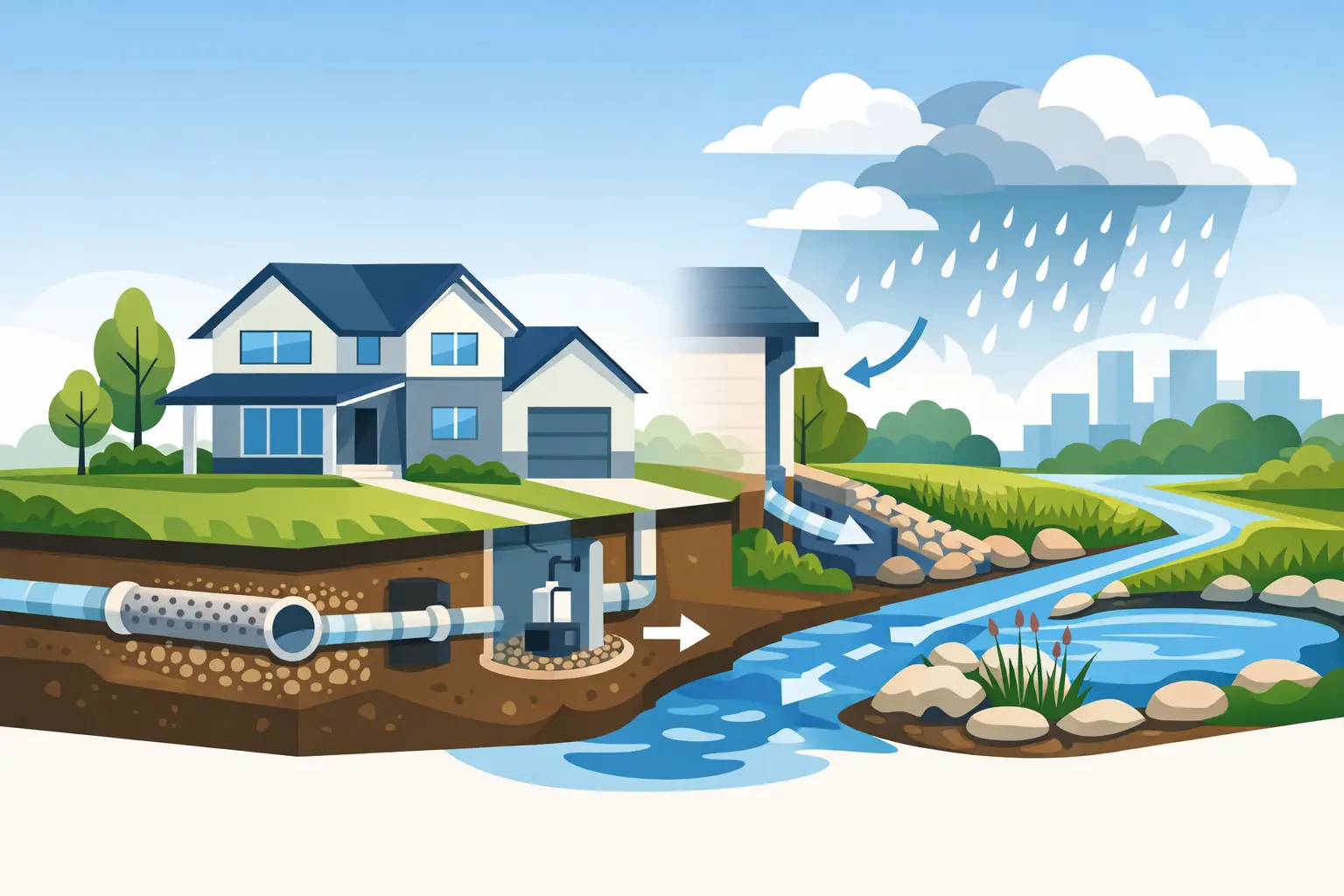
Water usually tells you there is a problem before anything else does. It sits against the house after rain, turns a lawn to mud, washes mulch into the footpath, or leaves garden beds soggy for days. Good property drainage solutions stop those small warning signs turning into damaged gardens, slippery paths, rotting timber and expensive repairs.
For most properties, drainage is not just about getting rid of water. It is about moving water in the right direction, at the right speed, without creating a new problem somewhere else. A quick fix might shift a puddle from the lawn to the patio. A proper fix looks at the full site – soil, slope, hard surfaces, downpipes, garden layout and where stormwater can safely go.
Why drainage problems happen
Poor drainage often starts with a combination of small issues rather than one major fault. A yard may have compacted soil from vehicles or foot traffic, which stops water soaking in. New paving or concrete can increase runoff. Garden edging can trap water if levels are wrong. Even healthy planting can struggle if roots sit in wet ground for too long.
On some Hawkes Bay properties, the land itself creates the challenge. Flat sections can hold water because there is nowhere for it to fall away. Sloping sections can send runoff toward retaining walls, sheds or house foundations. Older homes may also have drainage that no longer suits the way the outdoor space has been changed over time.
That is why drainage should be looked at as part of the whole landscape. If the source of the water is missed, the same problem tends to come back after every decent downpour.
Property drainage solutions for common site issues
The right approach depends on what the water is doing and where it is collecting. There is no single product or trench that suits every job.
Surface drainage for pooling water
If water sits on top of the ground, the issue is often surface levels. In these cases, reshaping the area can make a major difference. A lawn may need regrading so water falls away from the house. A paved area may need a strip drain or channel drain to catch runoff before it spreads.
This type of work is especially useful where rainwater gathers on driveways, near patios, beside bin areas or across paths that need to stay safe and usable. The aim is not to make the site look engineered or overworked. It is to create a clean finish that still looks natural while performing properly.
Subsurface drainage for soggy lawns and garden beds
Sometimes the surface looks flat and tidy, but the soil underneath stays wet. That usually points to poor infiltration or groundwater movement below the top layer. In those cases, subsurface property drainage solutions such as agricultural drains can help collect and redirect water before it rises into lawns or planting areas.
These systems need careful installation. Depth, fall, backfill materials and discharge points all matter. If they are installed poorly, they can clog, move or stop doing their job. If they are installed well, they can make a waterlogged area usable again without changing the look of the whole yard.
Downpipe and runoff management
A surprisingly common problem is roof water ending up where it should not. A downpipe that discharges too close to the house, driveway or garden bed can create ongoing saturation in one spot. The result might look like a landscaping issue, but the source is often concentrated roof runoff.
Redirecting that water properly can relieve pressure on surrounding areas straight away. Depending on the site, that could mean extending stormwater connections, installing collection points, or reworking nearby ground levels so water is carried away efficiently.
Drainage around hardscaping and structures
Outdoor improvements should look good and function properly in wet weather, not just on a sunny day. Retaining walls, paved entertaining areas, garden edging, steps and service areas all need drainage considered from the start.
For example, water building up behind a retaining wall can shorten its life and affect stability. Paving without the correct fall can send runoff toward doors or create slippery patches. A practical outdoor space is one that still works after heavy rain, and that comes down to planning levels and drainage before materials go in.
The trade-offs property owners should know
Not every drainage fix is invisible, cheap or quick. Sometimes the best result involves excavation, reinstating lawn areas, or adjusting existing garden beds. That can feel disruptive in the short term, but patching around the issue often costs more over time.
There are also cases where one solution improves drainage but changes maintenance needs. A grated channel drain, for instance, can be very effective near paving, but it needs to be kept clear of leaves and sediment. A regraded lawn may shed water better, but fresh turf or seed needs time to establish. These are not reasons to avoid the work. They are simply part of choosing a solution that fits how the property is actually used.
Budget matters too. Some sites need a staged approach, especially if there are multiple pressure points across the section. In that situation, it makes sense to deal with the highest-risk area first – usually around buildings, accessways or places where standing water creates damage or safety issues.
Signs the problem is bigger than a puddle
A wet patch after rain is one thing. Ongoing drainage trouble usually leaves a wider trail if you know what to look for. Lawns can thin out or become patchy. Mulch can shift repeatedly. Garden beds may smell stale or stay soft underfoot. Timber can show moisture damage, and paved areas may stain or grow moss faster than they should.
Inside the property, poor exterior drainage can also contribute to damp conditions around walls or subfloors. That is when drainage stops being a cosmetic issue and becomes a property protection issue. Acting early is usually far less costly than waiting for damage to spread.
Why site-specific work matters
The reason some drainage jobs fail is simple – they are copied from another property without considering the conditions on site. What works on a free-draining section with a gentle slope may do very little on compacted ground beside heavy paving. Even the same block can have different needs from front to back.
That is why experienced drainage and landscape work starts with observation. Where is the water coming from? How long does it sit? What surfaces are feeding it? What is underneath the topsoil? Where can water be discharged legally and effectively? Once those answers are clear, the solution tends to be more straightforward.
For homeowners, that means less guesswork and fewer repeat fixes. For commercial properties, it means outdoor areas that are safer, tidier and easier to maintain. In both cases, the value is in solving the cause rather than just treating the symptom.
Drainage should improve the whole outdoor space
Well-planned drainage does more than remove water. It protects planting, preserves hardscaping, reduces maintenance and helps the property look cared for year-round. A lawn that dries properly is easier to mow. Garden beds hold shape better. Paths stay cleaner. Outdoor areas become more usable because they recover faster after rain.
That broader result is what matters. The best jobs are not the ones where you can see the most drainage work. They are the ones where the property simply functions better and looks sharper because the water is finally under control.
For a business like Kandu Gardens, that practical outcome is the point. Good workmanship outdoors should solve problems and leave the space looking finished, not patched together.
If water is repeatedly finding the weak spots around your home or commercial site, it is worth dealing with it properly. The right drainage work can protect what you have now and make every other improvement on the property perform better for years to come.