
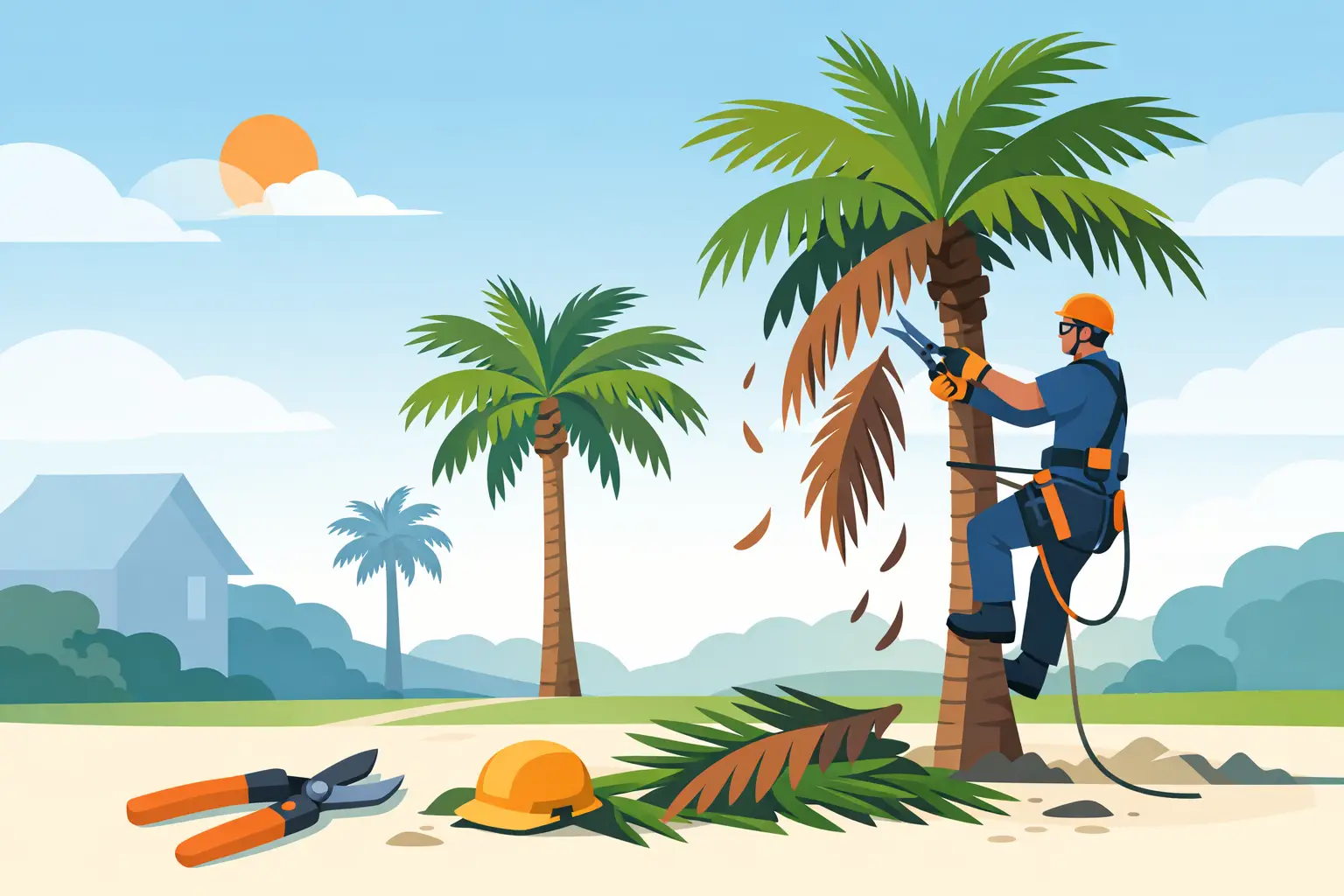
A palm with yellowing, broken fronds can make an otherwise tidy property look neglected fast. But palm pruning timing is not simply a matter of cutting whenever the crown looks untidy. Remove too much at the wrong time and you can weaken the palm, slow its recovery and leave it looking sparse for months. A well-timed prune keeps the property neat while protecting the healthy growth your palm needs.
For Hawke’s Bay homes, lifestyle blocks and commercial sites, the best approach is usually light, considered maintenance rather than a major cut-back. Dead fronds, old flower stalks and loose fruit can be removed when they become a safety or mess issue. Healthy green fronds should stay where they are.
When is the best time for palm pruning?
For most established palms, late spring through summer is the preferred window for planned pruning. The weather is warmer, palms are actively growing, and wounds generally recover more readily than they do in the colder months. This is especially helpful after winter, when older fronds may have browned off or frost damage has become clear.
That does not mean a dead frond must stay in place until spring. A hanging frond over a driveway, entry, footpath or outdoor seating area should be dealt with promptly. The same applies to heavy fruit clusters that are dropping, attracting pests or creating a slip hazard. Safety work is best done when it is needed, provided the job is limited to genuinely dead, damaged or hazardous material.
Winter pruning calls for more restraint. Hawke’s Bay can have cold snaps and frosts, particularly inland. Green fronds help insulate and feed the palm, so stripping them away before cold weather can make a stressed plant more vulnerable. If your palm has suffered frost burn, wait until warmer weather before deciding how much to remove. What first looks dead may still be supporting the plant.
Palm pruning timing depends on what needs removing
A palm does not grow and respond like a broadleaf shade tree. Its crown is its food factory. Every green frond is contributing energy, and palms cannot replace a heavily removed canopy as easily as many other garden trees.
The simplest rule is to prune only what is fully brown, broken, diseased or creating a clear problem. Brown fronds hanging below the horizontal line of the crown are usually ready to come off. Fronds that are green, even if they are drooping, should normally remain. Yellowing alone is not always a pruning signal. It can point to natural ageing, poor drainage, nutrient issues, cold stress or watering problems.
Old flower and fruit stalks are another practical target. Removing them can reduce fallen berries, prevent seedlings popping up in garden beds and keep paths cleaner. On palms near pools, decks and parking areas, this small job can make regular maintenance much easier.
Some palms naturally hold a skirt of old fronds around the boot. Whether to remove it is partly a safety and appearance decision. A tidy crown may suit a formal entrance or managed commercial landscape, while retained fronds can provide habitat and a more natural look. If old fronds are dry, loose or close to buildings, they may create a fire or falling-risk concern and should be assessed.
Avoid over-pruning, even when a palm looks overgrown
The common mistake is removing every frond that points downwards, sometimes called hurricane cutting. It may create a temporarily neat, lifted look, but it takes away valuable green growth. Over-pruned palms can become stressed, develop smaller crowns and take longer to regain their shape. They may also be more exposed to sun and wind damage.
A good prune leaves a rounded, balanced crown with plenty of healthy green fronds. There is no need to force every palm into the same shape. A mature queen palm, phoenix palm and kentia palm can all look very different when properly maintained.
Be particularly cautious around the newest fronds in the centre of the crown. This is the growing point. Damage here can permanently harm the palm. Never cut the top off a palm in the way you might reduce the height of another tree. Palms do not branch from a cut trunk, and a removed growing point usually means the palm will not recover.
Signs your palm needs attention now
Planned maintenance is ideal, but a quick inspection after strong wind or heavy rain is worthwhile. Call for help sooner if you notice:
- dead fronds hanging over a roof, driveway, path or play area
- large fruit clusters dropping onto paving or near parked vehicles
- loose fronds caught in the crown after wind
- sharp spines or heavy fronds around accessways
- visible decay, pests or damage near the central growing point
Tall palms are not a ladder-and-chainsaw job. Fronds can be heavier than expected, fall unpredictably and cause damage below. Phoenix palms also have severe spines that can cause painful injuries. Power lines, roofs, glass fencing and neighbouring properties add further risk. Professional equipment, safe access and a clear drop zone make a real difference.
Match pruning to the season and the site
Palm care is not one-size-fits-all. A sheltered courtyard palm may only need a light annual tidy, while a fast-growing specimen beside a commercial car park may need more regular attention to keep accessways clean and safe. Palms planted near pools often benefit from fruit-stalk removal before berries begin to fall. Palms beside houses need enough clearance that fronds are not scraping gutters, windows or roofing in the wind.
Spring is a useful time to assess the overall condition of the palm, clear winter damage and check for nutrient needs. Summer is well suited to routine dead-frond and fruit-stalk removal. In autumn, focus on hazards and remove material that could blow loose in winter weather. Through winter, avoid cosmetic cutting and only tackle dead or unsafe growth.
The exact timing also depends on the species and its condition. A newly planted palm needs its green fronds more than an established specimen does. A palm recovering from transplanting, drought or frost should not be heavily pruned. In these situations, improving watering, mulch, soil condition or fertilising may do more for the plant than cutting anything off.
A tidy finish includes the ground below
Palm pruning can leave behind more than fronds. Fruit, seed pods, fibres and sharp cuttings quickly make a garden bed or paved area look messy. Clearing the site properly is part of a quality job, particularly around shared accessways, retail frontages and rental properties where presentation matters every day.
The removed material should be handled thoughtfully. Clean green waste can often be processed appropriately, while diseased material may need separate disposal to avoid spreading problems through the garden. Leaving piles against fences or under the palm invites pests and removes the clean result property owners expect.
For properties with several palms, combining pruning with general garden improvement can be more practical than booking individual small jobs. Clearing overgrown planting, redefining edges, refreshing garden beds and removing palm debris at the same visit gives the whole area a more finished appearance.
Get the result without compromising the palm
The best palm maintenance is often barely noticeable once complete. The crown still looks full, the boot is clear where it needs to be, paths are safer, and the palm continues to suit the space rather than dominate it. That takes judgement, not aggressive cutting.
Kandu Gardens can assess palms as part of broader garden maintenance, with a focus on safe access, clean workmanship and the right amount of pruning for the season. A straightforward on-site assessment helps identify whether the issue is dead fronds, fruit mess, storm damage or a palm that needs more than a cosmetic trim.
If you are unsure whether to cut now or wait, leave the healthy green fronds in place and assess the actual risk below. A timely, careful prune protects both the palm and the people who use the space around it.
Leave a Reply