
After a decent downpour, you should not need to step around puddles just to reach the washing line or watch water sit against the house for days. A proper garden drainage improvement guide starts with one simple point – drainage problems are rarely just about too much rain. More often, they come from how the land falls, what sits under the soil, and where water has been forced to go.
For Hawkes Bay property owners, drainage can be the difference between a garden that stays tidy and usable, and one that turns muddy, patchy and hard to maintain. If parts of your section stay wet long after the rest has dried out, the fix is not always a big excavation job. But it does need the right diagnosis before any work begins.
Why garden drainage goes wrong
Most drainage issues start with a combination of slope, soil and surface changes over time. Heavy clay soil is a common culprit because it holds water instead of letting it soak away. Even a healthy lawn can struggle if the ground beneath it is compacted by foot traffic, vehicle access, or years of neglect.
Then there is the shape of the section itself. Water always follows the easiest path. If your yard falls towards the house, garage, paved area or a low corner with nowhere to drain, that is where the problem will show up. In other cases, well-meaning garden improvements can make things worse. New edging, raised beds, paved areas and retaining features can all interrupt the way water used to move across the site.
Downpipes are another big one. A single downpipe discharging into the wrong spot can turn one patch of lawn into a bog. If that area is already low or compacted, the water simply sits there.
Signs you need this garden drainage improvement guide
Some drainage issues are obvious, like standing water and muddy ground. Others build up gradually and are easy to miss until the damage is done. If your lawn is thinning in one area, mulch keeps washing away, plant roots are rotting, or paving develops slippery green growth, poor drainage may be behind it.
You might also notice water marks along garden edging, erosion around paths, or damp soil close to structures. On commercial sites, poor drainage can create safety concerns as well as an untidy first impression. On residential properties, it often means outdoor areas are not as usable as they should be.
The key is not to treat every wet patch the same. A shady corner that stays damp may need a different approach from a section where roof water is being dumped in one place.
Start with the source, not the symptom
The most effective drainage work begins with finding out where the water is coming from and why it is not moving on. That sounds obvious, but it is where many DIY fixes go off track. Adding more topsoil or fresh mulch over a soggy area can make the garden look better for a week or two, but it does not solve the underlying issue.
A good assessment looks at levels across the property, soil type, hard surfaces, roof water outlets and any recent changes to the landscape. Sometimes the answer is as simple as redirecting discharge from a downpipe. Other times, the whole area needs regrading so water moves away from problem zones instead of collecting in them.
This is also where trade-offs matter. You may be able to move water quickly from one area, but if that sends it straight into another low spot, you have only shifted the problem.
Drainage solutions that actually work
There is no single fix that suits every garden. The right solution depends on the layout of the site, how severe the issue is, and how you want the area to function day to day.
Regrading and reshaping the ground
If the land is holding water because the levels are wrong, reshaping the area is often the best long-term fix. This can be as minor as correcting a shallow dip in the lawn, or as involved as reworking a larger section so water falls away properly.
This type of work makes sense when drainage problems are widespread or when other garden improvements are already planned. It can also improve how the whole space looks and feels, rather than leaving you with a visible drainage patch-up.
French drains and subsurface drainage
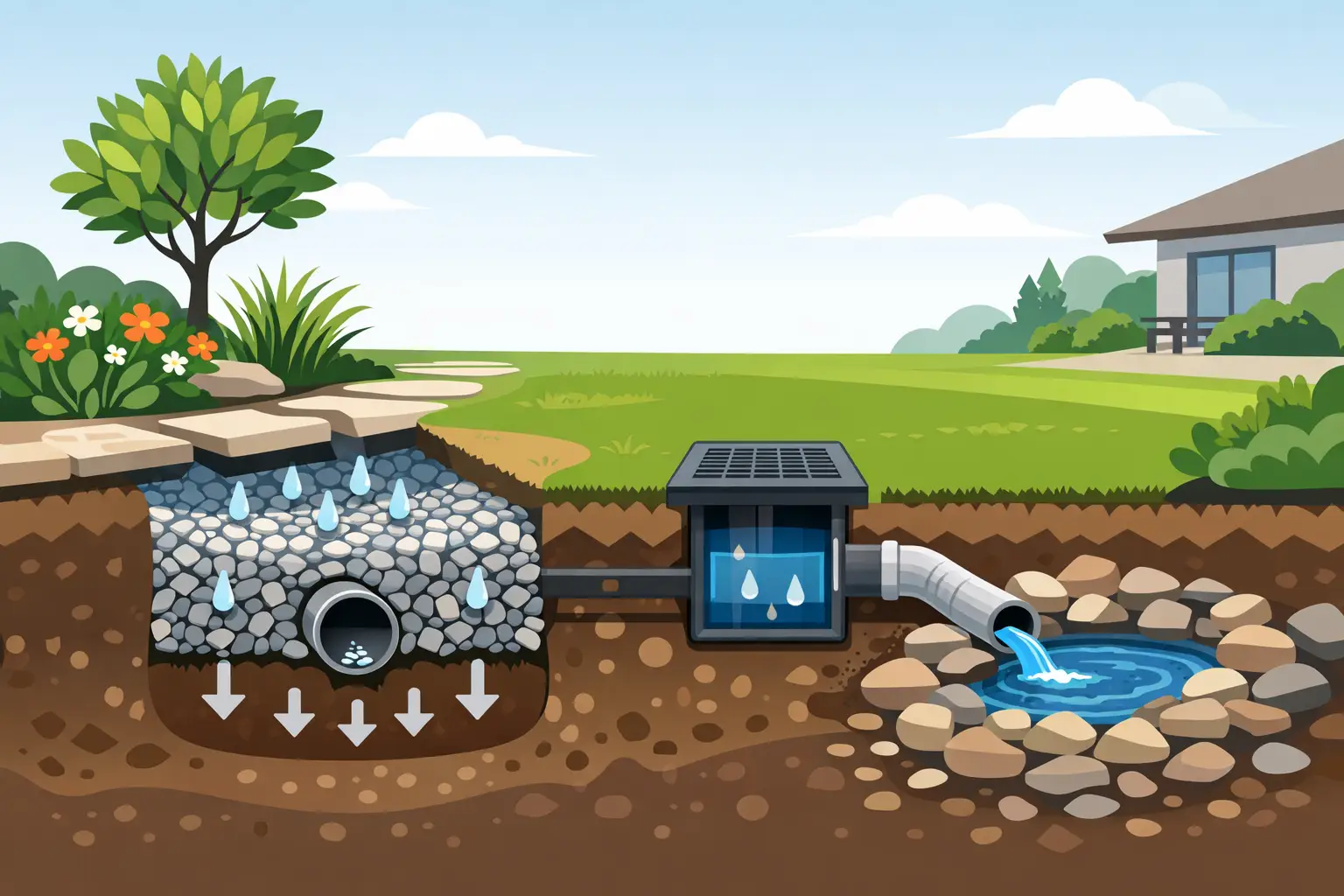
When water needs to be collected and carried away underground, a French drain can be a practical option. These systems are useful where surface water keeps pooling in the same place and there is a suitable discharge point available.
That said, they are not magic. If installed without enough fall, or without resolving the source of the water, they can underperform. They also need to suit the site. On some properties, excavation and access can affect whether this is the best choice.
Soak pits and controlled discharge
Where water can be dispersed safely into the ground, a soak pit may help. This can work well on some sites, but not all soils are suitable. Heavy clay, for example, may not let water drain away quickly enough. In those cases, directing water to a legal and practical discharge point may be more effective.
Lawn and soil improvement
Not every drainage issue needs pipes in the ground. Compacted soil can often be improved through cultivation, soil conditioning and re-establishing the lawn properly. If the issue is mild and mostly affects surface soakage, this can make a noticeable difference.
Still, it depends on the cause. If a low point is constantly receiving runoff, lawn work alone will not keep up.
Garden design changes
Sometimes the smartest fix is changing what sits in the wet area. A section that stays naturally damp may suit certain planting better than turf. In other cases, adding edging, gravel, stepping areas or raised planting zones can make an awkward space more functional while reducing the visual mess caused by wet ground.
This is often the most balanced option when you want improvement without overcapitalising on one corner of the property.
What to avoid with drainage fixes
Quick fixes tend to cost more in the long run when they fail. One common mistake is adding gravel to a boggy patch and hoping it will absorb the problem. Gravel can help as part of a proper drainage system, but on its own it often just creates a wet gravel patch.
Another is building the ground level up against structures, fences or paths without considering where the water will go next. That can create run-off issues and, in some cases, increase moisture problems around buildings.
It is also worth being careful with decorative solutions that hide the issue rather than fixing it. A garden can look neat on the surface while water continues to sit underneath, affecting roots, soil health and usability.
When a professional assessment makes sense
If water is pooling near your home, affecting paved areas, damaging planting, or making parts of the property unusable, it is worth getting proper advice. Drainage is one of those jobs where the workmanship matters as much as the idea. Poor installation can leave you with the same problem plus the cost of redoing it.
For property owners who want the job handled properly from the start, a practical site assessment can save a lot of time. The right contractor will look at the bigger picture, not just the wettest spot. That means considering excavation needs, surrounding landscaping, access, runoff, and how the finished area should work once the drainage is sorted.
That hands-on approach is especially valuable if you are already planning broader outdoor improvements. Done properly, drainage can be built into the overall layout so the space not only dries out better, but also looks more finished and performs better year-round.
A smarter garden drainage improvement guide for lasting results
The best garden drainage improvement guide is not about throwing the biggest solution at the problem. It is about matching the fix to the cause, the site and the way you use the space. Some gardens need a simple correction. Others need excavation, reshaping and a more complete rethink.
If your section is staying wet, the main thing is not to leave it until the problem spreads. Water has a habit of showing you the weak points in a landscape. Sort them properly, and the whole garden becomes easier to maintain, safer to use, and far more enjoyable after the next spell of rain.
A dry, workable garden does not happen by luck. It starts with understanding the ground beneath it and making practical changes that hold up over time.