
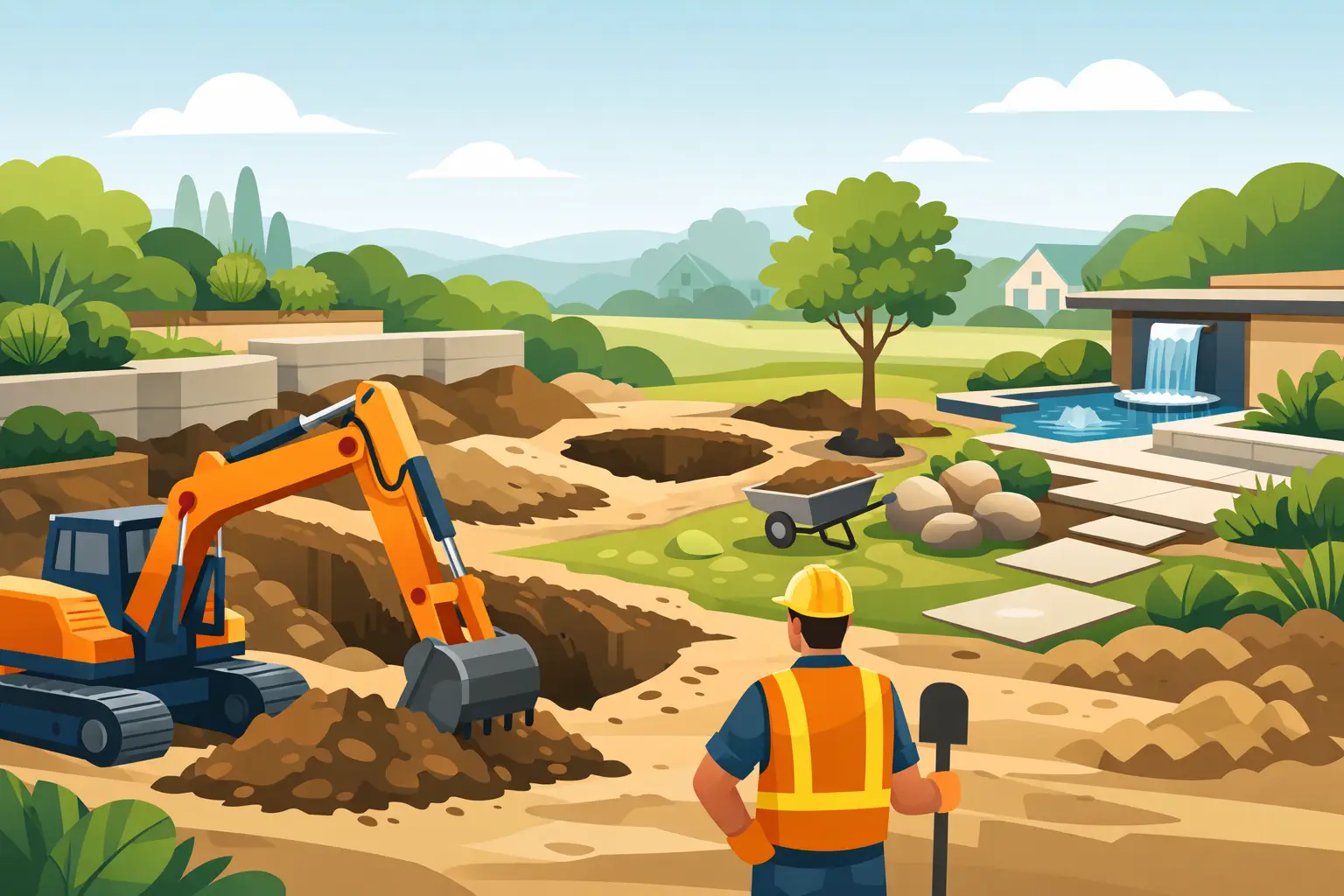
A new patio can look excellent on the day it is laid, yet still fail within a season if the ground beneath it has not been prepared properly. The same applies to lawns that stay boggy, garden beds that wash away, and driveways that develop ruts. Excavation for landscaping projects is where a long-lasting outdoor transformation really begins – well before the plants, pavers or decorative stone are in place.
For homeowners and property managers, excavation is not simply about moving soil. It is the process of shaping the site so water drains correctly, surfaces sit at the right height, and every finished element has a stable base. Done carefully, it makes the rest of the landscaping work cleaner, safer and far more durable.
Why excavation matters in a finished landscape
Ground levels set the performance of an outdoor space. If a lawn slopes towards the house, rainwater can collect against the building. If a paved area has too little fall, puddles can remain after every shower. If a retaining edge is built on loose or uneven ground, movement is likely to show up as cracking, tilting or gaps.
Good excavation addresses these issues before they become expensive problems. It removes unsuitable material, creates planned levels and allows room for the layers needed under hard surfaces. That may include compacted basecourse for a path, drainage aggregate around a garden edge, or imported topsoil where the existing ground is poor.
It also gives a landscape a deliberate look. Clean changes in level can separate entertaining areas from lawns, make a garden feel more private, or turn an awkward slope into usable space. The goal is not to make every section perfectly flat. It is to create levels that suit how the property will be used and how water naturally moves across it.
Planning excavation for landscaping projects
The best results come from looking at the whole site rather than treating excavation as an isolated task. Before machinery arrives, it helps to establish what needs to stay, what needs to go and where the finished surfaces will sit.
Start with drainage and access
Water should be considered first. Existing low points, downpipes, surface runoff and damp areas all provide useful clues. In Hawke’s Bay, dry conditions can make a site appear straightforward, but heavy rain will quickly expose poor falls or compacted ground that does not drain well.
A practical plan directs water away from buildings and prevents it from settling on paths, patios and lawns. The right solution depends on the site. Some gardens need minor regrading, while others may need drainage installed before new surfaces are built. It is always easier to do this while the ground is open than after a finished garden has been disturbed.
Access is the next consideration. Excavators, loaders and trucks need a safe route in and out, and spoil needs somewhere to go. A narrow side access may call for compact equipment and a staged approach. On a commercial property, work may need to be organised around tenants, customers, delivery areas or vehicle movements.
Check what is below the surface
Underground services, old concrete, tree roots and buried rubble can change a straightforward job very quickly. Services should be identified before digging begins. Large roots also need careful assessment, particularly where established trees provide shade, shelter or privacy that the owner wants to retain.
Not every root can be cut without consequence. Removing too much root structure can affect a tree’s stability and health. In some cases, adjusting the design or choosing a different location for a path, edge or structure is the better long-term decision.
Set finished heights before digging
Finished levels should be agreed early. This is especially important where a new patio meets a door threshold, a driveway connects to a garage, or a lawn meets existing paths and garden edging. A few centimetres can make the difference between water flowing away as intended and water being directed towards a building.
Excavation depth is then calculated from the finished height down. For hardscaping, this includes the surface material, bedding layer and compacted base below it. For planting areas, it may involve removing poor fill and allowing for suitable soil depth. Guessing these levels is one of the most common causes of uneven results.
Common projects that need proper ground preparation
Many landscaping upgrades rely on excavation, even when the finished result appears simple. A new lawn may need old turf stripped, subsoil loosened and levels corrected before topsoil and seed are added. Without that preparation, the lawn can struggle with drainage, thin growth and uneven patches.
Paths, patios and paving need a stable, compacted foundation. The required depth varies with the material, expected use and soil conditions. A pedestrian garden path does not need the same construction as a vehicle area, but both need enough base preparation to avoid sinking and movement.
Garden edging and raised beds benefit from accurate trenching and level setting. This keeps lines straight, helps contain mulch and soil, and gives the garden a crisp, finished appearance. Retaining work requires even more care, as it must manage soil pressure and drainage as well as provide a clean visual boundary.
Excavation is also often needed after stump removal or vegetation clearance. A removed stump can leave a hollow, disturbed soil and roots beneath the ground. Simply covering the area may lead to later settling. Cleaning out the remaining material and rebuilding the ground properly gives the area a sound starting point for lawn, planting or hardscaping.
Choosing the right approach for the site
There is no single excavation method that suits every property. A small courtyard may only need hand work and compact machinery to protect nearby walls, fences and established planting. A larger section with heavy clay, poor drainage or significant changes in level may require a more substantial earthworks approach.
The trade-off is usually between speed, access and precision. Larger machinery moves material efficiently, but it needs room and can damage finished areas if the site is not protected. Smaller equipment is more flexible in tight spaces, although the work can take longer. An experienced operator will choose equipment that fits the job rather than forcing a one-size-fits-all solution.
Soil type matters too. Sandy ground drains more freely but may need stabilising beneath some surfaces. Clay can hold water and become difficult to work when wet. Imported material should not be treated as a cure-all. It needs to be selected for the job, placed in suitable layers and compacted correctly.
What quality workmanship looks like
Good excavation work is often invisible once a project is complete, but its results are easy to see over time. Surfaces remain even. Water drains where it should. Garden edges stay tidy. New planting has room to establish, and lawn areas are easier to maintain.
It also means leaving the site orderly. Spoil is removed or reused where appropriate, surrounding areas are protected, and final levels are checked before the next stage begins. That attention to detail prevents the frustrating situation where a beautiful new feature needs to be pulled apart to correct a problem underneath.
At Kandu Gardens, excavation is approached as part of the wider outdoor result. Whether the work supports a new garden, a hardscape feature, drainage improvements or a complete tidy-up after overgrown vegetation has been removed, the focus stays on practical preparation and a polished finish.
Before work begins, ask the right questions
A clear quote should explain the scope of excavation, what material will be removed or brought in, and whether disposal, drainage or base preparation is included. It is also worth confirming how existing services, fences, trees and access routes will be managed.
If the site has a steep slope, signs of erosion, persistent water issues or proposed retaining work, seek advice before committing to the final design. Depending on the scale of the work, local requirements or specialist engineering may apply. Addressing this early protects both the property and the investment.
The most satisfying landscapes are not only attractive from the street or outdoor living area. They feel solid underfoot, handle the weather well and stay easy to enjoy. Start with the ground, and every layer built above it has a better chance of lasting.
Leave a Reply