
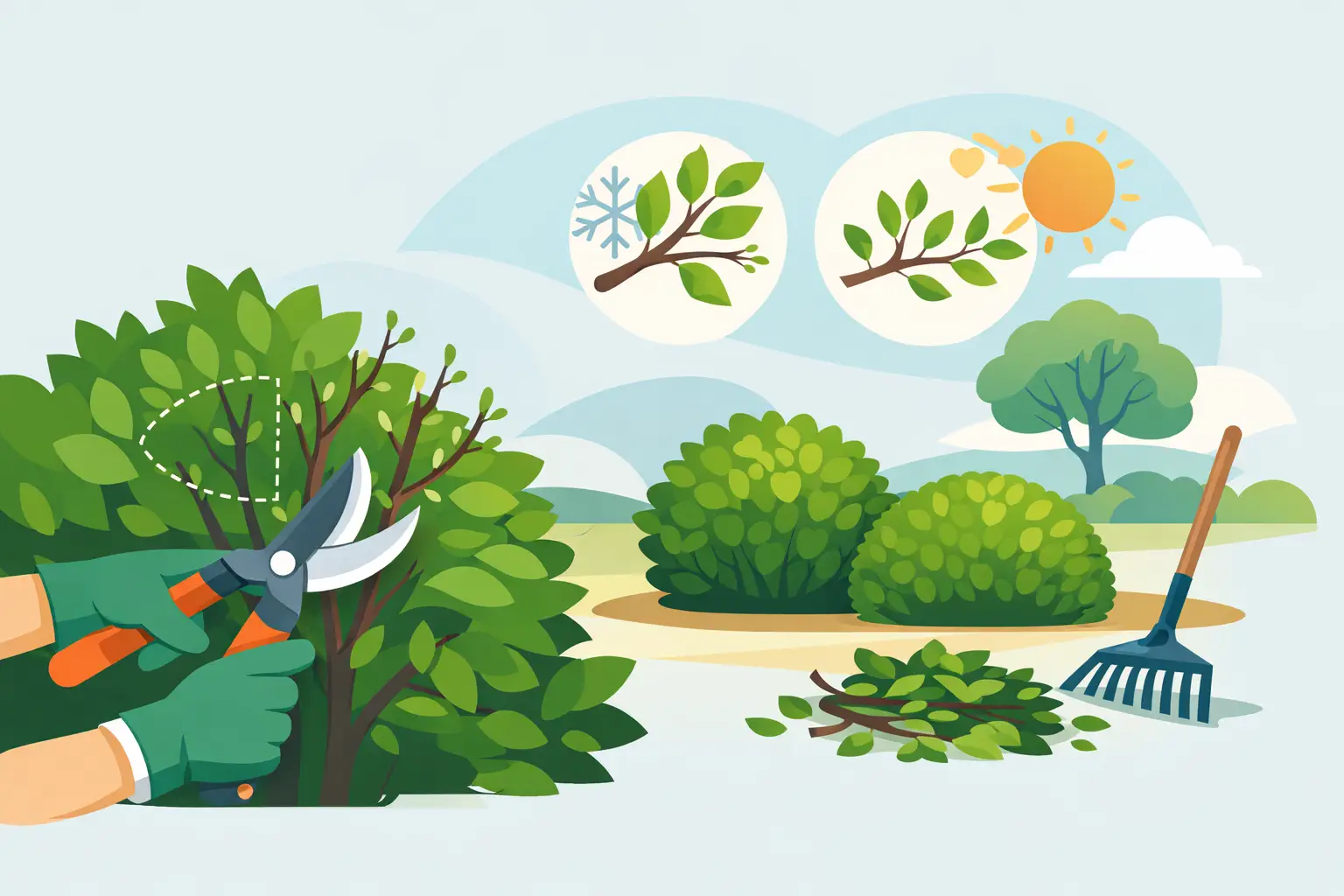
A shrub can look untidy for a few weeks and still be perfectly healthy. Prune it at the wrong time, though, and you may remove next season’s flowers, expose new growth to frost, or leave it struggling to recover. So, when should shrubs be pruned? The answer depends on what sort of shrub it is, when it flowers and what you want it to do in your garden.
For most Hawke’s Bay properties, the best results come from pruning with a clear purpose: improving shape, encouraging flowering, controlling size, removing damaged growth or restoring an overgrown plant. A few well-timed cuts are usually far better than a hard trim at the first sign of messiness.
When should shrubs be pruned for flowering?
The simplest rule is this: prune spring-flowering shrubs straight after they finish flowering, and prune summer-flowering shrubs in late winter or early spring.
Spring-flowering shrubs such as lilac, weigela, flowering quince, rhododendron and many camellias form their flower buds on growth made during the previous season. If they are cut back in winter, those buds go with the clippings. The shrub may grow back well, but it will have few or no flowers that spring.
Once the display has faded, remove spent flowers and shorten selected stems to a healthy outward-facing bud or side shoot. This gives the plant time through summer and autumn to make new wood and set buds for the following year.
Summer-flowering shrubs, including many varieties of hydrangea, buddleia and hardy fuchsia, generally flower on new growth. A late-winter prune encourages fresh, productive stems in spring. In cooler inland or exposed spots, wait until the risk of a sharp frost has eased before making major cuts. Tender new shoots are more vulnerable after pruning.
Hydrangeas need a little extra care because varieties respond differently. Mophead and lacecap hydrangeas often flower from older stems, so remove only dead wood and the oldest spent flowering stems in late winter. Panicle hydrangeas flower on new growth and can usually be cut back more firmly at the same time. If you are unsure which type you have, a light tidy-up is safer than a hard prune.
Pruning evergreen shrubs and hedges
Evergreen shrubs are often pruned for shape rather than flowers. Pittosporum, coprosma, griselinia, hebes and many coastal planting favourites can be lightly trimmed from spring through early autumn while they are actively growing. Avoid heavy pruning in late autumn if cold weather is approaching, as soft new growth may be damaged.
For formal hedges, regular light trims produce a denser, cleaner finish than an occasional severe cutback. Start with the base slightly wider than the top so sunlight reaches the lower branches. A hedge that is narrower at the bottom often becomes thin and bare near the ground over time.
Fast-growing hedges may need two or three trims during the growing season, while slower plants may need only one. Do not cut deeply into old, leafless wood unless you know the species will reshoot. Some plants recover strongly from renovation pruning; others can remain patchy for years.
If a hedge has become too tall or wide for the space, reducing it in stages is often the sensible option. Cut one side back first, allow it to regrow, then tackle the other side in the following season. It keeps some screening in place and places less stress on the plant.
The best season for general shrub maintenance
Late winter is the main maintenance window for many deciduous shrubs. With leaves gone, it is easier to see crossing branches, dead stems and the overall framework. Removing these before spring growth starts helps air and light reach the centre of the plant.
That said, not every job should wait for late winter. Broken branches, disease-affected growth and branches blocking a path can be removed whenever you see them. Clean cuts made with sharp tools are less damaging than leaving torn or hanging stems behind.
Summer is useful for light shaping and deadheading, particularly where shrubs are growing into driveways, footpaths or outdoor living areas. Keep summer pruning modest during hot, dry spells. A plant already under moisture stress does not need a major setback at the same time.
Autumn is best treated with caution. It is fine to remove damaged or diseased material, but major pruning can stimulate new growth just as temperatures are dropping. In gardens exposed to frost or wind, it is usually better to wait until late winter unless the plant has a specific seasonal need.
How to tell a shrub needs pruning
Timing matters, but so does the condition of the plant. A shrub may need attention if it has dead or rubbing branches, a crowded centre, weak growth, spent flowers, branches leaning over accessways, or a shape that is swallowing nearby plants.
Look closely before reaching for the secateurs. Dead wood is often brittle and may be darker than healthy stems. Crossing branches can rub in wind, creating wounds where pests or disease may take hold. Removing the weaker of two crossing stems gives the shrub a cleaner structure.
For mature shrubs, the most effective approach is often thinning rather than shearing. Remove a few of the oldest stems right down at ground level, or back to a lower side branch. This opens the plant, encourages younger growth and keeps its natural form. Shearing every surface into a tight ball may look neat at first, but it can leave dense outer growth and a bare, shaded middle.
Avoid the common pruning mistakes
The most common mistake is cutting every shrub at the same time of year. Gardens contain plants with different flowering cycles and recovery habits, so a one-weekend blitz can cost you a season of colour.
Another is removing too much at once. As a general guide, avoid taking more than around one-third of a healthy shrub’s live growth in a single session unless it is a species known to handle hard renovation pruning. Older, neglected plants may need a staged plan over two or three seasons.
Blunt, dirty tools are another problem. They crush stems instead of slicing cleanly and can transfer disease between plants. Use sharp secateurs for small stems, loppers for thicker branches and a pruning saw where needed. Wipe blades clean between diseased plants and keep tools dry after use.
Finally, do not prune simply because a shrub is large. If it is repeatedly outgrowing its position, consider whether the plant is wrong for the space. Constantly cutting a large-growing shrub into a small shape creates ongoing work and rarely delivers the best-looking result. Replanting with a more suitable variety can be the lower-maintenance choice.
A practical approach for overgrown shrubs
An overgrown section can make an otherwise tidy property feel closed in. Before cutting, decide whether the aim is to restore the existing plants, create more light, improve access or prepare the area for new planting, edging or hardscaping.
Start by taking out dead, damaged and clearly unwanted stems. Then remove selected older branches from the base to reduce crowding. Step back regularly to check the shape. It is easy to keep cutting while standing close to a plant, then realise too late that one side has been stripped back too far.
Where shrubs are tangled with small trees, invasive vegetation or old stumps, the work can become more than a straightforward prune. Safe removal, green-waste handling and a clear plan for the space afterwards make a noticeable difference to the finished result. Kandu Gardens can assess whether a careful prune, a staged reduction or full removal will give your property the most practical long-term outcome.
The right time to prune is ultimately the time that suits the shrub’s flowering cycle, health and role in the garden. Watch how each plant responds, make considered cuts, and give it room to grow into a shape that works for your property.