
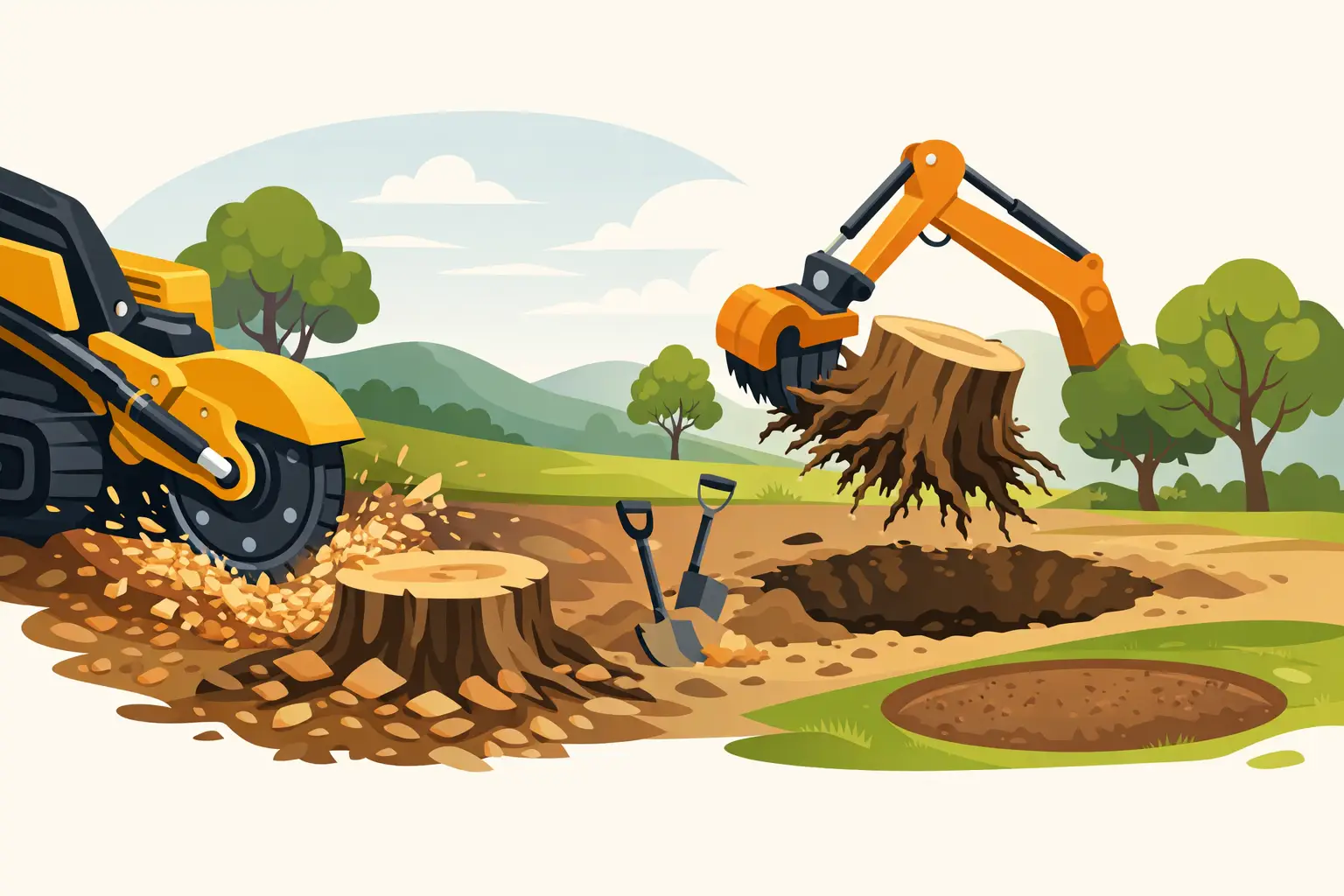
That stump left behind after a tree comes down can seem harmless for a while, until it starts getting in the way of mowing, attracting pests, or making the whole garden look unfinished. If you have been asking what is stump grinding and removal, the short answer is this: both are ways to deal with a leftover tree stump, but they solve the problem in different ways.
Stump grinding cuts the stump down below ground level using a specialised machine. Stump removal takes out the entire stump and root ball, usually with heavier equipment and more ground disturbance. The right option depends on how you use the space, what you plan to do next, and how much excavation you are prepared for.
What is stump grinding and removal in practical terms?
For most property owners, the real question is not the technical definition. It is whether the stump will still be visible, whether roots remain in the ground, and whether the area can be replanted or built on afterwards.
Stump grinding is usually the less invasive option. A machine with a rotating cutting wheel grinds the stump into wood chips, taking it down to a depth below the soil surface. Once complete, the visible stump is gone, and the area can often be backfilled and tidied so it blends into the garden.
Stump removal is more extensive. Instead of shaving the stump down, the full base of the tree is extracted from the ground. That can include major roots close to the trunk. It leaves a larger hole and generally involves more cleanup, soil replacement, and restoration work.
Both services have a clear purpose. One is focused on removing the visible obstruction with minimal disruption. The other is about complete extraction when the ground needs to be fully cleared.
How stump grinding works
Stump grinding is the option many homeowners choose because it is efficient and causes less mess than full removal. The machine is brought to the stump, positioned carefully, and used to chip away the timber section by section. The operator works the stump down until it sits below the finished ground level.
This does not mean every root is removed. The larger stump is dealt with, but many roots stay underground and break down naturally over time. In most gardens, that is not a problem. If your goal is to improve appearance, remove a trip hazard, or make mowing easier, grinding is often enough.
It also suits spaces with tighter access where bringing in large excavation equipment would be difficult. Residential gardens, lawns, side yards, and landscaped areas can often be handled more neatly with grinding than full extraction.
What stump removal involves
Full stump removal is a bigger job because the stump is pulled out rather than ground down. Depending on the stump size, species, age, and root spread, this may require excavation machinery. The surrounding soil is opened up so the stump and root mass can be lifted clear.
This is often the better choice when the area is being prepared for construction, hardscaping, drainage work, or a new tree in the exact same spot. If a stump is close to a retaining wall, fence line, paving area, or foundation, the decision becomes more site-specific. Sometimes full removal is necessary. Other times, grinding is safer because it avoids disturbing nearby structures.
The trade-off is straightforward. Removal gives you a cleaner slate underground, but it usually costs more and leaves a bigger area to reinstate.
Stump grinding vs stump removal: which is better?
There is no one-size-fits-all answer. The better option depends on what matters most on your property.
If you want the stump gone with less disruption, stump grinding is usually the practical choice. It is faster, often more affordable, and easier on established lawns and gardens. For many Hawkes Bay homes and commercial sites, that is enough to restore the area and improve presentation.
If you need the root crown fully out of the ground, stump removal is more suitable. That is common where future building works are planned or where underground clearance is a priority.
Budget also plays a part. Grinding generally involves less labour, less excavation, and less reinstatement. Removal can be worth the extra cost, but mainly when the end use of the space justifies it.
Why leaving a stump behind can create problems
A leftover stump is not always urgent, but it rarely improves with time. In many gardens, it becomes more of a nuisance than people expect.
It can make routine mowing awkward and create a genuine trip hazard, especially in shared outdoor areas or commercial grounds. Older stumps may attract termites, ants, beetles, or fungal growth, depending on local conditions and the timber type. Even when pests are not an issue, the stump can hold moisture and slowly decay, which tends to make the area look neglected.
There is also the issue of regrowth. Some tree species can sprout again from the stump or roots. That leads to ongoing maintenance and can make the area harder to manage if you are trying to keep the garden tidy.
For property owners focused on presentation, removing the stump is often one of those jobs that makes the whole space feel more finished.
When stump grinding is usually the right fit
Stump grinding tends to suit properties where appearance, safety, and usability are the main concerns. If the tree is gone and you simply want the remaining stump dealt with neatly, grinding usually gets the result without turning the job into a major excavation.
It is also a strong option when access is limited. Narrow side passages, established lawns, garden beds, and fenced residential sections are often better suited to a grinder than larger removal equipment.
If you plan to turf over the area, spread mulch, replant nearby rather than directly on top, or just get rid of an obstacle, grinding is often the most sensible way forward.
When full removal makes more sense
There are situations where grinding is not enough. If you are installing a driveway, laying foundations, building a retaining wall, or excavating for another project, the stump and major roots may need to come out completely.
The same applies if a new tree must go exactly where the old one stood, or if root material could interfere with planned services or drainage. In those cases, full removal can save trouble later.
This is where site assessment matters. A stump near pipes, edging, paving, or structures is not something to guess your way through. The safest approach is to look at access, stump size, underground considerations, and the intended use of the space before choosing the method.
What affects the cost?
The price of stump grinding or removal depends on several practical factors. Size is the obvious one. A large, old stump with a wide base takes more time and effort than a smaller garden tree stump.
Access matters as well. If machinery can be brought in easily, the job is usually more straightforward. If the stump sits behind gates, beside buildings, or in a tight landscaped area, setup and handling become more involved.
Tree species can also affect the job. Some timbers are tougher and denser than others. Root spread, soil conditions, slope, and proximity to obstacles all influence how simple or complex the work will be.
The final cost should also account for what happens afterwards. Some clients want the stump dealt with and the grindings left on site. Others want full clean-up, soil backfilling, levelling, and restoration so the area is ready for the next stage.
What to expect before and after the work
Before any work starts, the area should be checked for access, underground services, and nearby features that need protection. Good preparation makes the job safer and helps avoid unnecessary damage to lawns, edging, irrigation, or surrounding plants.
After stump grinding, you will usually be left with a mix of soil and wood chips where the stump was. That area can then be topped up, levelled, and prepared depending on your plans. If the goal is lawn reinstatement, it may need fresh soil and seed. If the goal is a garden bed, the area can be reshaped as part of the overall improvement.
After full stump removal, there is generally more reinstatement required because the hole is larger. That may involve imported fill, compacting, and surface finishing to bring the area back into usable condition.
For many clients, the best result comes from treating stump work as part of a broader outdoor tidy-up rather than a standalone task. That is often where an experienced, practical team like Kandu Gardens can add real value.
A stump might look like a small issue, but removing it properly can make your outdoor space safer, cleaner, and easier to use. The best choice is the one that fits what you want the space to do next.