
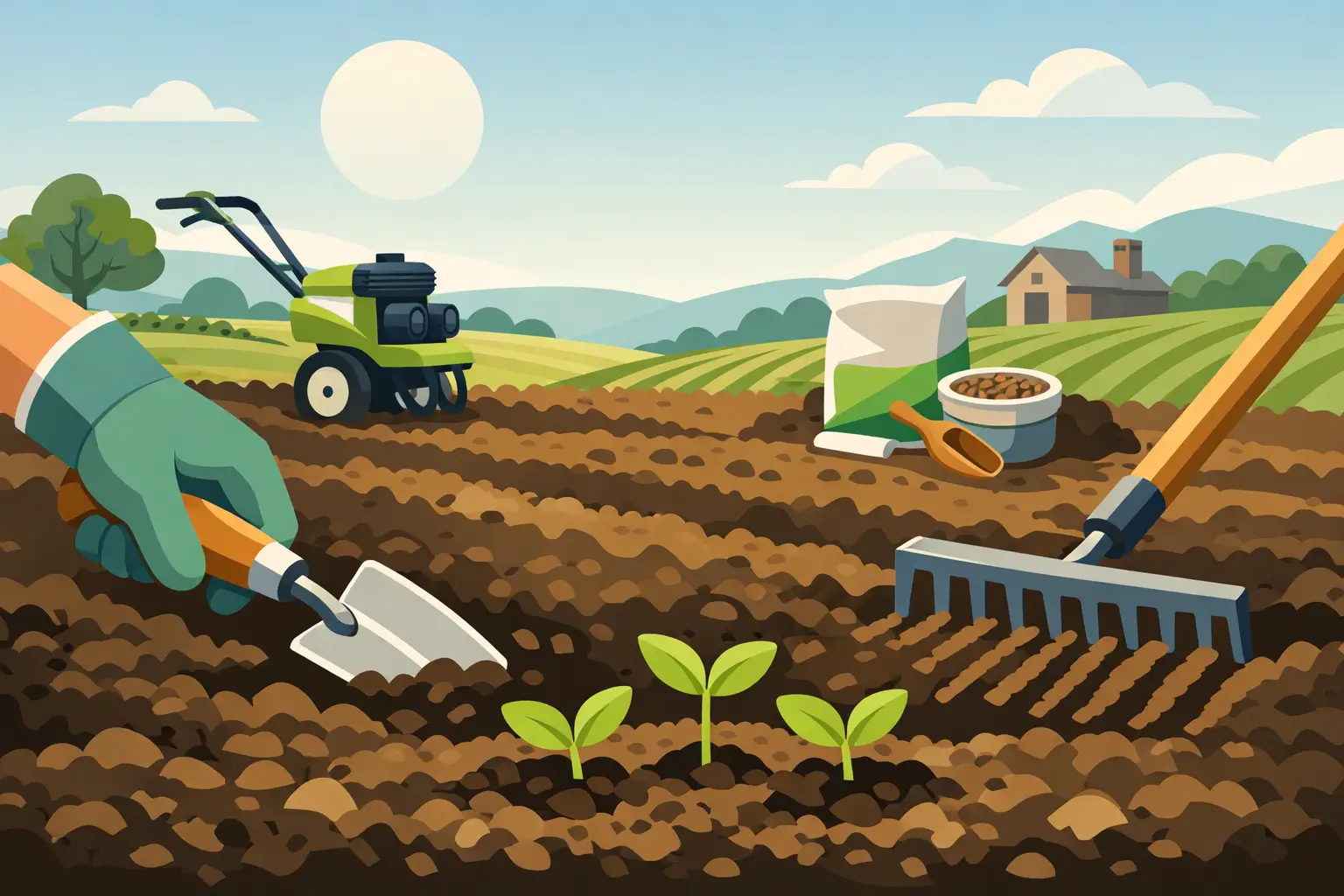
A garden can look neat on planting day and still struggle a month later if the ground underneath has been rushed. Soil preparation for planting is the part that decides whether roots settle in properly, water drains as it should, and new plants actually put on healthy growth. For homeowners and property managers in Hawke’s Bay, that groundwork matters even more because hot, dry periods, compacted ground and mixed soil conditions can all work against a tidy result.
Why soil preparation for planting matters
Most planting problems do not start with the plant itself. They start below the surface. If the soil is too hard, roots cannot spread. If it holds too much water, roots can rot. If it dries out too fast, young plants are put under stress before they have had a chance to establish.
Good preparation gives plants a better start, but it also improves the finish of the whole area. Beds sit cleaner, edging holds better, irrigation works more evenly and ongoing maintenance becomes simpler. That matters if you want a front yard that lifts street appeal or a commercial site that needs to stay presentable without constant rework.
There is also a cost angle. Replacing failed plants, topping up washed-out soil and fixing drainage later is usually more expensive than getting the base right from the start. A well-prepared bed does not guarantee every plant will thrive, because weather and plant choice still matter, but it shifts the odds strongly in your favour.
Start by understanding the site
Before adding compost or turning over a bed, it pays to look at what the area is already doing. Soil preparation for planting should match the site, not follow a one-size-fits-all routine.
In one part of a property, the ground may be compacted from foot traffic, builders’ machinery or parked vehicles. In another, it may be sandy and free-draining but low in organic matter. Low spots can stay wet after rain, while raised areas can bake hard in summer. Existing tree roots may compete heavily for moisture. Even the amount of sun and wind exposure changes how the soil performs.
That is why experienced landscapers usually assess drainage, compaction, grade and existing vegetation before planting begins. Clearing an overgrown area, removing stumps or reshaping levels can be just as important as improving the soil itself. If the site has deeper problems, no amount of fertiliser will make up for them.
Clearing the area properly
A clean planting area gives you a proper starting point. That means removing weeds, old root matter, rubble and anything else that will interfere with growth. It is tempting to plant around stubborn weeds or leave bits of construction waste hidden in the ground, but those shortcuts often show up later as patchy growth or recurring weed pressure.
For neglected garden beds, the first job is often getting rid of overgrown vegetation and aggressive root systems. If there are old stumps or large roots in the way, they can continue to affect planting layout and soil condition long after the visible growth has gone. In those cases, proper removal creates a far more usable area.
Rubbish in the soil is another common issue on residential and commercial sites. Broken concrete, buried plastic, leftover pavers and compacted fill all reduce the quality of the planting zone. Removing that material may not be the most visible part of the job, but it has a direct effect on the finish and long-term performance.
Improving structure, not just adding fertiliser
One of the biggest misconceptions is that feeding the soil means simply throwing in fertiliser. Plant nutrition matters, but structure comes first. Roots need air, moisture and space to move. If the soil is hard and lifeless, nutrients alone will not solve the problem.
Organic matter is usually the key improvement. Quality compost helps open heavy soils and gives lighter soils better moisture-holding ability. It also supports soil life, which plays a major role in nutrient cycling and root health. In many gardens, this does more for establishment than a quick nutrient hit.
That said, the right soil amendment depends on the starting point. Clay-heavy ground may need gypsum in some situations, but not always. Sandy ground may need repeated additions of compost rather than a single heavy application. Imported topsoil can help lift a poor site, but only if it is good quality and compatible with what is already there. Layering fine topsoil over compacted subsoil without blending it properly can create a barrier that roots struggle to cross.
This is where practical judgement matters. The best result usually comes from improving the existing soil profile where possible, rather than trying to mask a poor base with a thin surface layer.
Drainage and moisture need to be balanced
People often focus on dry soil and forget that wet soil can be just as damaging. If water sits around roots, plants can decline quickly, especially in cooler months or shaded areas.
Poor drainage can come from compacted ground, low-lying sections, heavy clay or bad fall across the site. Sometimes the solution is as simple as cultivating the area and adding organic matter. Other times, the area needs reshaping, raised beds or drainage work to move water away properly.
The opposite problem is common too, particularly in Hawke’s Bay summers. Free-draining soil can leave new plants stressed unless it has enough organic material to hold moisture. Mulch helps after planting, but it cannot fix a poor base on its own.
A good planting bed should drain well without drying out immediately. That balance is not always easy to get right, which is why site-specific preparation makes such a difference.
How deep should soil preparation go?
For many planting jobs, surface-level preparation is not enough. If only the top few centimetres are loosened, roots can hit a hard layer underneath and stop spreading. That leaves plants more vulnerable to heat, drought and instability.
As a general approach, the soil should be worked to a depth that suits the plant type and site condition. Annuals and smaller ornamental beds need less depth than shrubs, screening plants or areas being fully renovated. Lawn preparation also has its own requirements, especially if a clean, even finish is part of the goal.
There is a trade-off here. Going deeper takes more labour and sometimes machinery, but shallow preparation can limit the success of the whole project. On heavily compacted sites, proper cultivation is often one of the most worthwhile parts of the job.
Matching the soil to the planting plan
Not every plant wants the same conditions. That sounds obvious, but it gets missed regularly. Plants chosen for quick visual impact may not suit the soil, wind or moisture levels of the site. Then the ground gets blamed when the real issue is poor matching.
A practical planting plan looks at both appearance and performance. Hardy species for exposed areas, moisture-tolerant plants for damper spots, and drought-tolerant choices for hotter zones will always give a stronger result than forcing one style across the whole property.
This also affects how much preparation is needed. If a site has naturally free-draining soil, selecting plants that suit those conditions may be more sensible than trying to turn the entire area into something it is not. The same goes for difficult corners under established trees. Sometimes the smart move is adapting the planting choice, not overcorrecting the soil.
When a professional approach is worth it
Some garden beds can be improved with a bit of hand work and compost. Others need a more coordinated approach, especially where excavation, levelling, stump grinding, edging or drainage all connect to the final planting result.
That is often the difference between a patch-up job and a proper transformation. If the area is overgrown, uneven, compacted or poorly drained, preparation can become the main part of the project rather than a quick step before plants go in. For larger residential sections and commercial sites, having the work handled properly also saves time and avoids repeat costs.
At Kandu Gardens, that practical side of the job is a big part of getting a polished finish. The goal is not just to make an area look ready for planting on the day, but to set it up so it keeps performing after the tools are packed away.
What good preparation looks like after planting
You can usually tell when the soil work has been done well. Water soaks in rather than pooling or running off. Plants sit firmly and start putting on new growth. Mulch stays where it should. The bed looks even, tidy and intentional instead of soft in some spots and sunken in others.
Just as importantly, maintenance becomes more manageable. Weeds are easier to stay on top of, irrigation is more effective and plants need less rescuing. That is the kind of result most property owners are really after – an outdoor space that not only looks better, but works better.
If you are planning new garden beds, upgrading tired areas or reclaiming an overgrown section, the smartest place to spend attention is below ground. Plants get the credit, but the soil does the heavy lifting.