
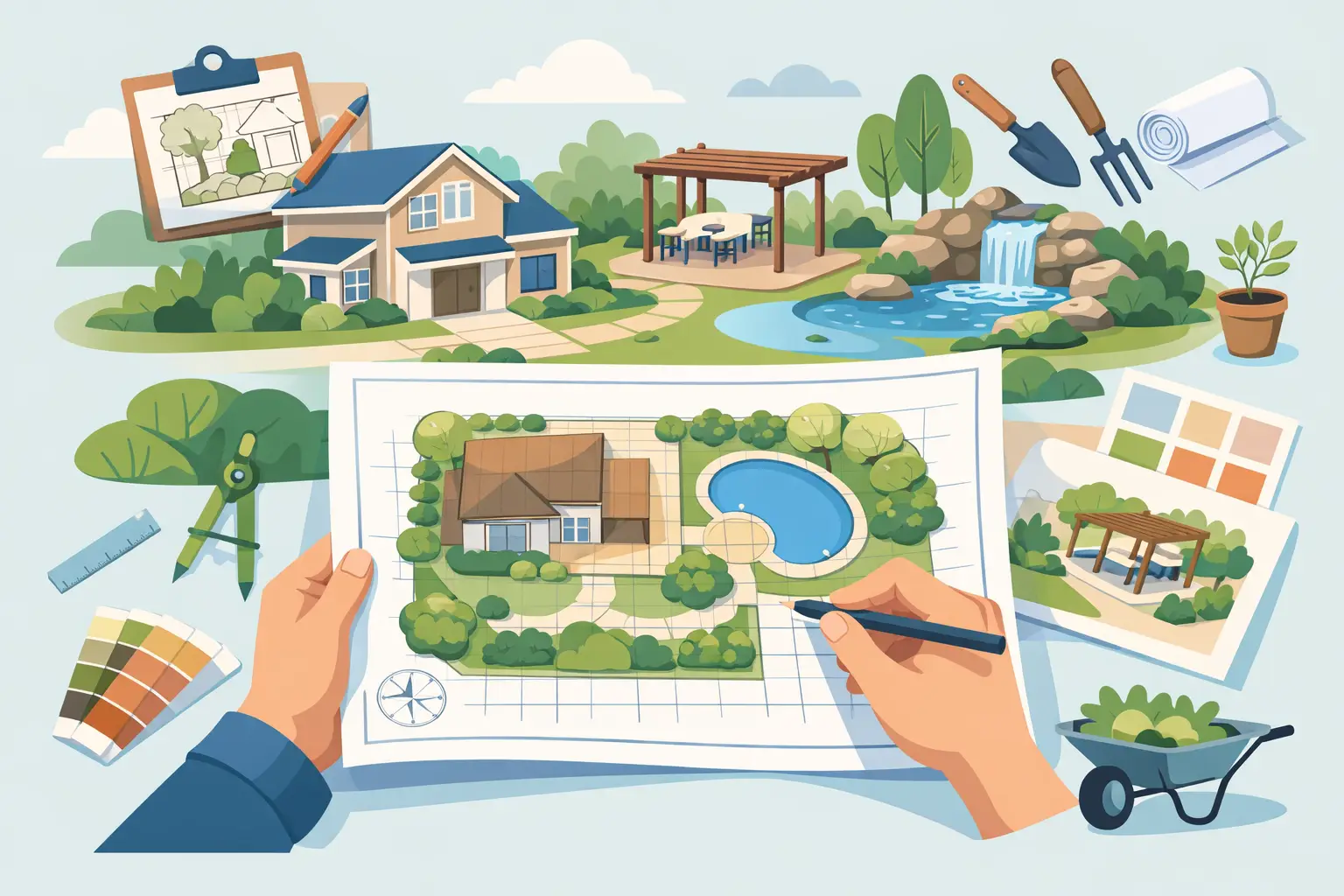
A yard can look simple from the kitchen window, but once work starts, small decisions add up quickly. That is why a residential landscaping project planning guide matters before a shovel goes in the ground. Good planning helps you avoid wasted spend, patchy results and a space that looks better for a month but does not work properly long term.
For most homeowners, the best outdoor projects are not just about looks. They need to solve a real problem. That might be poor drainage near the house, a lawn that never establishes well, an overgrown section that is hard to maintain, or an entry that feels untidy no matter how often you clean it up. A well-planned landscape should improve how the property looks and how it functions day to day.
What a residential landscaping project planning guide should cover
A useful residential landscaping project planning guide starts with purpose, not plants. Before choosing edging, lawn type or feature trees, get clear on what the space needs to do. Some properties need better access, cleaner borders and low-maintenance planting. Others need excavation, stump grinding or removal of old growth before any new work can begin.
This is where many projects go off track. People often start by collecting inspiration photos, then try to fit those ideas into a site with different levels, soil, sun exposure and drainage. Inspiration has its place, but your block should lead the plan. A polished outdoor space in Hawke’s Bay needs to suit local conditions, your budget and the amount of upkeep you are actually willing to do.
Start with the site as it is
Walk the property and look at it honestly. Notice where water sits after rain, where the ground falls away, where roots are lifting surfaces, and which areas get full sun or long shade. Pay attention to practical use as well. How do you move bins out? Is there a muddy path to the clothesline? Does the front yard feel open and tidy, or overgrown and difficult to manage?
If the section has been neglected for years, the first stage may be mostly preparation. That can mean pruning, clearing, vegetation removal, stump grinding or reshaping parts of the ground so the next stage has a proper base. It is not the most exciting part of landscaping, but it is often the difference between a job that lasts and one that needs redoing.
Older properties especially can hide issues under the surface. A nice planting plan will not fix compacted soil, drainage trouble or roots from poorly placed trees. If those problems exist, sort them first. It usually costs less than trying to work around them later.
Set clear priorities before you set the budget
Most people do not have an unlimited budget for outdoor work, so it helps to separate must-haves from nice-to-haves. If the driveway edge is collapsing into the garden bed, that is a priority. If the lawn is uneven and difficult to mow, that may come before adding decorative features. If privacy is a concern, planting or screening could move higher on the list.
A practical budget should also include the less visible parts of the job. Site clearing, soil preparation, drainage improvements and disposal all affect the final cost. These items can feel frustrating because they are not always what visitors notice first, but they support the finished result.
There is also a timing trade-off. Some homeowners prefer to complete the project in one stage for a consistent finish. Others break it into sections, starting with the front entrance or the problem area that affects daily use the most. Neither option is wrong. It depends on budget, urgency and how disruptive the work will be.
Plan the layout around how you live
A good landscape layout should make the property easier to use. That sounds obvious, but many yards end up awkward because the plan focused too heavily on appearance. Paths should go where people actually walk. Garden edges should be easy to maintain. Lawn areas should be sized for a real purpose, not just left over between garden beds.
Think about movement first. From the street to the front door, from the back door to the washing line, from the side gate to the bins – these routes should feel natural and tidy. If they do not, people create their own shortcuts, and the landscape starts to wear badly in those spots.
Then think about how much maintenance the layout creates. Large garden beds can look excellent, but they need ongoing attention. Tight corners and narrow planting strips often become nuisance areas. Cleaner shapes, sensible edging and planting that suits the space can keep a property looking sharp without constant rework.
Drainage, ground levels and preparation come first
This is the part homeowners sometimes want to rush past, but it affects almost everything else. If water pools near paving, against the house or across a lawn area, it needs attention before planting and finishing work. The same goes for unstable levels, eroded edges or ground that needs excavation to make the space usable.
Drainage fixes are not one-size-fits-all. A slight grade correction may be enough in one yard. Another may need more substantial reshaping, especially where runoff moves from one part of the property to another. What matters is understanding the cause, not just treating the visible symptom.
Proper soil preparation also matters more than people expect. New lawn seeding, planting and garden creation all perform better when the base is prepared properly. If the soil is poor, compacted or full of old roots and rubble, growth will be uneven and disappointing no matter how good the plant selection looks on paper.
Choose plants and features that suit Hawke’s Bay conditions
Plant choice should match the site, not just the style you want. Sun, wind exposure, soil condition and available water all play a part. So does maintenance. There is no point installing a detailed planting scheme if you want a low-fuss yard that stays tidy with minimal work.
For many residential properties, the best results come from a balanced mix – practical lawn areas, structured edging, dependable shrubs, and feature planting where it has room to develop properly. Trees can add real value, but only when they are placed with future growth in mind. A tree that looks harmless at planting size can create pruning, shading or root issues later if the location is wrong.
Hardscape elements should be treated the same way. Edging, retaining features, bin areas and access points should improve the function of the space, not just fill it. When these details are planned well, the whole yard feels cleaner and more intentional.
Work with a staged plan if needed
Not every property needs a full overhaul in one go. In fact, staged landscaping can be the smarter approach when the site has multiple issues or the budget needs to be spread over time. The key is making sure each stage supports the next one.
A sensible order often starts with clearing, excavation or stump removal, then moves to drainage and shaping, followed by structural items such as edging or hardscaping. After that, lawn work and planting can finish the space. Doing it in the wrong order can lead to rework, extra cost and damage to completed areas.
This is where experienced advice saves time. A clear plan helps you understand what should happen now, what can wait, and where spending will make the biggest difference first. That is often far more useful than chasing the cheapest quote on a partial job that does not consider the whole site.
Why professional planning usually pays off
Homeowners can absolutely have strong ideas about what they want, and that is helpful. But turning those ideas into a landscape that performs well takes practical judgement. Levels, access, preparation, materials, planting and finish all need to work together.
A dependable contractor will ask the right questions, point out issues early and give straightforward advice about what is realistic. That includes saying when a preferred idea may not suit the property or will create more maintenance than expected. Honest planning is worth more than being told yes to everything.
For local property owners, working with a team that understands Hawke’s Bay conditions also makes a difference. Soil, weather patterns and site variation across the region can change what will perform best. Kandu Gardens focuses on that practical side of outdoor improvement – not just making a place look better, but making it easier to use and easier to maintain.
If you are planning work on your yard, start by being clear about the problems you want solved. The best landscapes do more than lift street appeal. They remove stress, improve daily use and give you an outdoor space that feels properly finished.