
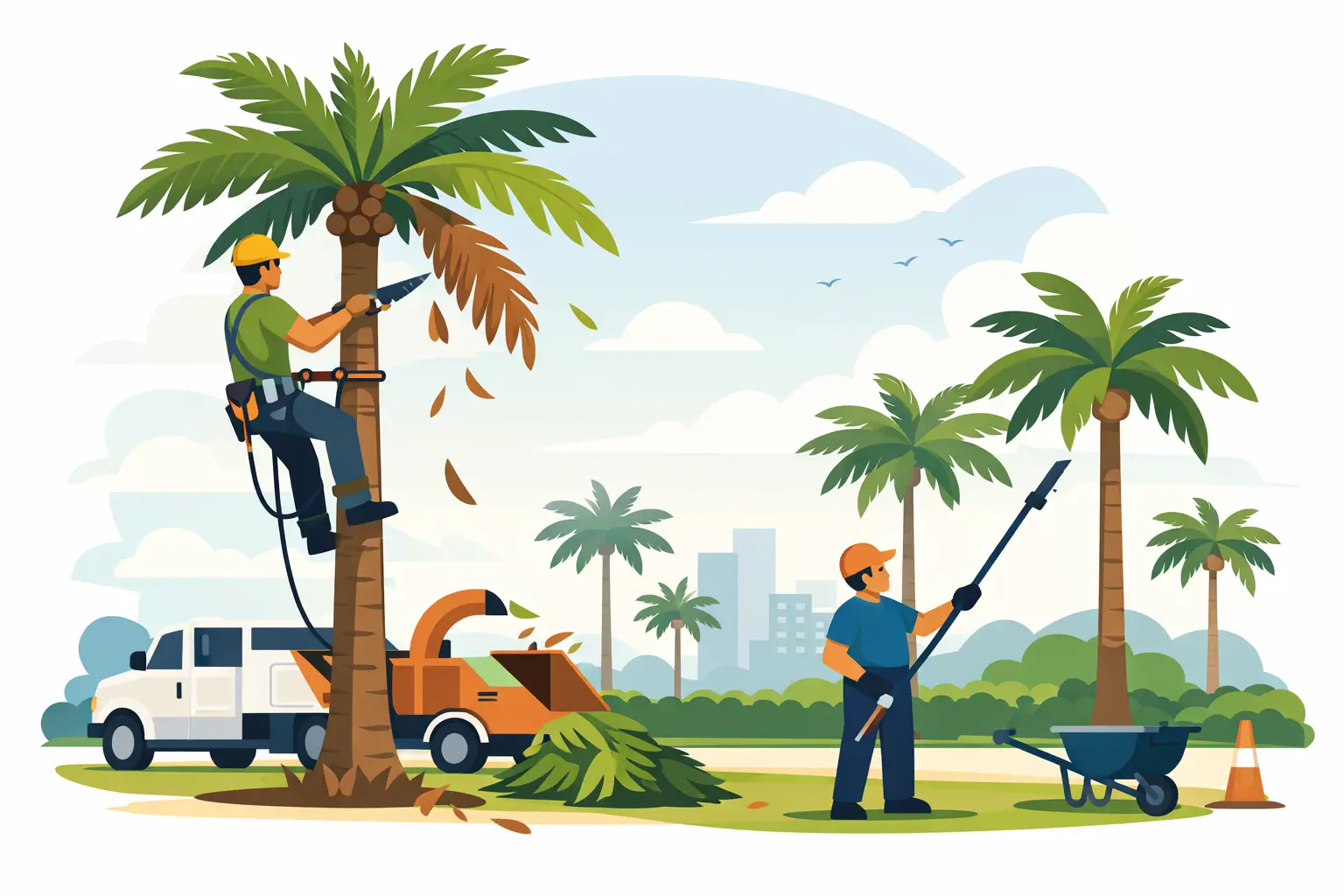
A palm can lift the whole look of a property, but when it starts dropping fronds, blocking views or leaning over a roofline, it quickly becomes a maintenance issue instead of a feature. Good palm tree maintenance is not just about keeping things neat. It protects people, buildings and the long-term health of the tree.
In Hawke’s Bay, palms often sit in high-visibility spots – front yards, pool areas, driveways, commercial entrances and outdoor entertaining spaces. That means they need more than occasional attention. They need the right work at the right time, done properly.
Why palm tree maintenance matters
A neglected palm stands out for the wrong reasons. Dead fronds can hang low and look untidy. Seed pods and fruit can create mess on paving and lawn areas. In windy weather, loose material can become a hazard, especially around parked cars, foot traffic and outdoor seating.
There is also the health side of the job. Palms are tough, but they are not maintenance-free. Cutting too much can stress the tree. Leaving dead material in place for too long can invite pests and make the crown look heavy and unbalanced. The goal is simple – remove what needs to go, keep the tree structurally sound and preserve its natural shape.
For homeowners, that usually means better street appeal and less mess to deal with. For commercial properties, it also means presenting a tidy, well-kept site to customers, tenants and visitors.
What proper palm tree maintenance includes
Palm maintenance is fairly specialised. It is not the same as pruning a hedge or shaping a small ornamental tree. Each palm variety has its own growth habit, and the way it is maintained should reflect that.
In most cases, the work starts with removing dead or damaged fronds. These are the brown, hanging or broken fronds that no longer contribute anything useful to the tree. Taking them off improves appearance straight away and reduces the risk of debris falling later.
The next part may involve removing seed stalks or fruit clusters. This is often overlooked, but it can make a big difference in how clean and manageable the area stays. Around driveways, pathways and courtyards, fallen fruit can stain surfaces and create slip hazards.
Some palms also need old boots or skirt growth cleaned back, depending on the species and the look the owner wants. This is where experience matters. A tidy finish can improve the appearance of the trunk, but overdoing it can damage the tree or leave it looking harsh and unnatural.
Good palm tree maintenance also includes assessing the tree’s position and condition. If a palm is crowding gutters, pushing into nearby plantings or affecting access around a property, maintenance may need to be part of a broader garden plan rather than a one-off trim.
The biggest mistake – over-pruning
One of the most common problems with palms is over-pruning. People often assume that removing more fronds will make the palm healthier or easier to manage. Usually, the opposite is true.
Green fronds are still feeding the tree. If they are cut off too aggressively, the palm loses energy and becomes more vulnerable to stress. It can also develop a thin, stripped look that takes away from the natural form people usually want in the first place.
A good rule is to remove dead, dying or clearly damaged fronds and leave healthy green growth alone unless there is a specific safety reason. This is especially important with mature palms, where poor cutting can affect both appearance and recovery.
There is a balance to get right. Too little maintenance leaves the tree messy and potentially unsafe. Too much leaves it weakened and unattractive. That is why experienced trimming matters.
When to schedule palm maintenance
There is no single schedule that suits every property. It depends on the species, the size of the tree, the surrounding area and how tidy you want the site to look.
Some palms may only need attention once or twice a year. Others, particularly in prominent areas or fast-growing conditions, may need more regular work. If a palm drops material frequently, overhangs a busy space or produces heavy seed clusters, waiting too long usually creates more clean-up and a bigger job later.
Seasonal timing can also help. Many owners prefer to have palms tidied before summer entertaining, before listing a property for sale, or after periods of strong wind when damage becomes obvious. Commercial sites often benefit from planned maintenance that keeps the property consistently presentable year-round.
The best timing is usually preventative rather than reactive. It is easier and more cost-effective to maintain a palm properly than to deal with accumulated debris, storm damage or access issues after the fact.
Safety is a bigger issue than most people expect
Palm work can look simple from the ground, but it often is not. Height, awkward trunk access, sharp frond stems and falling debris all add risk. Near fences, roofs, power lines, pools or pedestrian areas, the job needs proper planning.
Even smaller palms can be tricky if they are planted in tight corners or surrounded by hardscaping. Cutting from the wrong position can damage nearby structures or landscaping. On larger palms, working at height without the right equipment is where DIY jobs can go badly wrong.
This is one reason many property owners choose a professional service. The job gets done efficiently, the site is left clean and the risk of damage is reduced. It is also easier to spot related issues while on site, such as overgrown surrounding vegetation, root zone crowding or access problems caused by other plantings.
Palm care is not only about pruning
Maintenance does not stop at trimming. Healthy palms also benefit from the right growing conditions. Poor drainage, compacted soil, competition from nearby plants and physical damage around the base can all affect performance over time.
If a palm looks yellow, sparse or slow to grow, pruning is unlikely to fix the underlying issue on its own. It may need soil improvement, better watering practices or a review of what is happening around the root zone. In landscaped settings, this is where a practical garden team can add real value by looking at the wider picture rather than treating the palm in isolation.
Mulching around the base, keeping heavy equipment off root areas and managing surrounding growth can all support a healthier, cleaner result. It depends on the site, but the best outcomes usually come from viewing palm maintenance as part of overall property upkeep.
For homes and commercial sites, presentation counts
Palms tend to draw the eye. When they are tidy, they add structure and character. When they are neglected, they can make an otherwise well-kept property look unfinished.
For homeowners, that can affect first impressions, outdoor enjoyment and the amount of weekend clean-up required. For commercial properties, it affects how professional the premises feel. Clients, customers and tenants notice details, especially at entrances, car parks and shared outdoor areas.
That is why reliable maintenance matters. Not just a quick cut, but a clean, considered job that suits the tree and the property around it. At Kandu Gardens, that practical approach is what property owners value most – clear communication, careful workmanship and visible results once the job is done.
Knowing when removal is the better option
Sometimes, ongoing palm tree maintenance is no longer the best solution. If a palm has outgrown the space, is causing repeated mess in a high-use area, or poses an increasing risk near structures, removal may be the more sensible long-term choice.
That decision depends on the tree, the location and what you want the space to do. A palm that works well in a large open section may be completely wrong beside a narrow driveway or a busy courtyard. In some cases, replacing it with more suitable planting gives you a cleaner look and easier upkeep.
This is where honest advice matters. Not every palm needs to be removed, and not every palm should be heavily cut back. A proper assessment can help you decide whether trimming, regular maintenance or full removal is the smartest investment.
Well-maintained palms add real value to an outdoor space, but only when they are kept safe, balanced and in proportion to their surroundings. If your palm is dropping debris, looking untidy or becoming hard to manage, dealing with it early usually saves time, money and frustration later. A clean, well-kept tree does more than improve appearance – it makes the whole property feel cared for.