
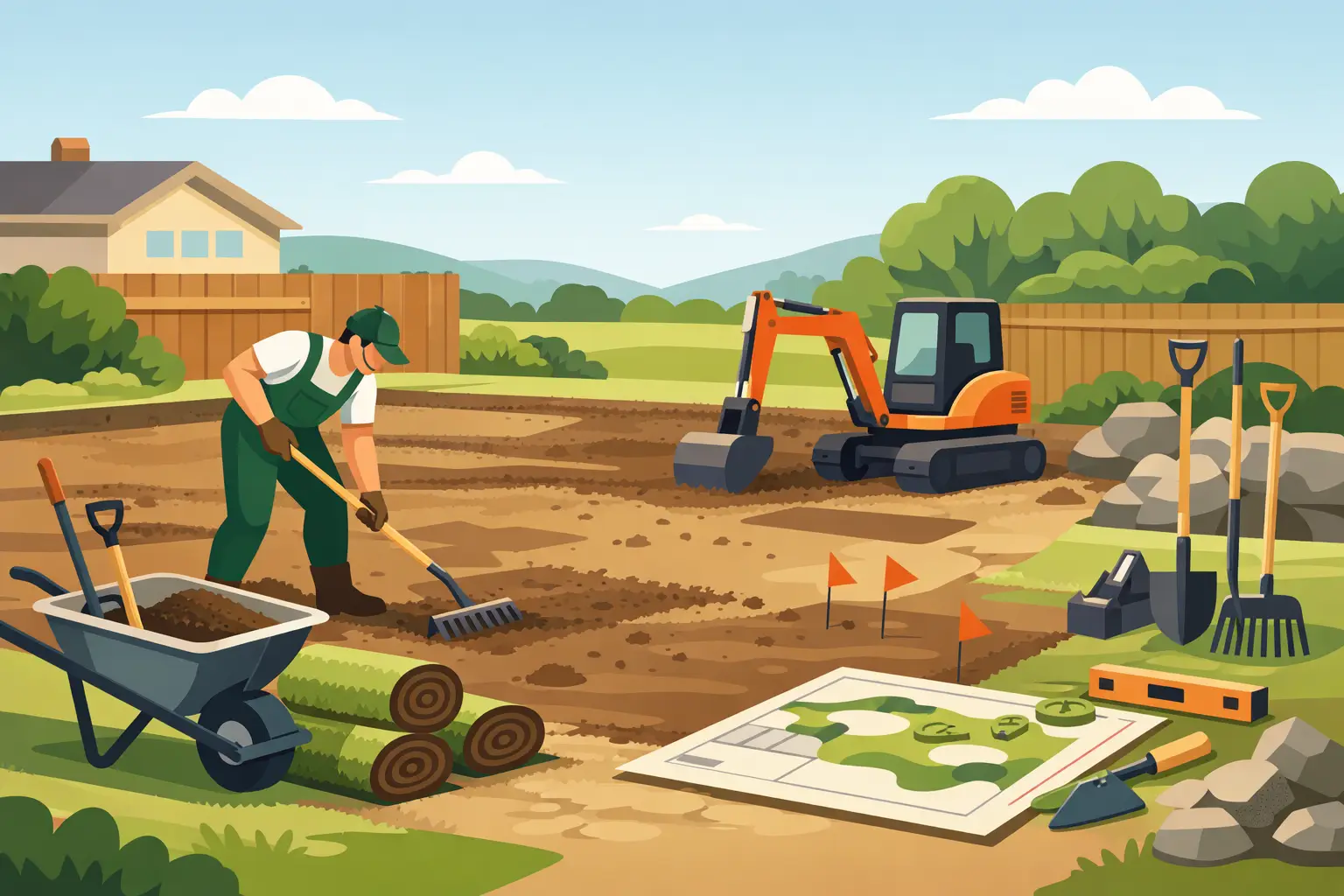
A landscaping job usually looks easy once the plants are in and the edges are tidy. What people do not see is the work that happens first. If you want to know how to prepare yard for landscaping, the real answer starts before a single shrub, paver or roll of turf arrives on site.
Good preparation saves time, prevents expensive rework and gives you a finish that lasts. It also helps you make better decisions about drainage, levels, access and planting, rather than trying to fix problems after the yard has already been transformed.
Why yard preparation matters before landscaping
A fresh landscape built on poor groundwork rarely stays looking good for long. New lawns can struggle, garden beds can wash out, pavers can move, and water can end up where it should not. Preparing the yard properly gives every part of the job a better foundation.
This is especially important in Hawke’s Bay, where properties can vary a lot from one street to the next. Some yards have compacted soil, some have overgrown areas that need clearing, and others have old stumps, poor drainage or awkward slopes. There is no single approach that suits every section, which is why proper assessment matters.
How to prepare yard for landscaping: start with the site
Before any physical work begins, take a proper look at the space as it is now. Walk the yard after rain if you can. Notice where water sits, where the ground falls, which areas get full sun and what parts are already difficult to maintain.
This early step helps shape the whole project. A front yard that needs stronger street appeal may need tidy edging, fresh planting and cleaner access. A back yard used by kids or pets may need better levels, tougher surfaces and lower-maintenance planting. A commercial site may need practical improvements first, such as clearing, structure, drainage and safer movement through the space.
You should also be realistic about what needs to stay and what needs to go. Sometimes an old garden can be refreshed. Other times, overgrown shrubs, tired lawn, broken edging or leftover building material are just getting in the way.
Clear the yard before you build anything new
One of the biggest mistakes in landscaping is trying to work around too much old material. If the site is cluttered, overgrown or uneven, clearing it properly makes the next stage far easier.
That can mean removing weeds, rank grass, dead plants, rubbish, loose stones, broken timber, old edging or unwanted features. In some yards, small trees or palms need pruning back before other work can happen. In others, full removal is the better option if the plant is in the wrong place or has outgrown the area.
Stumps are another common issue. They take up valuable space, can interfere with replanting, and often become a nuisance when you are trying to level or reshape the area. If a stump is staying below ground level, it still needs to be dealt with properly so it does not compromise the finished job.
This stage can look rough for a short time, but that is normal. Clean ground gives you a true starting point.
Check levels, drainage and access early
If you are wondering how to prepare yard for landscaping in a way that lasts, this is where the job becomes more than just tidying up. Ground levels and drainage affect almost every outdoor feature, from lawns and garden beds through to paving and retaining work.
Start by looking at how water moves across the property. Water should generally fall away from buildings, not pool against them. Low spots in lawn areas, boggy patches and muddy edges are signs that the site may need reshaping or drainage work before planting starts.
Levels matter for practical reasons too. If you are installing hardscaping, pathways, a bin area or a new outdoor section, the base needs to be prepared correctly. Even small mistakes in height can create trip points, poor runoff or an untidy finish where new work meets existing surfaces.
Access is worth thinking about at the same time. Can machinery get in? Will waste need to be removed through a narrow side passage? Is there enough room for excavation or stump grinding? These details affect both timing and cost, so it pays to sort them out early rather than halfway through the project.
Test and improve the soil
Healthy soil gives plants a better chance from day one. Poor soil does the opposite. If the yard has been neglected, heavily built over or repeatedly driven on, the ground may be compacted and low in nutrients.
You do not always need a formal soil test for a simple residential job, but you should know what you are working with. Heavy clay behaves differently from sandy soil, and both need different treatment. If the soil drains badly, adding the wrong material can make things worse rather than better.
In many cases, preparation includes loosening compacted ground, removing builder’s rubble, improving topsoil and adding organic matter where needed. Garden beds benefit from good structure and drainage, while lawn areas usually need a level, friable surface before seeding or turfing.
This is one of those stages where shortcuts show up later. Plants that fail to establish, patchy grass and uneven growth often trace back to what was skipped underneath.
Mark out the new layout before work begins
Once the site is cleared and assessed, mark out where key features will go. This does not need to be complicated, but it does need to be practical. A simple layout helps you visualise spacing, movement and proportion before materials are locked in.
Think about where garden beds should sit, how wide paths need to be, where edging will create a cleaner line, and whether trees or shrubs have enough room to mature. If you are adding hardscape features, check that they fit the way the space is actually used.
This step often reveals useful adjustments. A garden bed may be too narrow to maintain properly. A path may need to shift so it lines up with a door. A planting area that looked good on paper may block light or crowd a fence line in real life.
For homeowners, this is where the yard starts to feel real. For commercial properties, it helps keep the project efficient and functional from the outset.
Prepare separate areas for their specific purpose
Not every part of the yard should be prepared the same way. That is where a lot of DIY jobs come unstuck.
Lawn areas need clearing, levelling and enough quality topsoil to support healthy growth. Garden beds need weed removal, soil improvement and proper edging to stop grass invasion. Paved or gravel areas need excavation, compacted base preparation and attention to drainage. If retaining, structural edging or outdoor construction elements are involved, the groundwork becomes even more important.
This is also the stage to think about irrigation, lighting sleeves or any hidden services that should go in before surfaces are finished. It is much easier to install these early than to disturb a completed landscape later.
Know when the job needs professional help
Some yard preparation is manageable on a small scale. If you are cleaning up a simple garden bed and refreshing an existing area, you may be able to handle it yourself. But larger projects usually involve more than people expect.
Excavation, stump removal, grade correction, drainage issues and major overgrowth can quickly turn into heavy, time-sensitive work. The same applies when the finish needs to be right the first time, especially on visible front yards, shared spaces or commercial sites.
A professional team brings the equipment, experience and practical judgement to prepare the site properly. That means less guesswork, fewer delays and a result that looks better because the groundwork was done properly. For many property owners, that is the difference between a project that drags on for months and one that moves forward cleanly.
At Kandu Gardens, a lot of the value is in seeing what the site actually needs before the cosmetic work begins. That hands-on approach helps avoid wasted effort and sets up a better result across the whole outdoor space.
Common mistakes to avoid when preparing a yard
The most common mistake is rushing into planting or paving before solving the basics. People often focus on what they want the yard to look like, which is understandable, but appearance only lasts when the site underneath is ready for it.
Another mistake is keeping too many unwanted features just to avoid the work of removing them. Old roots, buried rubbish, broken concrete and failing edges tend to create problems later. It is usually cheaper to deal with them at the start than to work around them twice.
The last one is underestimating drainage. A yard can look neat for a few weeks and still fail once proper rain arrives. If water has nowhere to go, the finish will not hold up.
A well-prepared yard gives landscaping the best chance to look sharp, function properly and stay easier to maintain. If you are planning changes to your outdoor space, start with the ground, not just the design. That first step is often the one that makes the rest of the job worth doing.