
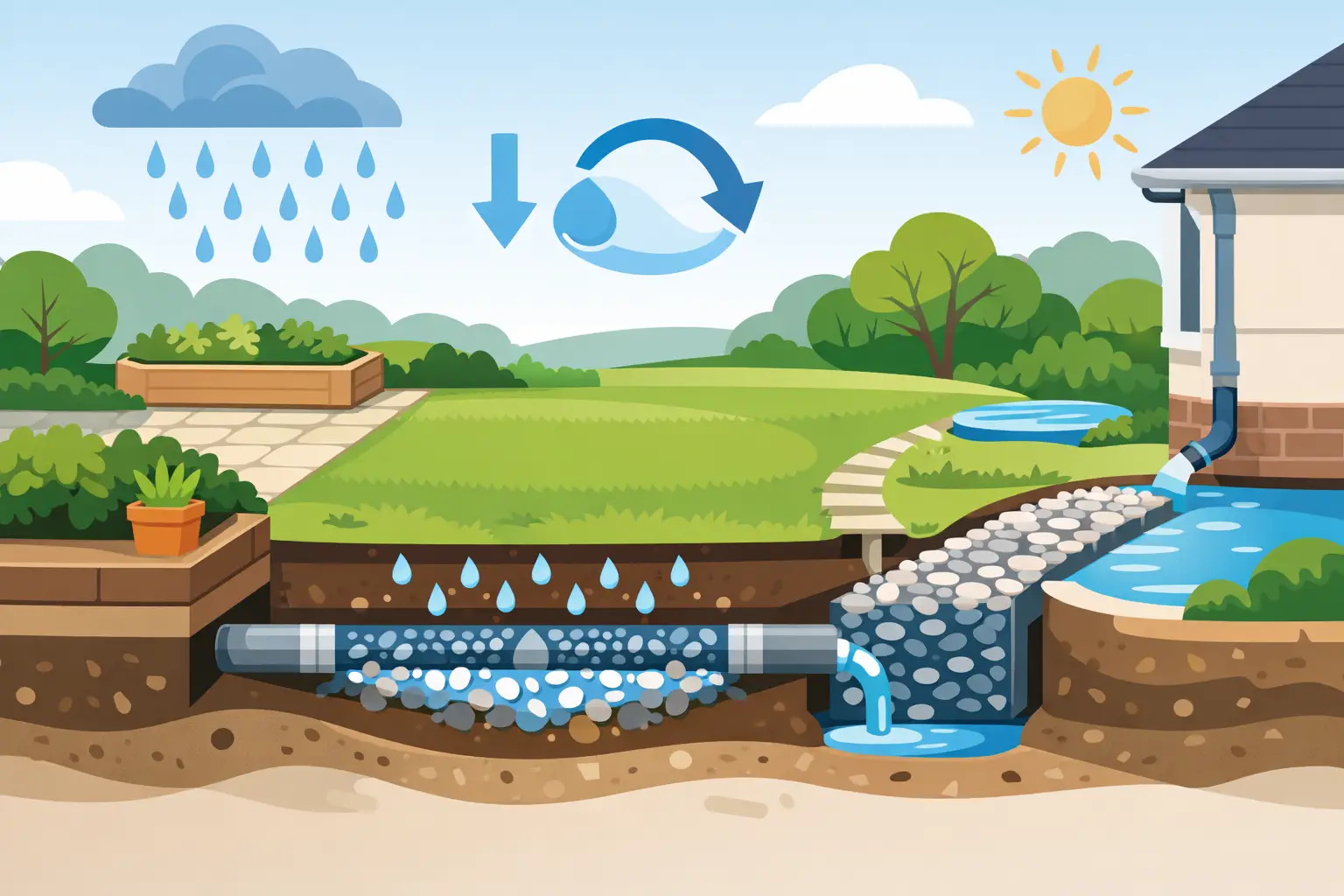
A lawn that stays soft for days after rain, water gathering beside the patio, or garden beds washing onto paths are not just untidy problems. They are signs that water is not being directed where it needs to go. Knowing how to plan garden drainage starts with looking at where water comes from, where it naturally travels, and what needs protecting.
Good drainage should make a garden easier to use in wet weather without stripping it of the moisture plants need. The right solution is rarely about digging one deep trench and hoping for the best. It is about matching the drainage method to the slope, soil, hard surfaces and purpose of the space.
Start by watching water move through the property
Before choosing pipes, gravel or drains, inspect the garden during rain or shortly afterwards. This is when the real problem becomes clear. Look for puddles that remain after surrounding areas have dried, bare channels where water has cut through soil, damp patches at the base of retaining walls, and runoff flowing towards the house, shed or garage.
Walk the full site, including driveways, paths, downpipes, lawns and neighbouring boundaries. A low spot in the lawn may actually be receiving water from a sloping paved area or a roof, so treating the low spot alone will not solve the cause.
It also helps to note how long water takes to drain. A shallow puddle that disappears within an hour after heavy rain may not need major work. Water that remains for a day or more can damage lawn roots, make paths slippery and turn garden beds into mud. Persistent dampness near buildings deserves prompt attention because it can affect foundations, walls and access areas.
Check slope, soil and the amount of runoff
Every drainage plan needs a clear fall. Water does not need a steep slope, but it does need a consistent route away from buildings and usable outdoor areas. Even a gentle change in level can guide surface water into a planted area, swale or drain.
A straight timber board, string line or laser level can help identify high and low points. Do not rely on what looks level from the patio. Outdoor areas can be deceptive, especially where lawns have settled or previous landscaping has changed the ground level.
Soil type matters just as much. Sandy soils usually let water pass through quickly, while clay soils hold water near the surface. Hawkes Bay properties can vary widely, even within the same suburb. A garden with heavy clay may need more than a soak pit because the surrounding ground may not absorb water fast enough during a downpour.
Consider the volume of water as well. A small garden bed collecting rainfall is very different from a driveway, large roof or paved entertaining area. Hard surfaces shed water quickly, and downpipes can release a surprising amount in one storm. Your plan must allow for peak rainfall, not only a light shower.
Decide what the drainage system needs to achieve
Drainage works best when it has a defined purpose. You may need to keep water away from a house, dry out a lawn, prevent a path from flooding, stop soil washing from a bank, or protect a retaining wall. Often, one site has several of these issues, but each may need a different approach.
Surface water is usually managed by shaping the ground, installing channel drains beside paving, or adding shallow swales that guide water through the landscape. Subsurface water, which sits within saturated soil, may need a perforated drain line in gravel to collect and carry it away.
Where possible, retain and use water on the property. Directing clean roof water into a suitable rain garden or storage tank can reduce runoff and support planting. However, this only works where the ground, location and rainfall volume suit it. If water is pooling against a building or on a busy accessway, reliable removal comes first.
Choose the right drainage method for the problem
There is no single best garden drain. The best option depends on what is causing the water to collect and where it can safely go.
Regrading and surface shaping
For broad, shallow pooling across a lawn or garden, reshaping the ground can be the most effective solution. Soil is added or removed to create a gentle fall away from buildings and towards a safe discharge area. This approach can look natural once the lawn or planting is re-established, but it needs careful levels so water is not redirected onto a neighbour’s property.
Channel drains around hard surfaces
A channel drain is useful where water runs across paving, driveways, patios or entrances. It sits flush with the finished surface and captures water before it reaches doors, garages or low areas. The grate needs to be strong enough for its location, particularly if vehicles will pass over it, and it must remain accessible for cleaning.
French drains and perforated pipe
A French drain typically uses a perforated pipe surrounded by clean drainage gravel and wrapped in geotextile fabric. It collects water from wet soil and carries it towards a lawful outlet. These drains are useful along the base of slopes, beside retaining walls and through consistently soggy lawn areas.
They are not a cure for every wet garden. If the pipe has no fall, the gravel is clogged with soil, or there is nowhere suitable for water to discharge, it will underperform. Installation depth also matters. A drain needs to sit below the wet zone it is intended to relieve, without compromising nearby structures or tree roots.
Swales, rain gardens and planted solutions
A swale is a shallow, gently shaped channel that slows and directs runoff. A rain garden is a planted low area designed to temporarily hold water while it filters into the ground. Both can soften the look of a drainage system and create habitat, rather than adding more hard infrastructure.
These options suit gardens with room to work and a safe place for water to spread. They are less suitable immediately beside building foundations or in narrow spaces where every heavy rain event would overwhelm the area. Plant selection should handle both wet periods and dry spells, which is especially relevant in areas with changeable seasonal conditions.
Soak pits and collection points
A soak pit stores runoff underground and releases it gradually into surrounding soil. It can be useful for roof water where soil tests show adequate drainage and the pit is located clear of buildings, boundaries and services. In heavy clay or high-water-table ground, a soak pit may fill faster than it empties, so it should not be assumed to solve a flooding issue without proper assessment.
Plan the outlet before digging anything
Every drain needs a destination. This is the point most likely to be overlooked in a rushed DIY job. Water may be directed to an approved stormwater connection, a suitable on-site soakage area, a swale or another lawful discharge point, depending on the property and local requirements.
Never send concentrated runoff towards a neighbour, onto the footpath, or into an area that could undermine a fence, retaining wall or building. Local council rules and site conditions can affect what is permitted, particularly for stormwater connections and work near boundaries.
Check for underground services before excavation. Pipes, power cables and communications lines may run through areas that look clear. It is also wise to consider future access. Inspection points, grates and clean-outs should be reachable without removing established planting or lifting major sections of paving.
Build drainage into the wider garden plan
Drainage is easier and more cost-effective when it is planned alongside landscaping, edging, paths, lawns and retaining work. Installing a new patio before correcting the surrounding levels can create an expensive problem, while laying a drain before new turf or planting keeps disruption to a minimum.
Think about finished heights early. Soil and mulch should not be built up against cladding, and paved surfaces should fall away from structures. Garden edging can help hold mulch in place, but it should not become a dam that traps water against paths. Retaining walls need drainage behind them so water pressure does not build up in wet weather.
A well-planned garden can make drainage feel almost invisible. Gravel bands, planted swales, discreet grates and correctly shaped lawns all do their job without taking over the space.
Know when professional help is the sensible option
A simple downpipe extension or minor surface adjustment may be manageable for a confident homeowner. Larger drainage work is different. If water is affecting a house, retaining wall, driveway, commercial access area or neighbouring property, professional assessment can prevent a temporary fix becoming a costly repair.
Experienced landscapers can assess levels, excavation requirements, soil behaviour and how drainage will work with the finished garden. Kandu Gardens approaches this work as part of the whole outdoor space, so drainage supports a garden that is practical, tidy and built to last.
The best drainage plan is one you stop noticing. After rain, paths stay usable, lawns recover, planting remains in place and water moves safely through the property – exactly where it should.