
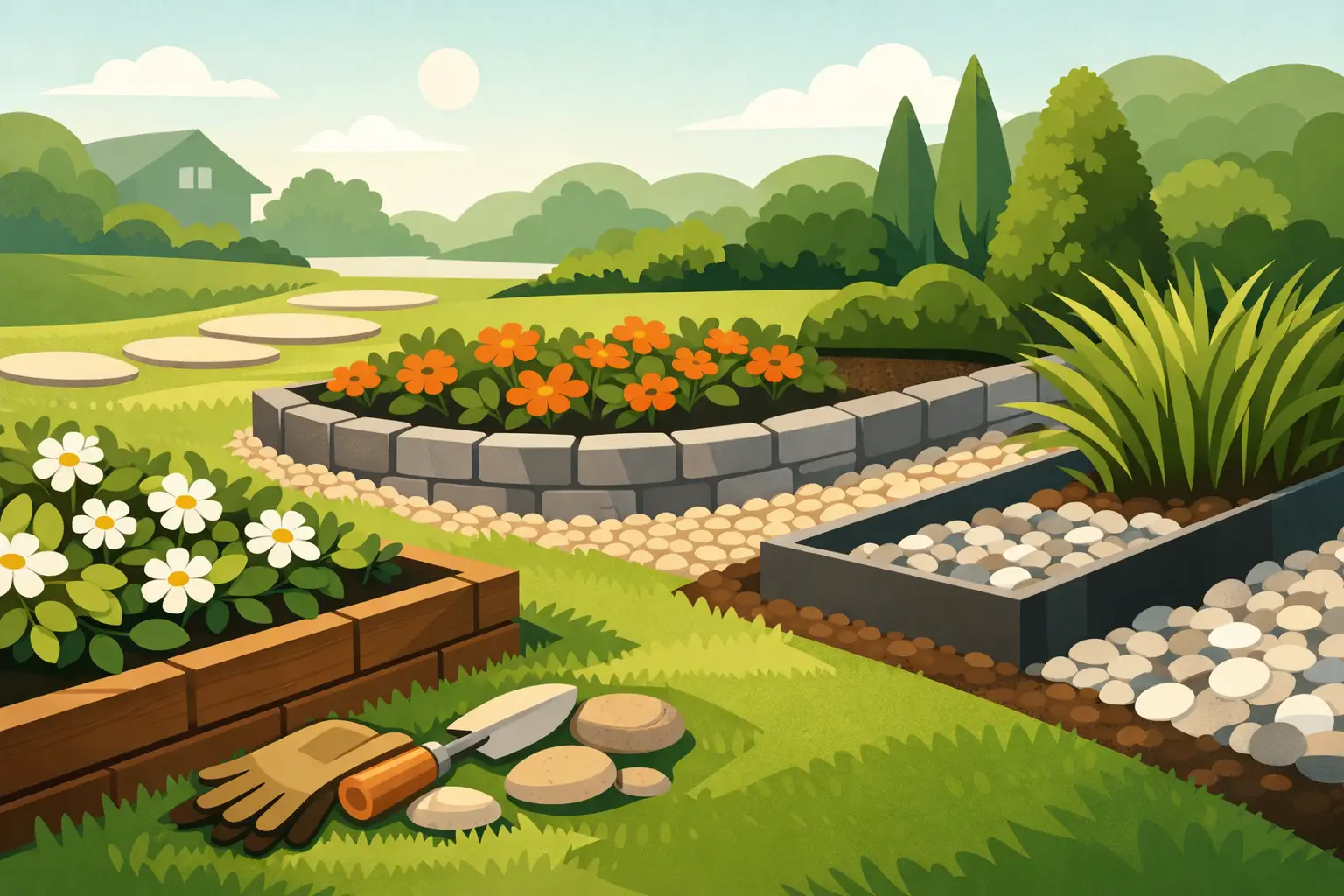
A garden can be beautifully planted and still look unfinished if the lawn keeps creeping into the beds. The right border creates a clean line, makes mowing simpler and helps each part of the yard hold its shape. Knowing how to choose garden edging comes down to more than picking a material that looks good on the day. It needs to suit the site, the way the garden is used and the amount of upkeep you are prepared to take on.
For Hawkes Bay properties, edging also has to handle dry spells, heavy rain, shifting soil and the occasional knock from a mower or wheelbarrow. A good choice gives your garden a polished finish without creating another job that needs constant fixing.
Start with what the edging needs to do
Garden edging can separate lawn from garden beds, define paths, hold back gravel, contain mulch or create a raised planting area. These jobs place very different demands on the material and installation.
A simple lawn-to-bed edge may only need a neat, low-profile barrier that allows a mower wheel to run alongside it. An edge retaining pebbles beside a path needs to be more secure. If soil is being held at two different levels, it may require proper retaining construction rather than decorative edging alone.
Think about how people move through the area as well. A narrow edging strip beside a driveway, bin area or busy footpath needs to be durable and firmly installed. Around a quiet flower bed, appearance may matter more than strength. Getting this purpose clear first prevents the common mistake of using a light garden border where a structural edge is needed.
Choose garden edging materials to suit the site
There is no single best material. The right option depends on the look you want, the budget, the level of maintenance and the conditions in the garden.
Timber for a natural, practical border
Timber edging works well in informal gardens and can tie in neatly with decks, raised beds and other timber features. It is straightforward to shape around gentle curves and is often a cost-effective option for larger spaces.
The trade-off is lifespan. Timber in contact with soil and moisture will eventually weather and deteriorate, even when treated. It is best for areas where a warm, natural finish matters and where replacement in years to come is acceptable. Use quality treated timber suited to ground contact, and make sure it is anchored well enough to stay straight as the soil settles.
Steel for crisp modern lines
Steel edging gives a slim, clean boundary that suits contemporary landscaping, gravel paths and structured planting schemes. It is particularly effective where you want a near-invisible division between lawn and garden bed.
Galvanised or powder-coated steel offers a more consistent finish, while weathering steel develops a rust-coloured patina over time. That weathered look can be attractive, but it does not suit every home or every planting palette. Steel needs careful installation, particularly on curves and uneven ground, and exposed edges should be selected and fitted with safety in mind.
Concrete, pavers and brick for long-term strength
Concrete mowing strips, brick borders and paver edging are hard-wearing choices for formal gardens, driveways and high-traffic areas. They provide a solid mowing edge, help prevent lawn spread and can match existing paving or exterior finishes.
These options usually cost more to install because preparation matters. The base must be level, compacted and drained properly, otherwise bricks and pavers can move or concrete can crack. When installed well, though, they offer a permanent, tidy result with minimal ongoing attention.
Stone for character and texture
Natural stone edging can make a garden feel established and works especially well around cottage-style beds, feature trees and informal paths. Each stone has variation, so the finished edge feels less uniform than steel or concrete.
Stone is heavy, and that is both its strength and its challenge. It can sit firmly once bedded correctly, but lifting and setting it takes time and experience. Smaller loose stones are not ideal where a sharp mowing line is needed, as grass can grow between them and make maintenance harder.
Plastic and composite for flexible, low-cost edges
Plastic or composite edging is useful for curved beds and lightweight projects. It is generally quick to install and can be an affordable way to define a new garden while the wider landscape takes shape.
Quality varies greatly. Thin products can lift, crack or become brittle under strong sun and mower impacts. For a temporary solution or a lightly used area, it can be suitable. For a prominent front garden or a commercial property, a stronger material often delivers better value over time.
Consider your garden style, but do not let style decide everything
Edging should support the property rather than compete with it. Straight steel or concrete lines can sharpen up a modern home, while brick, timber or natural stone often sit more comfortably around older houses and relaxed planting schemes.
Colour matters too. Dark edging can make green foliage stand out and visually recede, while pale concrete or stone becomes a stronger design feature. Try to repeat a material or tone already present in the property, such as pathway pavers, cladding, fencing or outdoor furniture. This helps the garden feel connected rather than pieced together.
However, the best-looking option is not always the most practical. A low timber edge may suit the style of a garden, but it will not retain soil beside a raised driveway. A decorative stone edge may look right, but can become frustrating if it makes mowing and weeding more difficult. Good landscape work balances appearance with the jobs the garden needs to perform.
Plan for mowing, weeding and maintenance
The easiest gardens to maintain are designed with access in mind. If the mower cannot run cleanly along the edge, someone will need to trim it by hand. Over a large lawn, that extra task soon adds up.
A flush concrete or paver mowing strip lets the mower wheel travel along the border while keeping blades out of the garden bed. Steel and timber can also work well, but they need to sit at the right height. An edge that is too high can catch equipment, while one set too low may disappear beneath mulch and soil.
Allow enough room for mulch in garden beds. A shallow edge may look fine immediately after installation, then become hidden once mulch is topped up. In areas with vigorous lawn growth, install the edging deep enough to discourage grass runners from crossing into the bed.
Also consider irrigation. Drip lines, sprinklers and outdoor lighting cables should be planned before edging goes in, not cut through afterwards. This is one reason a site inspection is worthwhile when a project includes planting, lawn work, paths and edging together.
Match the installation to the ground conditions
Even premium edging can fail when the base is poorly prepared. Soft ground, poor drainage, roots and sloping sites all affect how an edge should be installed.
Clay-heavy soil can expand when wet and shrink in dry weather, which may shift a lightly installed border. Gravel, pavers and concrete need a compacted base to prevent movement. Near mature trees, roots may limit how deep the edging can go, and cutting large roots can affect tree health.
Slopes need particular care. Edging can follow the slope, step down in sections or act as part of a retaining solution, depending on the height difference and the desired look. Trying to force a perfectly level line across a steep garden without considering drainage can direct water where it is not wanted.
Before committing, check these practical details:
- whether the edge must retain soil, mulch, gravel or only define a boundary
- where water flows after rain and whether drainage needs to be improved
- how close tree roots, services, paths and driveways sit to the proposed line
- whether mowing equipment can work along the finished edge safely
- how the material will age in sun, moisture and regular use
Set a budget around lifespan, not just purchase price
The cheapest edging is not necessarily the most economical. A low-cost product that bends, fades or comes loose after a season can cost more in repairs and replacement than a well-installed, durable alternative.
It helps to separate material cost from installation cost. Straight lines on level ground are generally simpler than long curves, tree-lined beds or edges that need excavation and drainage preparation. A professional quote should account for the preparation work that makes the finished result last, not only the visible border.
For a staged garden upgrade, it can be sensible to install permanent edging around the key areas first: front garden beds, paths, entertaining spaces and lawn boundaries. Less visible sections can be completed later. This creates an immediate improvement in presentation while keeping the project manageable.
When professional installation makes sense
DIY edging can be a satisfying weekend job for short, straightforward borders. But larger sites, heavy materials, concrete work, drainage issues and changes in ground level benefit from experienced installation. The lines need to be set out properly, the base prepared, materials secured and the surrounding lawn or garden restored neatly.
Kandu Gardens approaches edging as part of the wider outdoor picture. A border should work with the lawn, planting, paths and maintenance needs of the property, not sit there as an isolated strip of material. That practical approach is what turns a garden edge from a small detail into a finish that makes the whole space look cared for.
Choose an edging solution you will still be happy to see after a wet winter, a hot summer and plenty of mowing. A clean line that stays put gives every plant, path and patch of lawn a better chance to look its best.