
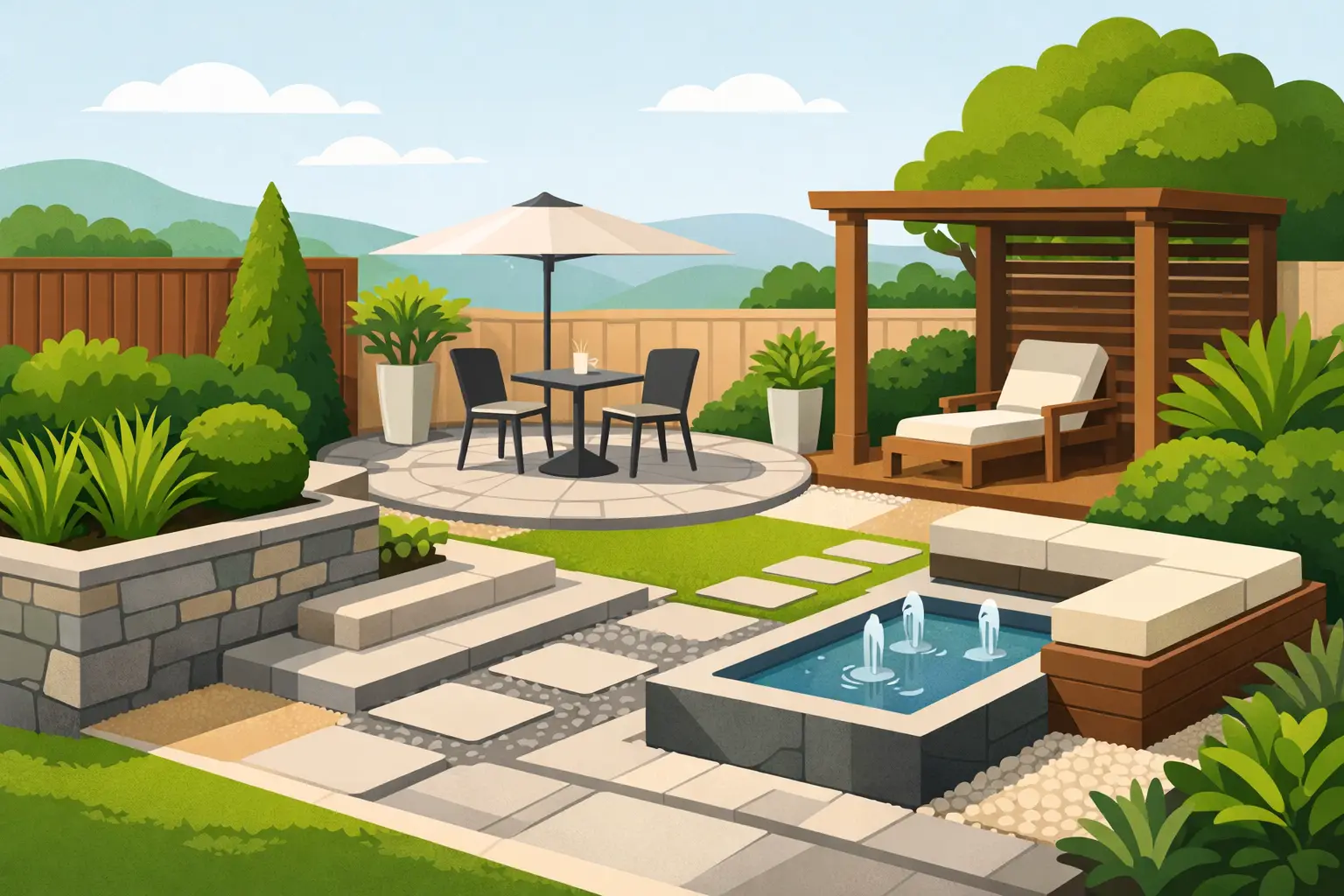
A small garden can feel crowded fast. One narrow path, an awkward corner, a patch that turns muddy after rain, and suddenly the whole space is harder to use than it should be. That is where hardscaping for small gardens makes a real difference. Done properly, it gives the garden shape, improves day-to-day use, and helps every square metre earn its place.
For many Hawke’s Bay properties, space is limited but expectations are not. Homeowners still want an outdoor area that looks tidy, handles the weather, and works for real life – from moving bins out of sight to creating a spot to sit, entertain, or simply walk through without dragging dirt indoors. Good hardscaping is not about filling a garden with concrete or making it feel hard and cold. It is about solving practical problems while keeping the space balanced and attractive.
Why hardscaping for small gardens matters
In a larger section, a layout mistake can be absorbed by the extra room. In a compact garden, every choice shows. The width of a path, the size of a paved area, the height of edging, and the placement of steps or retaining edges all affect how spacious the garden feels.
Hardscaping gives structure first. That might mean a clear route from the back door to the washing line, a defined patio area, edging that keeps lawns and garden beds neat, or a bin area that stops everyday clutter from becoming the first thing you see. Once those elements are in place, the softer parts of the garden – lawn, plants, mulch and feature planting – tend to look better as well.
There is also a maintenance benefit. Small gardens often need to work hard with limited upkeep. Well-built hard surfaces can reduce muddy patches, contain gravel or mulch, and cut down on the constant reshaping and tidying that comes with poorly defined outdoor areas.
Start with function, not just looks
The best small garden projects usually begin with a simple question: what does this space need to do? That answer matters more than following a trend.
If the area is mainly a thoroughfare, the priority is durable access. If it is used for outdoor dining, then surface size, furniture placement and movement matter more. If storage is the problem, a hardscaped bin area or a clean service zone may add more value than a decorative feature.
This is where some gardens go wrong. People try to squeeze in too many materials, too many shapes, or too many separate zones. In a compact outdoor area, simplicity nearly always works better. Fewer finishes, cleaner lines and a clear purpose make the garden feel more generous.
Choosing the right surfaces for a compact space
Not every hardscaping material suits every garden. The right choice depends on drainage, sun exposure, maintenance expectations and how the area is used.
Paving is a strong option when you want a clean, durable surface that feels finished. It suits patios, entry points and pathways, and it can make a small garden look sharper straight away. Larger pavers often make a tight area feel less busy, but they need careful setting and planning to avoid awkward cuts in narrow spaces.
Gravel can work well for informal areas, side access or low-cost improvements. It drains better than some solid surfaces and gives a softer visual effect, but it does move underfoot and needs proper edging to stay where it belongs. In very small gardens, loose gravel can also feel messy if it spills into lawn or planting.
Concrete is practical and long-lasting, especially for utility zones and high-use paths. It can be the right answer when the goal is reliability and low fuss. The trade-off is that it needs to be designed carefully so the space does not end up looking too stark.
Timber elements, such as steps, edging or compact decking, can bring warmth, especially in courtyards. They are useful when levels need to be managed or when you want to soften the look of a built surface. The downside is ongoing upkeep. Timber can look excellent, but it does ask for maintenance over time.
Layout choices that make small gardens feel bigger
One of the most useful things hardscaping can do in a small garden is improve flow. When movement through the space feels easy, the garden usually feels larger too.
Straight paths often work best in tight or functional areas because they are efficient and keep the layout clean. In some gardens, though, a slight shift in direction can create interest without wasting space. It depends on the shape of the section and what the path connects.
Level changes also need careful thought. A single step in the wrong place can interrupt the whole garden. If the site has uneven ground, tidy retaining, clear edging or well-planned steps can turn an awkward area into one that feels deliberate and safe.
Corners are another missed opportunity. In small gardens, corners should rarely be dead space. They can hold built seating, a neat raised bed, a compact feature tree, or a screened service area. The goal is not to cram them full, but to give them a purpose.
Edging, retaining and the details that tidy everything up
The details often do more for a garden than the main surface itself. Edging is a good example. It creates a clean line between lawn and garden beds, keeps gravel from drifting, and makes maintenance simpler. It also gives the whole space a more finished look.
Retaining can be just as valuable in smaller outdoor areas, especially where ground levels are inconsistent. Even a modest retaining edge can help flatten a usable zone for seating, planting or access. When handled properly, it stops the space feeling patched together.
These practical elements are not always the part people get excited about at first, but they are often what makes the difference between a garden that looks tidy for a week and one that stays tidy.
Hardscaping for small gardens and outdoor living
A small garden does not need a big entertaining area to be useful. It just needs the right amount of usable space. A compact paved patio, a neat sitting area, or a simple transition from indoors to outdoors can completely change how often the garden gets used.
Scale matters here. Oversized paving can swallow the garden, while undersized areas feel frustrating. There should be enough room to move chairs, open a door, and walk through comfortably. Beyond that, more is not always better.
Built features can also improve liveability when they solve a clear problem. A screened bin area, for example, is not glamorous, but in a small property it can make the whole outdoor area look cleaner. The same goes for practical stepping zones near taps, clotheslines or side entrances.
Keep the balance between hard and soft elements
The word hardscaping sometimes makes people think the whole garden will end up looking bare. In practice, the best results come from balance.
Hard surfaces create order, but planting brings life, shade and softness. In small gardens, that contrast matters even more. A paved area looks better with surrounding greenery. Clean edging looks stronger when the lawn or planting is healthy and properly contained. Even a simple gravel path feels more settled when bordered by low planting or mulch.
This is why the best projects are planned as a whole, not as separate bits added over time without a clear layout. Hardscaping should support the garden, not fight with it.
Common mistakes to avoid
The most common mistake is trying to fit in too much. Multiple paving styles, busy patterns, unnecessary curves and oversized features can make a small garden feel smaller.
Another issue is poor drainage planning. A great-looking surface that pools water after rain is not a good result. Hardscaping needs to manage runoff properly and suit the way the property actually performs in wet weather.
Cheap installation is another false economy. Uneven paving, weak edging and poorly set surfaces tend to show up quickly, especially in high-use areas. In a compact space, defects are harder to hide and more annoying to live with.
A practical approach gets the best result
For most small gardens, the right hardscaping plan is not the flashiest one. It is the one that makes the space easier to use, simpler to maintain and better to look at every day.
That might mean reshaping access, adding tidy edging, building a usable patio, sorting out a problem corner, or creating clear separation between lawn, planting and service areas. These changes can seem straightforward, but when they are done with care they have a big impact.
At Kandu Gardens, that practical approach is what tends to deliver the strongest results. Small gardens respond well to clear planning, solid workmanship and design choices that suit the property rather than chasing ideas that look good only in photos.
If your garden feels cramped, untidy or harder to manage than it should, the answer is often not more garden bed or more lawn. Sometimes it is better structure, better surfaces and a layout that finally makes sense. A small outdoor space can still do a lot – it just needs the right bones.