
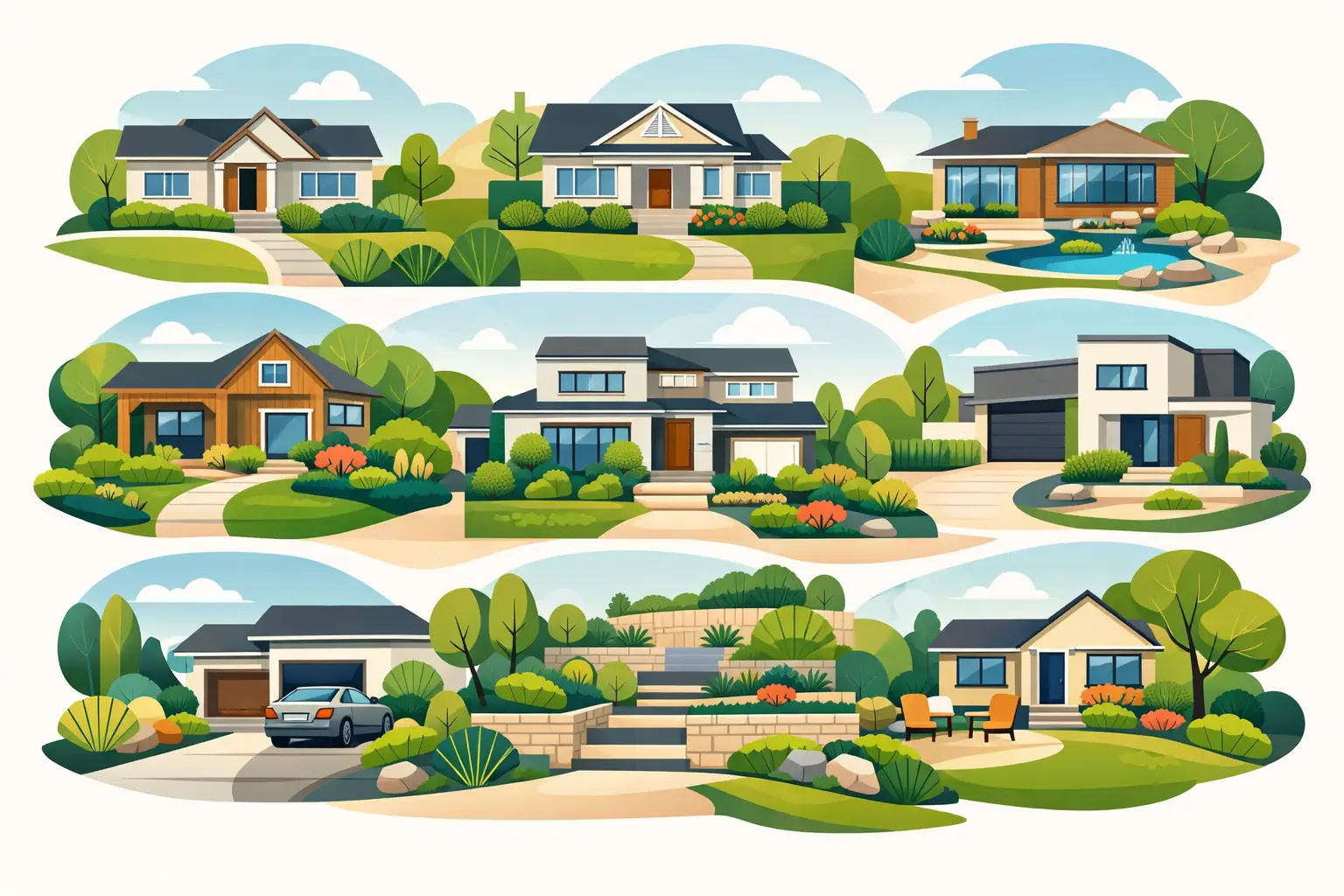
Some front yards make life harder than they need to. The lawn turns patchy, garden beds sprawl, old stumps sit in the way, and the whole entrance feels tired before you even reach the front door. That is why front yard transformation examples are useful – they show what actually changes a space, not just what looks good in a photo.
For most property owners, the best front yard upgrade is not the biggest one. It is the one that fixes the right problems. Better access, tidier planting, stronger edges, cleaner lines, and lower upkeep often make more difference than a complete redesign. Here are ten practical examples that show how a front yard can go from messy or underused to neat, functional, and well presented.
Front yard transformation examples that work in real homes
1. From overgrown and uneven to clean and structured
A common starting point is a yard with too much happening at once. Shrubs have grown past the windows, the lawn edges have disappeared, and different plants compete for space. The transformation here starts with removal, not planting.
Cutting back overgrown vegetation, clearing unwanted growth, and shaping what stays gives the yard an immediate lift. Once the space is opened up, defined edging and fresh mulch create order. You do not need dozens of new plants to get a polished result. In many cases, less is better.
This kind of change suits homeowners who want a fast visual improvement without taking on a major construction job. It also makes ongoing maintenance easier because every garden area has a clear boundary.
2. From bare frontage to a proper garden entrance
Some homes have the opposite problem. The front yard is mostly empty, with a plain lawn and no real sense of arrival. It looks unfinished rather than untidy.
A strong transformation can come from creating a simple entry garden around the path, letterbox, or front steps. Low shrubs, layered planting, and edging help guide the eye towards the front door. If the house exterior is already a feature, the garden should support it rather than compete with it.
The trade-off is maintenance. A newly planted space will need watering, trimming, and some seasonal care while it establishes. Choosing hardy plants that suit Hawke’s Bay conditions can keep that workload manageable.
3. From awkward tree stump to usable front yard space
An old stump in the middle of the front yard is more than an eyesore. It can affect mowing, limit planting options, and make the space feel neglected.
One of the clearest front yard transformation examples is stump grinding followed by reinstatement. Once the stump is removed, the area can be levelled and re-seeded, planted out, or included in a new bed design. It is a simple step that often makes the whole yard feel more intentional.
This is especially worthwhile if the stump is left over from a tree removal done years ago. Many property owners get used to seeing it and stop noticing how much it drags the frontage down.
4. From patchy lawn to a healthier green finish
A poor lawn can make the entire property look tired, even when the garden beds are in decent shape. Compacted soil, shade, uneven ground, and lack of feeding all play a part.
The transformation does not always mean starting from scratch, but sometimes that is the better option. If the lawn is more weeds than grass, regrading and lawn seeding may give a stronger result than repeated patch repairs. If the issue is localised, improving soil and repairing worn sections can be enough.
A lawn-focused front yard works well for households who like open space and a cleaner look. The catch is that lawns need regular care. If low maintenance is the priority, reducing lawn area in favour of mulched beds may be the smarter move.
5. From messy borders to sharp edging and definition
There are yards that are not in terrible condition, but still look unfinished. Often the problem is the lack of crisp edges between garden beds, lawn, driveway, and paths.
Installing proper edging is one of the most effective low-disruption upgrades. It gives the front yard structure straight away and helps keep soil, mulch, and grass where they belong. It also makes mowing and trimming more efficient.
This example proves that a transformation does not always need major excavation or planting. Sometimes the yard already has the right elements – it just needs better definition to look cared for.
Before-and-after thinking: what changes the result most?
6. From difficult slope to tidy, manageable levels
Sloping front yards can be frustrating. Water runs off too quickly, mowing becomes awkward, and planting can look uneven or sparse. A good transformation focuses on making the slope easier to use and maintain.
That may involve light excavation, reshaping, retaining elements, or terraced planting zones. The exact approach depends on the grade and the available space. A steep site will need a different solution from a gentle fall towards the street.
Done properly, levelling or sectioning a slope does more than improve appearance. It can also make access safer and reduce erosion. This is one of those jobs where practical groundwork matters just as much as the finished look.
7. From no function to a front yard that works harder
Not every front yard needs to be purely decorative. Some properties benefit from practical additions such as a defined bin area, better side access, or a clearer path from the gate to the entry.
A transformation here is about solving day-to-day annoyances while keeping the frontage neat. Screening bins with planting or a built structure, widening access points, or creating a proper pathway can all improve how the space functions.
These changes often matter most on busy family properties or rentals where ease of upkeep counts. Good front yard design should look better and work better at the same time.
8. From tired planting to a simpler, stronger palette
A lot of older gardens suffer from plant overload. There may be too many species, too many heights, and too many colours competing in a small space. The yard feels busy without feeling attractive.
A strong transformation often comes from simplifying. Replacing a mixed collection of struggling plants with a smaller number of reliable varieties creates a calmer and more cohesive result. Repetition helps. So does choosing plants that hold their shape and suit the site.
This approach is practical for owners who want a smart frontage without constant pruning or replacing failed plants. It is also a good reminder that mature gardens are not always better gardens if they have lost their structure.
9. From hidden home to better street appeal
Sometimes the problem is not the yard itself, but how it frames the house. Tall shrubs block the facade, palms are left untidy, or the approach to the entry is visually cluttered.
Opening sightlines can completely change the way a property presents from the street. Selective pruning, palm maintenance, canopy lifting, and removal of poorly placed planting can make the house feel larger, brighter, and more welcoming.
This kind of transformation is especially effective before selling or leasing, but it also pays off for owners who simply want to feel proud when they pull into the drive.
10. From neglected frontage to a full-property refresh
The biggest transformations usually happen when several issues are dealt with together. A yard might need vegetation cleared, stumps removed, edges installed, new planting added, and the lawn renewed all in one coordinated job.
That full refresh creates the strongest before-and-after result because every part of the frontage works together. The key is not adding more for the sake of it. It is choosing improvements that suit the property, the budget, and the level of upkeep the owner is actually willing to maintain.
For some homes, a staged approach makes more sense. Start with clearing and shaping, then tackle planting and lawn work next. For others, doing it all at once avoids repeated disruption and gets the front yard looking finished sooner.
What the best front yard transformation examples have in common
The most successful projects usually share the same basics. They solve a visible problem, make the space easier to maintain, and suit the style of the home. They also respect how the yard is used in real life.
That is where experience matters. A nice-looking concept is one thing. Knowing how to deal with compacted ground, old roots, drainage issues, awkward access, and tired planting is another. In practice, the groundwork often decides whether a transformation lasts.
For property owners in Hawke’s Bay, local conditions should always shape the plan. Sun exposure, dry periods, wind, soil quality, and maintenance expectations all affect what will perform well over time. A front yard that looks sharp in the first month but struggles after one season is not a strong result.
At Kandu Gardens, the most effective upgrades are usually the ones that balance presentation with practicality. A front yard should create a better first impression, but it should also be easy to live with once the job is done.
If you are weighing up ideas for your own property, start by noticing what frustrates you every time you come home. That is often the clearest sign of where the transformation should begin.