
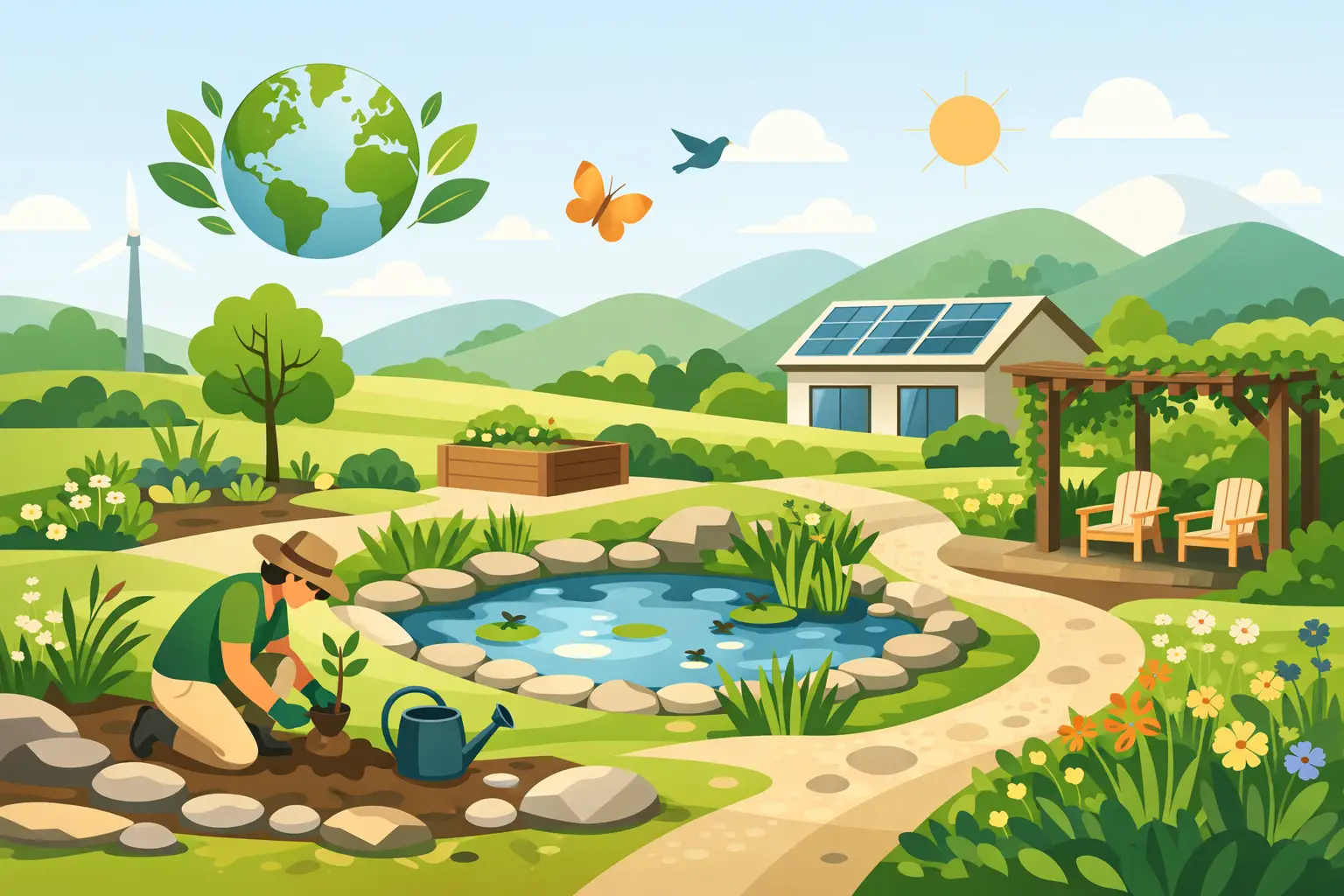
A good garden should do more than look tidy from the street. It should handle dry spells, suit the way you use the space, and stay manageable without constant waste, watering or rework. That is why more property owners are asking for eco-friendly landscaping ideas that improve the look of a section while also making it easier and more efficient to maintain.
In Hawke’s Bay, that approach makes sense. Conditions can be hard on lawns and new planting, and not every outdoor area needs the same treatment. A front garden, a rental property, a commercial frontage and a family backyard all have different demands. The best results come from practical choices that suit the site, the soil and the level of upkeep you actually want.
Eco-friendly landscaping ideas for real properties
Eco-friendly landscaping is not about making a garden look wild or unfinished. Done well, it looks polished, intentional and clean. The difference is that the layout, materials and planting work with local conditions instead of fighting them.
One of the smartest starting points is reducing high-demand lawn areas. Large lawns can look great, but they often need the most water, edging, mowing and repair. If parts of your section are rarely used, replacing some turf with garden beds, gravel paths, planted borders or hardscaped zones can cut maintenance straight away. You still keep open green space where it matters, but you stop spending time and money on grass that adds little value.
Plant choice is another big one. Drought-tolerant and climate-suited plants usually outperform thirsty varieties over time. They establish better, need less intervention and are less likely to struggle through hot periods. That does not mean every garden has to look the same. You can still create structure, colour and seasonal interest, but the plant mix should suit the conditions on your property rather than a picture from somewhere with different rainfall and soil.
Mulch is one of the simplest upgrades with the biggest return. A properly mulched garden bed helps the soil hold moisture, suppresses weeds and protects plant roots from temperature swings. It also gives the whole area a more finished appearance. The trade-off is that mulch needs topping up over time, and the wrong type or depth can create issues around some plants. Used properly, though, it is one of the most practical ways to improve performance without overcomplicating the job.
Start with water, not just appearance
Many landscaping problems show up as poor appearance when the real issue is water management. Dry patches, muddy corners, runoff and struggling plants often point to a layout that is not handling rainfall or irrigation well.
If you want eco-friendly landscaping ideas that deliver long-term value, start by looking at where water goes on your property. A slight change in levels, better drainage, reshaped garden beds or more permeable surfaces can make a real difference. Instead of letting water rush off hard ground and disappear, the goal is to slow it down and direct it where it can do some good.
That might mean replacing sections of solid paving with gravel or other permeable finishes in the right areas. It could mean creating planted zones that catch runoff from roofs or paths. On some sites, even simple excavation and reshaping can prevent water pooling and reduce erosion. The right solution depends on the layout, how the space is used, and whether the problem shows up in heavy rain or during long dry periods.
Water-wise irrigation matters too. Hand watering has its place, but it is often inconsistent. Drip systems and targeted irrigation are usually more efficient than spraying everything broadly, especially in planted beds. They help direct water to roots instead of paths, fences or hard surfaces. For larger properties or commercial grounds, that efficiency adds up quickly.
Build a garden that needs less from you
A sustainable outdoor space should not feel like a second job. For many property owners, the most useful eco-friendly choice is simply designing the garden so it asks less of them week to week.
That starts with layout. Clear edging between lawns, beds and paths helps contain growth and makes maintenance faster. Grouping plants with similar water and light needs also avoids the common problem of overwatering one area just to keep another alive. If you have a high-traffic section near an entry, letterbox or bin area, hardwearing surfaces and sturdy planting usually make more sense than delicate garden features that need constant repair.
There is also value in keeping the design honest. A complicated plan with too many small garden beds, awkward curves or fussy plant combinations can look impressive at first, then become expensive to maintain. A cleaner design with strong borders, practical surfaces and reliable planting often performs better over time. It looks sharp, functions well and does not rely on frequent intervention to stay presentable.
For rental properties and commercial sites, this matters even more. Outdoor areas need to hold their shape between visits and still look cared for. In those cases, lower-maintenance planting, robust ground cover, durable edging and accessible garden zones usually outperform anything delicate or highly seasonal.
Soil health is where good results begin
It is easy to focus on plants, pavers and finishes because they are the parts you see. But healthy soil does a lot of the heavy lifting in an eco-friendly landscape.
Soil that drains properly, holds enough moisture and contains organic matter gives plants a much better chance of thriving without excessive fertiliser or water. If the soil is compacted, stripped out or low in nutrients, even good planting can struggle. That is why site preparation matters. In some gardens, improving the soil before planting is more important than choosing expensive feature plants.
Reusing green waste where appropriate, adding composted material and protecting bare soil with mulch all support better garden performance. There is a balance, though. Not every part of every property needs intensive soil improvement. Areas planned for hardscaping, utility access or low-impact use may need a different approach. The key is matching the work to the purpose of the area.
Hardscaping still has a place
Eco-friendly landscaping does not mean avoiding construction elements. In many cases, smart hardscaping improves sustainability because it makes the space more usable and reduces wear in the wrong places.
A well-placed path protects lawn and planting from foot traffic. A defined bin area keeps service zones tidy and practical. Retaining, edging and steps can stabilise awkward sections and make maintenance safer and easier. The point is not to cover everything in hard surfaces. It is to use construction where it solves a genuine problem and supports how the property works.
Material choice matters here. Durable products that last well in local conditions are often the better environmental option than cheaper materials that need replacing too soon. There is always a cost discussion to have, because long-lasting solutions can require a higher upfront spend. But if they reduce repairs, improve function and hold their appearance, they often prove better value over time.
Trees, stumps and overgrowth matter more than people think
Some of the biggest improvements come from dealing with what is no longer helping the space. Overgrown vegetation can block light, compete for water and make a garden feel cramped or neglected. Old stumps can create safety issues, limit what you can plant and get in the way of practical use.
Pruning, selective removal and stump grinding can open up opportunities for a more efficient layout. That might mean creating room for new planting, fixing access issues or simply making the area easier to maintain. It also helps avoid the cycle where property owners keep working around old problems instead of solving them properly.
This is one area where a tailored plan matters. Mature trees often add real value through shade, privacy and structure, so removal is not always the answer. Sometimes careful pruning and underplanting create the best outcome. Other times, a poorly placed tree or invasive growth is costing more in upkeep than it gives back.
Good landscaping is practical before it is trendy
There is no shortage of ideas online, but not all of them suit local conditions or real budgets. The most successful eco-friendly landscaping ideas are the ones that work on your site, for your needs, with a sensible level of maintenance.
That could mean replacing part of a lawn with mulched garden beds. It could mean reworking drainage, installing stronger edging, choosing tougher plants or creating more usable outdoor zones with practical hardscaping. For some properties, the biggest win is a full tidy-up and reset. For others, it is a staged upgrade that improves the space piece by piece.
At Kandu Gardens, we see the best results when outdoor work is planned around how people actually live, move and maintain their properties. If a garden looks great for one month but becomes hard work after that, it is not a smart solution. A better landscape should lift the appearance of the property, reduce wasted effort and stay functional in everyday conditions.
If you are thinking about changes to your outdoor space, start with the areas that cause the most frustration. That is usually where the best improvements begin.