
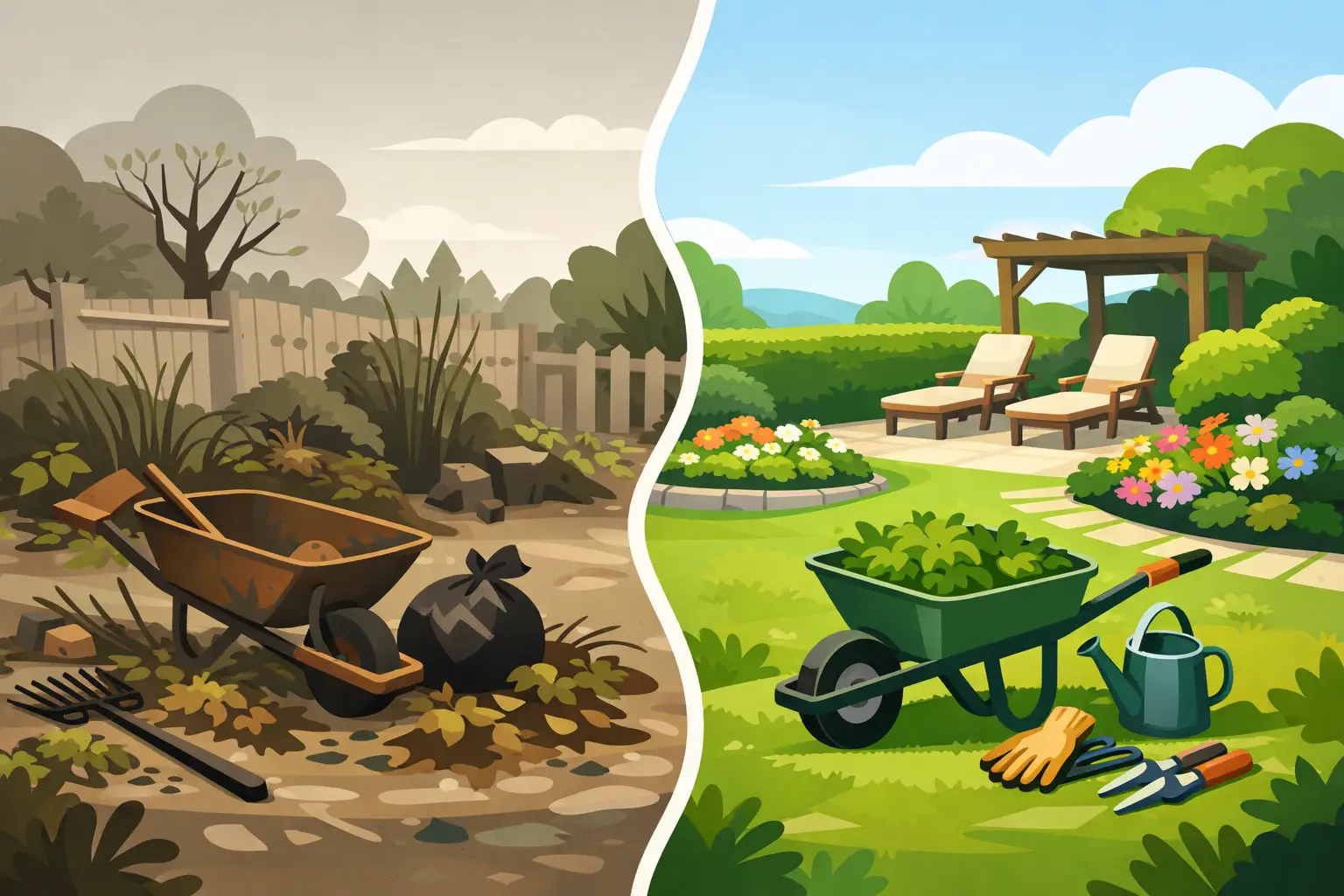
An overgrown garden rarely becomes a problem all at once. A hedge spreads over the path, weeds take hold around the edges, fallen branches collect behind the shed, and a tired lawn starts to make the whole property look neglected. A proper before and after garden cleanup changes more than the view from the street. It makes the outdoor area safer, easier to maintain and more enjoyable to use.
For Hawke’s Bay property owners, a cleanup can be the practical first step before selling, renting, building, planting or simply getting the garden back under control. The best results come from looking beyond a quick tidy-up and dealing with the issues that caused the space to become unmanageable in the first place.
What a Before and After Garden Cleanup Really Involves
The “before” is often a garden with too much competing for attention. There may be overgrown shrubs blocking windows, weeds pushing through paths, dead plants taking up valuable space, tree limbs hanging low, old stumps, uneven edges and green waste that has built up over time. On commercial sites, these problems can affect access, presentation and how well the property is perceived by customers or tenants.
The “after” should not look stripped bare or overly formal. It should look intentional. Paths should be clear, planting should have room to grow, lawn edges should be defined and the layout should suit how the property is actually used. A good cleanup reveals the garden’s useful features and creates a clear plan for anything that needs improving next.
This may include pruning and removal work, weed control, green waste removal, lawn preparation, edging, fresh planting or stump grinding. Not every property needs all of these services. The right scope depends on the condition of the site, the season, your budget and whether you want a one-off reset or an ongoing maintenance plan.
Start With Safety, Access and the Big Jobs
It is tempting to begin with the visible details, such as pulling weeds from a garden bed. In most neglected gardens, however, the biggest improvement comes from tackling the larger problems first. Overgrown vegetation, unstable branches, invasive roots and cluttered accessways can all make a property harder and less safe to use.
Low branches around driveways, gates and footpaths should be assessed before any cosmetic work begins. Trees and palms may need careful pruning to improve clearance and reduce the amount of dead material dropping into the garden. If a tree has already been removed but the stump remains, stump grinding can free up the area for lawn, planting or a new outdoor feature.
Dense, unwanted vegetation is another common issue. Clearing it properly gives you a better view of fences, boundaries, drainage points and garden beds. It also makes it easier to identify plants worth keeping. Rushing this stage can mean losing healthy established plants or leaving behind roots that quickly regrow.
For larger sections, sloping ground or areas with buried services, it pays to use an experienced contractor. Excavation and removal work need to be planned carefully, especially where machinery access is limited or the ground needs to be prepared for a new use.
The Details That Make the After Photo Work
Once the heavy clearing is done, the garden starts to take shape through the smaller finishing jobs. These are the details that make a property look cared for rather than merely cleared.
Clean, consistent edging is one of the simplest ways to lift a lawn and garden bed. It stops grass spreading into planting areas, makes mowing easier and gives the whole space a more finished appearance. Edging can be practical and understated, or it can define a stronger landscape layout where paths, lawns and beds need clearer separation.
Lawn condition also makes a major difference. A thin or patchy lawn can make even a tidy garden feel unfinished. Depending on the ground, lawn seeding and soil preparation may be a sensible option after the cleanup. This is particularly useful where old vegetation has been removed or where traffic and shade have damaged the grass. Timing matters, as fresh seed needs suitable conditions and regular watering to establish well.
Planting should be considered carefully rather than used to fill every empty space. The right plants will suit the amount of sun, soil and wind exposure on the property, while leaving enough room for mature growth. A low-maintenance planting plan is often the best choice for busy homeowners, rental properties and commercial sites. It provides colour and structure without creating another overgrown job a year later.
Before and After Garden Cleanup for Different Properties
A family home may need a safer lawn area, clearer access to the clothesline and room for children or pets to play. The priority could be removing old shrubs, repairing garden edges and making the back garden easier to maintain on weekends.
A property being prepared for sale needs a slightly different approach. Buyers notice the front boundary, driveway, entrance and outdoor living areas quickly. Pruning overgrown plants, removing rubbish, refreshing beds and defining the lawn can make the property feel well maintained before anyone steps inside. There is no need to overcapitalise on a full redesign if a focused cleanup will deliver the right lift.
For landlords and property managers, the goal is usually a tidy, durable outdoor area that tenants can manage easily. This may mean reducing high-maintenance planting, restoring accessways, removing problem trees or stumps and setting up clear lawn and garden zones.
Commercial properties need presentation as well as practicality. Entry areas, car parks, paths and boundaries should remain clear and professional. Regular garden improvement work can prevent a site from looking forgotten between major maintenance visits and helps avoid smaller issues becoming expensive jobs.
How to Keep the Result Looking Good
A garden cleanup works best when there is a realistic plan for what happens afterwards. Without one, fast-growing weeds, untrimmed hedges and lawn edges can undo much of the improvement within a season.
Start by choosing the level of upkeep that suits your time and property. Some gardens only need seasonal pruning, occasional weed management and regular mowing. Others, particularly larger sites or gardens with established trees and dense planting, benefit from scheduled maintenance. The aim is not to keep every corner perfectly manicured. It is to manage growth before it affects access, plant health or the appearance of the property.
Mulch can help reduce weeds and hold moisture in garden beds, but it should be applied properly and kept clear of plant stems. Pruning should also be timed to the plant and its purpose. A hard cut-back may be useful for an overgrown shrub, while a light, selective prune is better for keeping a healthy hedge dense and tidy.
It is also worth checking drainage after clearing. Leaves, soil and roots can hide blocked channels or areas where water pools. Addressing these issues early protects lawns, paths and planted areas, particularly after heavy rain.
Choosing the Right Level of Help
A small garden can often be improved with a weekend of weeding, trimming and green waste removal. But when there are mature trees, substantial vegetation, old stumps, difficult access or a complete change of layout involved, professional help can save time and prevent costly mistakes.
A clear site visit and quote should identify what will be removed, what can be retained and how the finished space will function. Ask whether green waste will be taken away, whether roots or stumps need separate treatment, and whether the work includes final tidying, edging or lawn preparation. These details make a big difference to the final result.
Kandu Gardens approaches cleanup work as the start of a better-functioning outdoor space, not just a load of green waste to remove. Whether the job is a modest front garden refresh or a heavily overgrown section, practical planning and careful finishing help the improvement last.
A garden does not need to be perfect to be useful and welcoming. It simply needs a clear purpose, healthy growth and enough ongoing care that the hard work is still visible months later. Start with the problems that are getting in the way, then build an outdoor space you will be glad to come home to.