
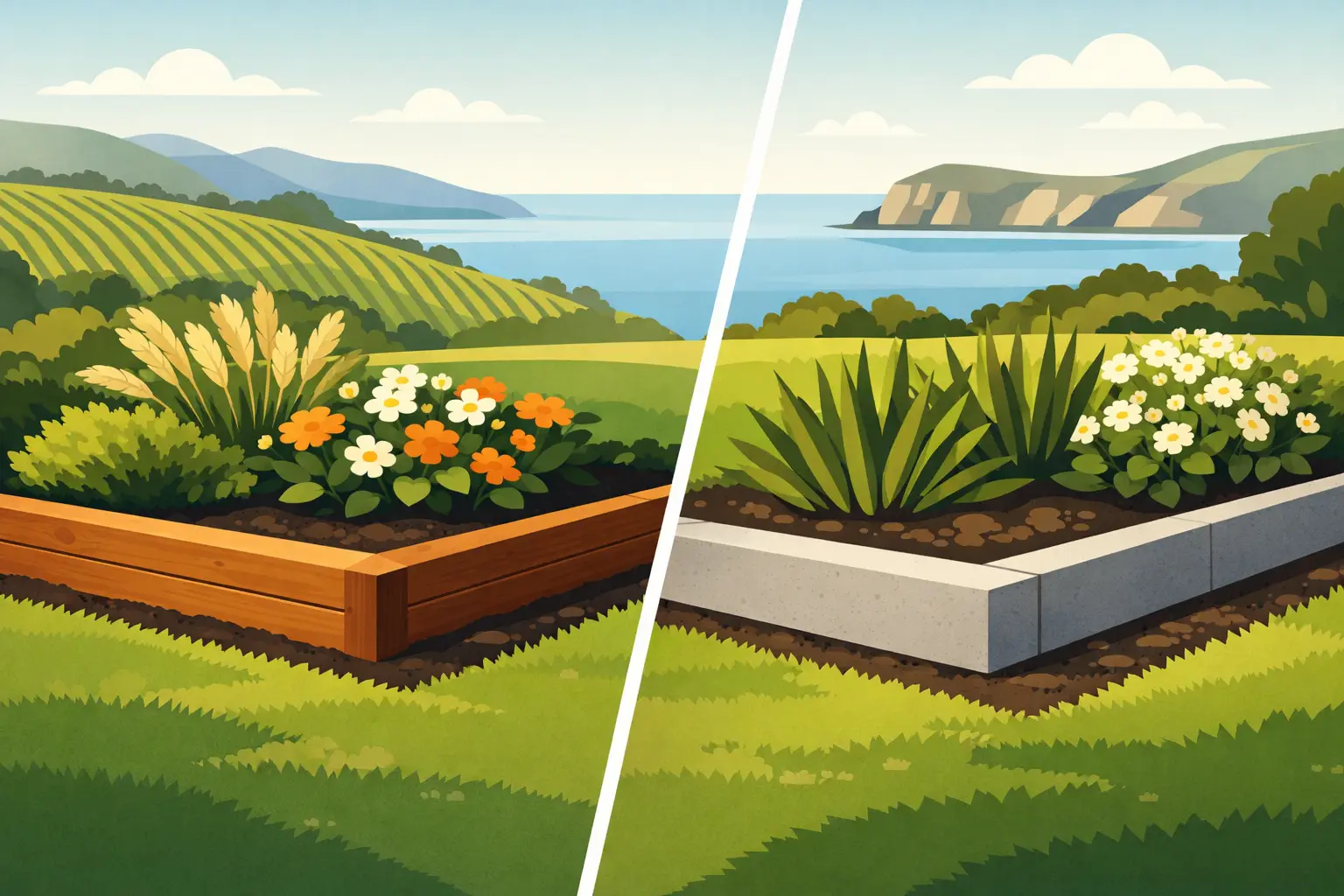
A clean garden edge can make more difference than a new plant or fresh mulch. It keeps lawn from creeping into beds, holds soil where it belongs and gives paths, gardens and outdoor areas a finished look. When weighing up timber vs concrete edging, the best choice comes down to how you use the space, the look you want and how much maintenance you are prepared to take on.
For some properties, timber is the practical, natural-looking answer. For others, concrete is the better long-term investment, particularly around high-use paths, driveways and commercial landscapes. Both can look excellent when installed properly. The key is matching the material to the job rather than choosing on price alone.
Why edging is worth getting right
Edging is not just a decorative line around a garden bed. It creates a physical barrier between lawn, soil, stones and mulch. That means less mess after rain, fewer weeds spreading across boundaries and easier mowing around the garden.
Well-planned edging also gives a property more structure. It can define a front entrance, shape a planting area, contain a gravel path or separate a lawn from a paved entertaining space. On sloping sites, it can help retain small changes in level before they become washed-out edges and uneven beds.
Poorly installed edging tends to shift, crack, rot or sit at different heights within a few seasons. A tidy result starts with correct excavation, a firm base and clean alignment – details that make the finished garden look purposeful rather than temporary.
Timber vs concrete edging: the main differences
Timber and concrete solve the same problem in very different ways. Timber brings warmth and flexibility. Concrete brings strength, permanence and a crisp architectural finish.
Timber edging is commonly made from treated pine, hardwood sleepers or purpose-made garden edging. It works especially well in planted gardens, vegetable beds and relaxed landscape designs where a natural material suits the home. It is relatively quick to install and can be cut to suit curves, angles and irregular garden shapes.
Concrete edging may be poured in place, installed as precast kerbs or built with concrete blocks, depending on the design. It is best suited to straight, defined lines, formal gardens, lawn borders and areas that receive regular foot traffic or mowing. It can also be shaped into curves by an experienced installer.
Neither material is automatically better. A timber edge around a cottage-style garden can look far more at home than a hard concrete kerb. Equally, a thin timber border beside a busy driveway may need replacing long before a concrete edge would.
When timber edging is the right choice
Timber is a strong option when the garden needs a softer, more natural finish. It sits comfortably beside timber decks, bark mulch, native planting and informal paths. For homeowners refreshing an overgrown garden without rebuilding the entire landscape, it can deliver a noticeable improvement without the cost of extensive hardscaping.
It is also useful where levels need a modest amount of support. A properly anchored sleeper edge can retain a shallow raised bed, create a practical boundary for planting or help level out a small section of garden. Taller retaining work is a different job and should be designed for the load, drainage and site conditions involved.
The main trade-off is lifespan. Even quality treated timber is exposed to moisture, soil organisms, sun and movement in the ground. In a dry, hot Hawke’s Bay summer, timber can shrink and weather. Through wet periods, areas that stay damp can deteriorate faster. The expected life depends on timber type, drainage, ground contact and installation quality, but timber should be viewed as a material that will eventually need attention or replacement.
Choose timber if you want a warmer look, have curved or changing garden beds, or prefer a cost-effective improvement that can be updated later. It is particularly effective for planting-focused gardens where the edging should support the landscape rather than become the main visual feature.
Timber needs good drainage and secure fixing
The biggest mistake with timber edging is placing it directly into poorly drained soil with no proper base or support. Water sits against the timber, the edge moves over time and the finished line loses its shape.
A sound installation begins with excavation and a level base. Posts, stakes or suitable fixings keep the timber secure, while backfilling and compacting reduce movement. It is also worth considering where irrigation lands, as constantly wet edges will not last as well as those that can drain freely.
When concrete edging makes more sense
Concrete edging is the better fit when durability and low maintenance matter most. Once installed on a prepared base, it gives a solid boundary that resists mower wheels, foot traffic, shifting mulch and the regular movement that can affect lighter materials.
It is a practical choice around driveways, front lawns, formal paths, bin areas and commercial properties where the landscape needs to stay neat with minimal ongoing repairs. Concrete can create a mower strip as well, allowing wheels to run close to the edge and reducing the need for line trimming.
Its clean finish works well with modern homes, exposed aggregate paths, paved patios and structured planting schemes. It can be left in a natural concrete finish, coloured or designed to complement nearby paving and hardscape features. A narrow concrete edge can make even a simple lawn and garden bed feel more organised.
The upfront cost is generally higher than timber. Concrete requires careful set-out, excavation, base preparation and finishing. Changes are also harder later. Moving a timber board is manageable; altering a poured concrete edge usually involves cutting, breaking out and disposing of material.
Choose concrete when the border needs to handle regular use, maintain a sharp line for years or connect with other permanent outdoor elements. It is often the more economical choice over the long term if replacing timber every few years would become frustrating or costly.
Concrete is permanent, but it is not maintenance-free
Concrete is tough, not indestructible. Ground movement, inadequate preparation, tree roots and poor drainage can still lead to cracking or uneven sections. Water needs somewhere to go, especially where edging meets paving, garden beds or retaining areas.
A professional installation considers the finished heights of lawn, soil and paths before the concrete goes in. If the edge sits too high, mowing becomes awkward. If it sits too low, mulch and soil can wash across it. These small details determine whether the edge works as intended every day.
Cost, upkeep and long-term value
The most affordable edging option is not always the one with the lowest installation price. Timber usually costs less initially, particularly for straightforward garden borders. It can be a sensible way to define several beds within a renovation budget.
Concrete costs more to install but generally demands less attention over its life. For a large lawn edge, high-traffic area or commercial site, the reduced maintenance can justify the higher starting cost. It also adds a sense of permanence that may support kerb appeal and make garden maintenance easier for future owners or tenants.
Upkeep is different for each material. Timber benefits from occasional checks for loose stakes, rot, warping and soil build-up. Concrete should be inspected for cracks, subsidence and areas where roots or water are putting pressure on the edge. In both cases, keeping drainage clear and avoiding repeated impacts from vehicles or heavy equipment will extend the life of the work.
Match the edge to the rest of your property
The best edging material should make sense with the wider landscape. A new edge may need to work alongside existing paving, fences, decks, drainage, trees and garden levels. It should also suit the amount of maintenance the property will realistically receive.
For a rental property or commercial frontage, concrete may offer the dependable, low-fuss result that property managers need. For a family home with evolving garden beds, timber may allow more flexibility as planting changes over time. For many properties, the answer is a combination: concrete around paths and lawn areas, with timber used in softer planting zones.
Before work begins, consider the line of the edge from the most visible viewpoints. Look from the street, the outdoor living area and the main access path. Gentle curves need to be deliberate, while straight edges need to be genuinely straight. A well-set-out border makes maintenance easier and gives every planted area a more polished finish.
Kandu Gardens can assess the practical demands of your site, from soil levels and drainage to the style of your home and garden. The right edge should not only look good on installation day – it should keep the whole outdoor space easier to use, mow and enjoy in the seasons ahead.