
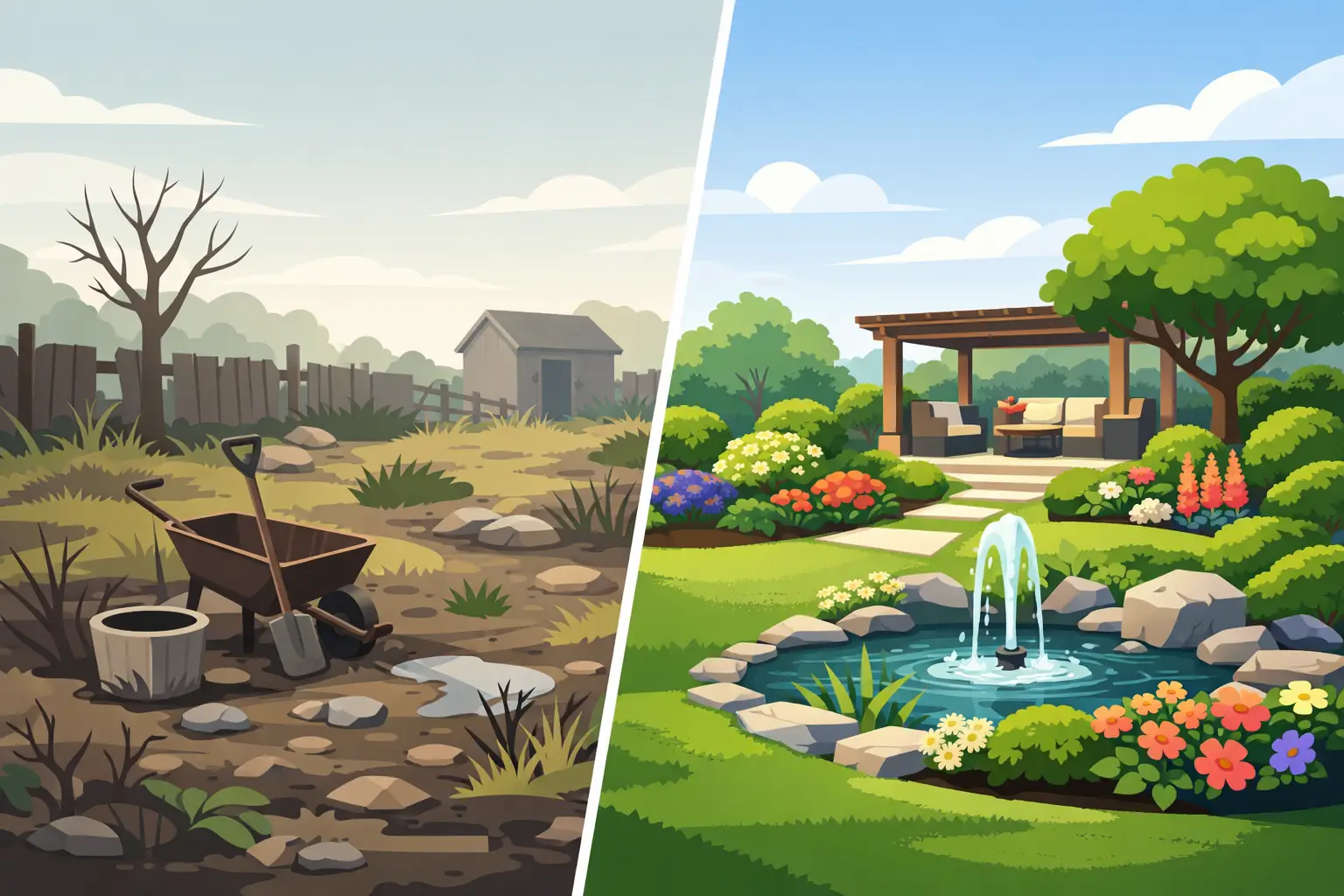
A neglected garden rarely has just one problem. The lawn may be patchy, paths may feel awkward, trees may block light and old garden beds may have become a home for weeds. A successful before and after garden transformation deals with the whole picture, turning an outdoor area into a space that looks cared for, works properly and is realistic to maintain.
For homeowners, the change can mean a more welcoming entrance, a usable backyard and less time spent fighting overgrowth each weekend. For commercial properties, it can improve first impressions, access and the standard of the site for tenants, staff and visitors. The best results do not come from adding more plants at random. They come from fixing the practical issues first, then building a garden around how the property is actually used.
Start with the problems hiding in plain sight
The “before” stage is not only about appearance. It is the time to identify what is making the garden hard to use or hard to keep tidy. Overgrown shrubs can narrow walkways and hide sightlines. Tree roots, old stumps and uneven ground can limit where new lawns, edging or outdoor structures can go. Poor drainage may leave wet patches that turn into mud through winter.
A clear site assessment helps set priorities. Some properties need a full clean-out before any design work can start. Others have a good layout but need defined garden edges, fresh planting and lawn repair to look finished again. There is no value in laying new turf over compacted ground, or planting a garden bed where water regularly pools.
It is also worth considering the property from the street. A tired front garden can make an otherwise well-kept home look uncared for. In a commercial setting, untidy vegetation around entry points, car parks or footpaths can create a poor first impression and add unnecessary maintenance work later.
Plan the transformation around everyday use
A garden should suit the people who use it. A family may need open lawn for children, clear routes between the house and washing line, and planting that can handle a stray football. A homeowner preparing to sell may place more value on a clean front boundary, healthy lawn and simple planting with strong kerb appeal. A commercial property manager may need low-maintenance beds, safe access and regular upkeep that does not interrupt business activity.
This is where practical design matters. Rather than filling every corner with planting, decide what each area needs to do. An outdoor seating space needs stable ground and easy access. A bin area should be functional, screened where appropriate and simple to clean around. Garden beds should be sized so they can be weeded and maintained without becoming another burden.
Sun, wind and water should guide the plan too. Hawke’s Bay properties can experience dry conditions, so planting choices and soil preparation need to support long-term water efficiency. In shady areas, lawn may struggle while shade-tolerant planting will perform better. In exposed spots, a mix of suitable shrubs, carefully positioned trees and durable edging can help create a more settled space.
Keep the right trees, remove the rest
Trees add shade, privacy and character, but an unmanaged tree can take over a garden. Low branches can block paths, deadwood can become a safety concern and dense growth can prevent lawn and smaller plants from getting enough light. Professional pruning can reshape a tree without removing its value from the property.
Sometimes removal is the sensible option, particularly when a tree is unhealthy, poorly positioned or damaging surrounding areas. Stump grinding then gives the space a proper fresh start. Leaving an old stump in place can interfere with mowing, attract pests and make future landscaping more difficult.
The right decision depends on the tree, its condition and the plans for the area around it. Good garden work is not about removing everything. It is about retaining what improves the space and clearing what holds it back.
The groundwork makes the after photo last
The most striking after photos often show lush lawn, crisp edging and tidy new planting. What they do not show is the preparation underneath. This is usually the part that determines whether the garden still looks good a year later.
Ground may need levelling, excavation or soil improvement before new features are installed. Compacted soil can prevent water from soaking in and make it difficult for roots to establish. Poorly graded areas can send water towards buildings or leave a lawn uneven and difficult to mow. Addressing these issues early avoids expensive rework after the attractive finishing touches are in place.
Edging is a small detail with a big effect. It separates lawn from garden beds, holds mulch where it belongs and gives the entire space a cleaner outline. It also makes ongoing maintenance easier, particularly around curved beds, paths and boundary planting. A well-installed edge helps a garden look intentional rather than unfinished.
For lawns, the choice between seeding and other options depends on timing, budget and site conditions. Lawn seeding can be a cost-effective way to establish a new area, but it needs proper soil preparation, watering and patience while it establishes. If the ground is shaded, compacted or regularly used, the lawn plan needs to account for those pressures rather than promise a result that will not hold up.
Plant for structure, not just colour
New plants can quickly improve a bare or tired garden, but a good planting plan is more than a row of flowers. It should create shape, texture and year-round interest while allowing room for plants to mature. Planting too closely may look full on day one, then become crowded and demanding within a few seasons.
A balanced garden often uses taller plants to provide privacy or soften boundaries, medium planting to create body, and lower plants to define edges. Mulch helps retain moisture, reduce weed growth and give beds a neat finished appearance. The varieties chosen should suit the available sun, soil and watering level, not simply what looks appealing at the nursery.
For clients who prefer a lower-maintenance garden, fewer plant varieties with repeat planting can create a tidy, consistent result. For those who enjoy gardening, a more varied layout may be worthwhile. Both can look excellent when the garden has a clear structure and enough room for care and growth.
What creates a convincing before and after garden transformation?
The strongest transformations are usually built from several coordinated improvements. Removing overgrown vegetation exposes the usable space. Tree maintenance improves light and safety. Ground preparation creates a stable base. New lawn, planting, edging and practical hardscape elements then make the garden feel complete.
It is tempting to focus on the most visible change, such as a new garden bed or freshly seeded lawn. Yet the result is more convincing when access, drainage, boundaries and maintenance have been considered as well. A neat bin area, properly defined path or cleared side yard can make daily life easier even if it is not the feature that first catches the eye.
This is also why staged work can be a smart option. If the garden needs significant clearing or excavation, start there. Once the site is safe and workable, the next stage can focus on lawn, planting and finishing details. Staging can spread costs and allow decisions to be made with a clearer view of the space, although it may mean living with a partly completed area for a period.
Maintain the result with a simple routine
A transformed garden does not need constant attention, but it does need regular care. Early weeding, seasonal pruning and checking irrigation or drainage after heavy rain prevent small jobs from turning into larger ones. Lawns benefit from consistent mowing and feeding when needed, while young plants need support as they establish.
For busy homeowners and commercial managers, ongoing garden improvement work can keep the property from slipping back into the same cycle of overgrowth. Regular maintenance is particularly useful where trees, palms, large boundaries or high-visibility entry areas need professional attention.
Kandu Gardens approaches each project with the same practical aim: create an outdoor space that looks polished, functions better and is built around the way the property is used. The best place to begin is often simple – stand at the gate, look at what gets in the way every day, and make that the first thing you improve.