
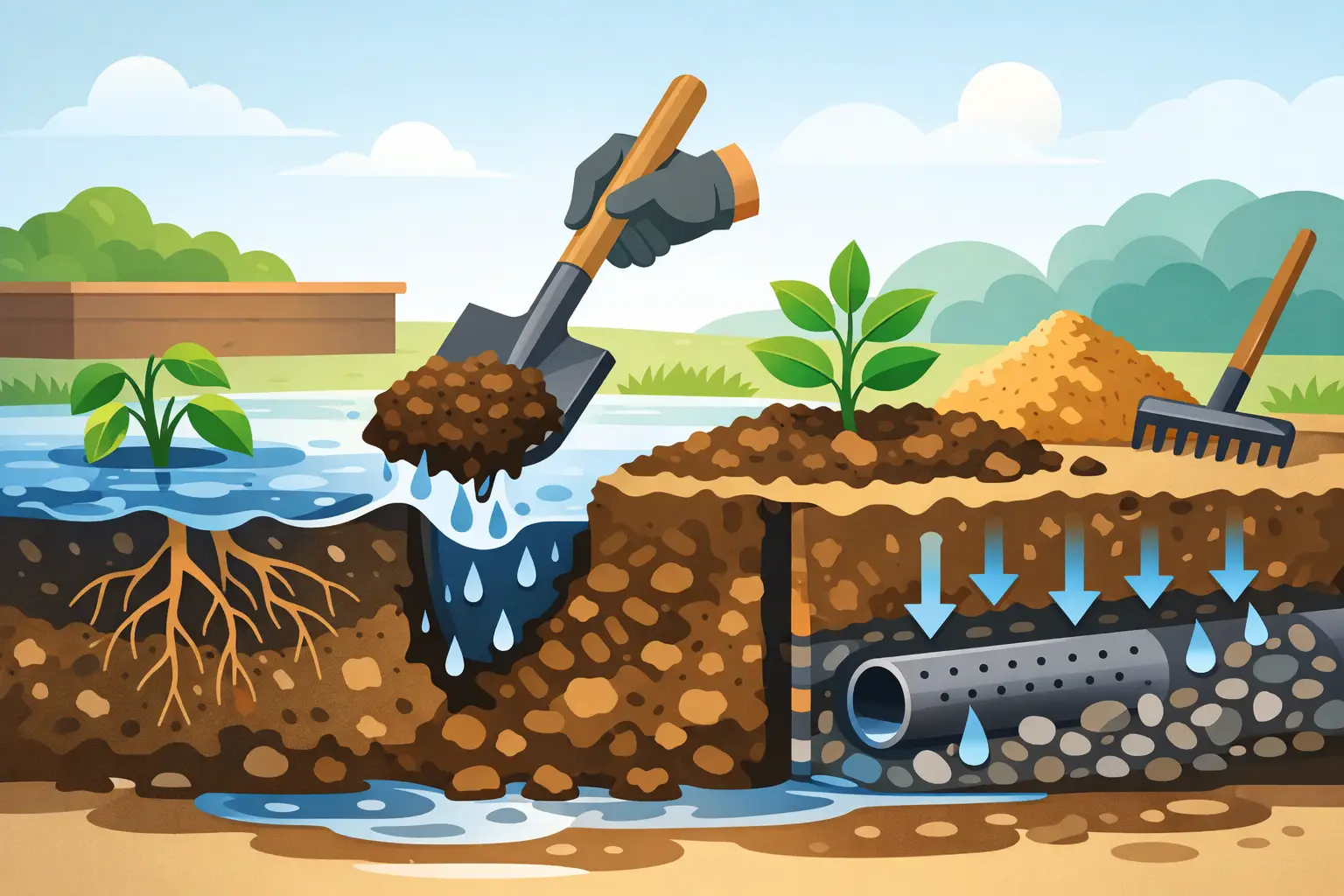
A garden that stays wet for days after rain is more than an inconvenience. It can turn lawns patchy, leave plants yellowing, make paths slippery and create muddy areas that are difficult to use. Knowing how to fix waterlogged garden soil starts with finding out where the water is coming from and giving it a reliable place to go.
In many properties, the problem is not simply heavy rain. Waterlogged soil is usually caused by a combination of compacted ground, poor drainage, low spots in the section, hard surfaces directing runoff into garden beds, or soil that contains too much clay. The right solution depends on the cause, so it pays to assess the whole area before adding soil or planting anything new.
Work out why the soil is holding water
Start by checking the garden a day or two after rain. If puddles remain on the surface, water is not draining through the soil quickly enough. If the ground looks dry on top but feels soft and soggy underneath, compaction or a dense clay layer may be trapping water below.
Look for clues around the property. Downpipes that discharge near garden beds, driveways sloping towards the lawn, blocked drains and low points beside retaining walls can all send large volumes of water into one area. On established sections, roots from removed trees, old construction rubble or buried hard layers can also interfere with drainage.
A quick soil test can help. Dig a hole about 30 centimetres deep, fill it with water and let it drain completely. Fill it again and see how long it takes to empty. If water is still sitting in the hole after several hours, the soil needs improvement or drainage work. This test will not identify every issue, but it gives a useful indication of how freely water can move through the ground.
It is also worth checking whether the waterlogging is seasonal or constant. A garden that struggles only through a wet winter may benefit from soil improvement and better surface drainage. An area that stays wet all year may need more substantial excavation, drainage channels or a redesigned garden layout.
How to fix waterlogged garden soil at the source
The best fix is usually a combination of improving the soil and managing where water flows. Simply spreading a layer of topsoil over a soggy lawn or garden bed can hide the issue for a short time, but it will not solve water sitting underneath.
Relieve compaction carefully
Compacted soil has very few air spaces, so water cannot soak in properly. This is common in lawns that receive regular foot traffic, around building sites and in gardens where machinery has worked over wet ground.
For a lawn, core aeration can make an immediate difference. A core aerator removes small plugs of soil, allowing air, moisture and roots to move deeper into the ground. Aerate when the soil is moist but not saturated. Working on very wet soil can compact it further and damage the lawn surface.
In garden beds, loosen the soil with a garden fork rather than aggressively turning it over. Push the fork in deeply and gently rock it back and forth to open channels without bringing poor subsoil to the surface. This is especially useful around established plants, where heavy digging can damage roots.
Improve clay soil with organic matter
Clay soil holds nutrients well, but it can become dense and slow-draining when wet. The goal is not to remove all clay, but to improve its structure over time. Work well-rotted compost, aged manure, leaf mould or fine organic mulch into the top layer of beds. These materials help create spaces for air and water while supporting healthier soil life.
Avoid mixing a small amount of sand into heavy clay. It can create a hard, concrete-like texture rather than improving drainage. Sand can be useful where it is part of a properly planned soil blend, but it needs to be added in significant volume and combined with organic material. For most home gardens, compost is the safer and more effective starting point.
Mulch also helps, provided it is used correctly. Keep it around 50 to 75 millimetres deep and leave a gap around plant stems. Mulch protects the soil surface from compaction caused by rain, but a thick, wet layer pushed against stems can encourage rot.
Redirect roof and surface runoff
Water from roofs can overwhelm a garden bed in a single storm. Check that gutters are clear and that downpipes discharge into suitable stormwater systems, drainage lines or areas designed to absorb runoff. Do not direct a downpipe straight onto a lawn or beside the house just because it is convenient.
Hard surfaces need attention too. Patios, driveways and paths should fall away from buildings and avoid channeling water into planting areas. In some cases, a small spoon drain, channel drain or shallow swale can redirect water without making the garden look overly engineered.
A swale is a gently shaped, shallow channel that carries water across the ground at a controlled pace. It can be planted and blended into the landscape, making it a practical option where there is room and the fall of the land allows it. This approach suits many larger gardens, while smaller yards may need a more compact drainage solution.
Install drainage where soil improvement is not enough
If water consistently pools in the same place, subsurface drainage may be needed. A French drain is one common option. It involves a gravel-filled trench with a perforated pipe that collects water and carries it towards a lawful discharge point. The pipe needs the correct fall to work properly, and the outlet must not create a problem for a neighbour, footpath or another part of the property.
Drainage work is not a one-size-fits-all job. Installing a pipe without enough slope can leave water sitting in the trench. Sending water into an unsuitable area can create erosion, undermine paving or cause damp problems near a building. Before digging, consider existing services, stormwater connections, boundary levels and where the water will finish up.
For badly affected lawns, it may be necessary to remove the damaged turf, regrade the surface and rebuild it with suitable topsoil before reseeding. This is more involved than aeration, but it provides a lasting result when the lawn has been sitting wet for years.
Raised garden beds are another sensible option where drainage improvements are limited by the site. Raising the growing area above wet ground gives plant roots access to freer-draining soil. This will not fix drainage around the property, but it can make an unproductive part of the garden useful again.
Choose plants that suit the conditions
Even after drainage is improved, some parts of the garden may remain naturally damp. Rather than forcing drought-loving plants into those spaces, choose varieties that can cope with moisture while the soil settles.
Lomandra, carex, dietes, liriope and certain native grasses can handle more moisture than many traditional border plants. In suitable climates, some flax varieties and moisture-tolerant shrubs may also work well. Plant selection should still consider sun, wind, frost and the amount of water the area receives in summer.
Keep plants that dislike wet feet in raised sections or well-drained beds. Rosemary, lavender, many succulents and Mediterranean-style plants often struggle in waterlogged ground, particularly through cooler months. Moving them to a sunnier, higher and drier location can be more successful than trying to improve one small wet patch around each plant.
Protect the garden while it recovers
Try to keep heavy foot traffic, wheelbarrows and machinery off saturated soil. Each pass can squeeze out more air and worsen compaction. If access is needed, use boards to spread the weight or wait until the ground has dried enough to support it.
Do not fertilise heavily when plants are stressed by wet conditions. Their roots may not be able to take up nutrients properly, and excess fertiliser can wash away. Remove badly rotted plant material, clear blocked surface drains and give the soil time to dry between rain events.
If you have standing water near foundations, retaining walls, paved areas or underground services, treat it as more than a garden issue. Ongoing moisture can affect structures and create expensive repairs if left unchecked.
A well-drained garden does not need to be bone dry. Good soil holds enough moisture for plants while allowing excess water to move away. When persistent wet areas are reshaped, drained and replanted properly, the result is a garden that is easier to maintain, healthier for plants and far more enjoyable to use. For larger drainage, excavation or garden restoration work, a practical site assessment can save time and prevent a temporary fix becoming a repeat problem.