
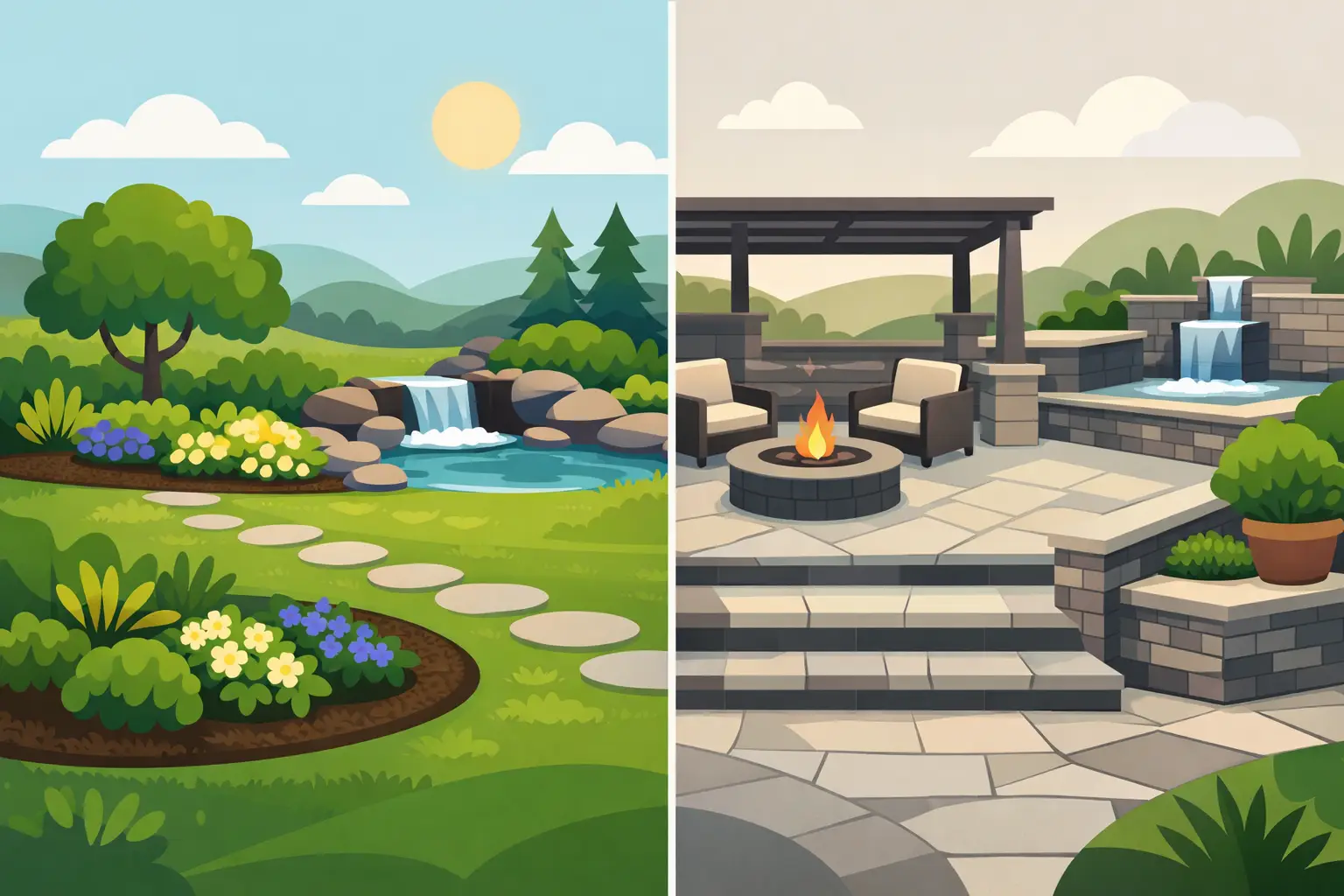
A tired lawn, muddy track to the clothesline and an overgrown boundary do not all need the same fix. Understanding the landscaping vs hardscaping differences helps you spend your budget where it will make the biggest difference to how your property looks, drains and functions.
For most outdoor projects, the strongest result comes from combining both. Soft planting brings life, shade and colour, while solid built features create access, structure and spaces that stand up to daily use. The right balance depends on your site, your maintenance expectations and what you need the area to do.
What is landscaping?
Landscaping generally refers to the living, growing parts of an outdoor space. It includes lawns, garden beds, trees, shrubs, hedges, plants, mulch and soil preparation. It can also involve clearing overgrown areas, shaping garden beds, improving drainage around planting zones and creating a layout that suits the property.
Good landscaping does more than make a section look greener. Well-chosen plants can soften a fence line, screen a neighbouring property, provide shade in a hot spot or make a front entrance feel cared for. Lawn seeding can turn bare ground into a usable area, while clear edging stops grass from creeping into garden beds and gives the whole space a sharper finish.
Landscaping changes over time. Plants establish, fill out and need pruning, feeding and watering. That is part of its appeal, but it also means the work should suit the amount of ongoing care you are willing to give it. A large garden with thirsty plants may look impressive at first, yet become hard work if it does not match your schedule or site conditions.
Common landscaping work
Typical landscaping work includes new garden creation, planting, lawn preparation and seeding, pruning, hedge work, tree and palm maintenance, mulching and removing unwanted vegetation. Stump grinding often supports landscaping too, particularly when an old stump is preventing a new lawn, garden bed or planting plan from taking shape.
The focus is on healthy growth and a tidy, balanced appearance. Soil quality, sunlight, wind exposure and drainage all matter. A plant that thrives in one corner of a property may struggle a few metres away if the ground stays wet or receives harsh afternoon sun.
What is hardscaping?
Hardscaping is the non-living, built part of an outdoor area. These are the permanent or semi-permanent features that provide shape, access and practical use. Think paths, patios, paving, retaining edges, steps, garden borders, gravel areas, driveways, drainage features and functional structures such as bin areas.
Where landscaping brings softness, hardscaping creates order. A properly formed path prevents people from wearing a muddy line through the lawn. Defined edging keeps soil and mulch contained. A level paved or gravelled space can turn an awkward patch beside the house into somewhere for bins, storage or outdoor seating.
Hardscape work normally requires more ground preparation than people expect. The visible pavers, gravel or edging are only part of the job. Excavation, base preparation, compaction and correct levels determine whether the finished area stays stable and drains properly. Skipping these steps can lead to puddling, movement, uneven surfaces and water running towards the house.
Common hardscaping work
Hardscaping can range from simple steel or timber edging through to excavation and construction of a usable outdoor feature. Gravel paths, paved accessways, retaining solutions and practical bin enclosures are all examples. The materials and construction method should suit the load, slope and amount of traffic the area receives.
For example, a decorative gravel strip may work well along a low-traffic garden edge, but it may not be the best choice for a frequently used path if gravel is likely to move underfoot. A built surface near an entrance needs safe levels and drainage, not just a neat appearance.
Landscaping vs hardscaping differences at a glance
The clearest difference is that landscaping is alive and hardscaping is built. Landscaping needs seasonal care and grows over time. Hardscaping is designed to hold its shape and support daily activity, although it still needs occasional cleaning, repairs and checks for movement or drainage issues.
Their purpose is different too. Landscaping is usually used to improve appearance, privacy, shade, biodiversity and the feel of a property. Hardscaping is more about movement, boundaries, access, drainage and creating reliable spaces for people, vehicles or equipment.
Cost and timing can differ as well. A hardscape feature may have a higher upfront cost because of excavation, materials and construction, but it can solve a long-running practical problem. Landscaping costs can be spread across stages, with a property improved bed by bed or season by season. However, plant care should be allowed for after installation.
Neither option is automatically better. Installing a large paved area may reduce mowing, but it can also increase heat around the home and reduce permeable ground. Filling every spare space with planting can look lush, but may create ongoing maintenance and leave no clear route for bins, wheelbarrows or guests. A thoughtful plan avoids both extremes.
How the two work together
The best gardens rarely separate soft and hard elements completely. A path needs planting beside it to feel settled into the landscape. A new garden bed needs clean edging to stay tidy and make mowing easier. A gravel area may need screening plants to soften its appearance, while a tree can benefit from a properly defined mulch ring that keeps mowers away from its trunk.
Consider a front yard with poor access and little street appeal. Hardscaping might establish a stable path from the footpath or driveway to the front door, plus edging that defines the lawn. Landscaping can then add a fresh lawn, low-maintenance planting and a feature tree. The result is easier to use, easier to maintain and more welcoming from the street.
The same thinking applies to commercial sites. Clear access routes, contained rubbish areas and neat boundaries make a property feel organised. Durable built elements handle traffic and service requirements, while maintained planting helps create a professional first impression for customers, tenants and visitors.
Choosing the right starting point for your property
Start with the problem rather than the product. If water collects beside the house, access is muddy, a slope is unstable or bins are constantly on display, a hardscaping or excavation solution may need to come first. Planting around an unresolved drainage or access issue will not fix it.
If the site feels bare, exposed or untidy but already has sound paths and usable surfaces, landscaping may be the priority. Removing overgrown vegetation, reshaping beds, repairing lawn areas and adding plants suited to the conditions can make an immediate visual difference.
It is also worth considering the order of work. Heavy excavation, stump removal and construction are usually best completed before new lawns or delicate planting go in. There is little value in laying fresh turf or seeding a lawn only to drive machinery across it for a later path or drainage job.
For properties with limited space, every element needs to earn its place. A narrow side yard may need a practical path first, with slim planting along the fence rather than a deep garden bed. A larger backyard may have room for a patio, lawn and layered garden borders, but the layout should still allow easy maintenance and drainage.
Plan for maintenance, not just the finished photo
A polished outdoor area stays that way when its design suits real life. Choose plants that match the conditions and the level of care you can provide. Allow enough room to mow, prune and access garden beds. Build paths and edges that make routine jobs easier instead of creating awkward corners that collect weeds and debris.
Hardscaping should also be designed for the way you use the property. Consider where water will go in heavy rain, whether a surface needs to carry a wheelbarrow or vehicle, and how easily it can be cleaned. Good workmanship is often most visible years later, when surfaces remain level, edges stay defined and the garden continues to grow well around them.
A clear on-site assessment can help turn scattered ideas into a practical sequence of work. Kandu Gardens can look at the condition of your grounds, the challenges underfoot and the finish you want, then provide a tailored approach that puts the right foundations in place first.
The goal is not simply more plants or more paving. It is an outdoor space that feels cared for, works properly in every season and gives you confidence each time you come home or welcome someone onto the property.