
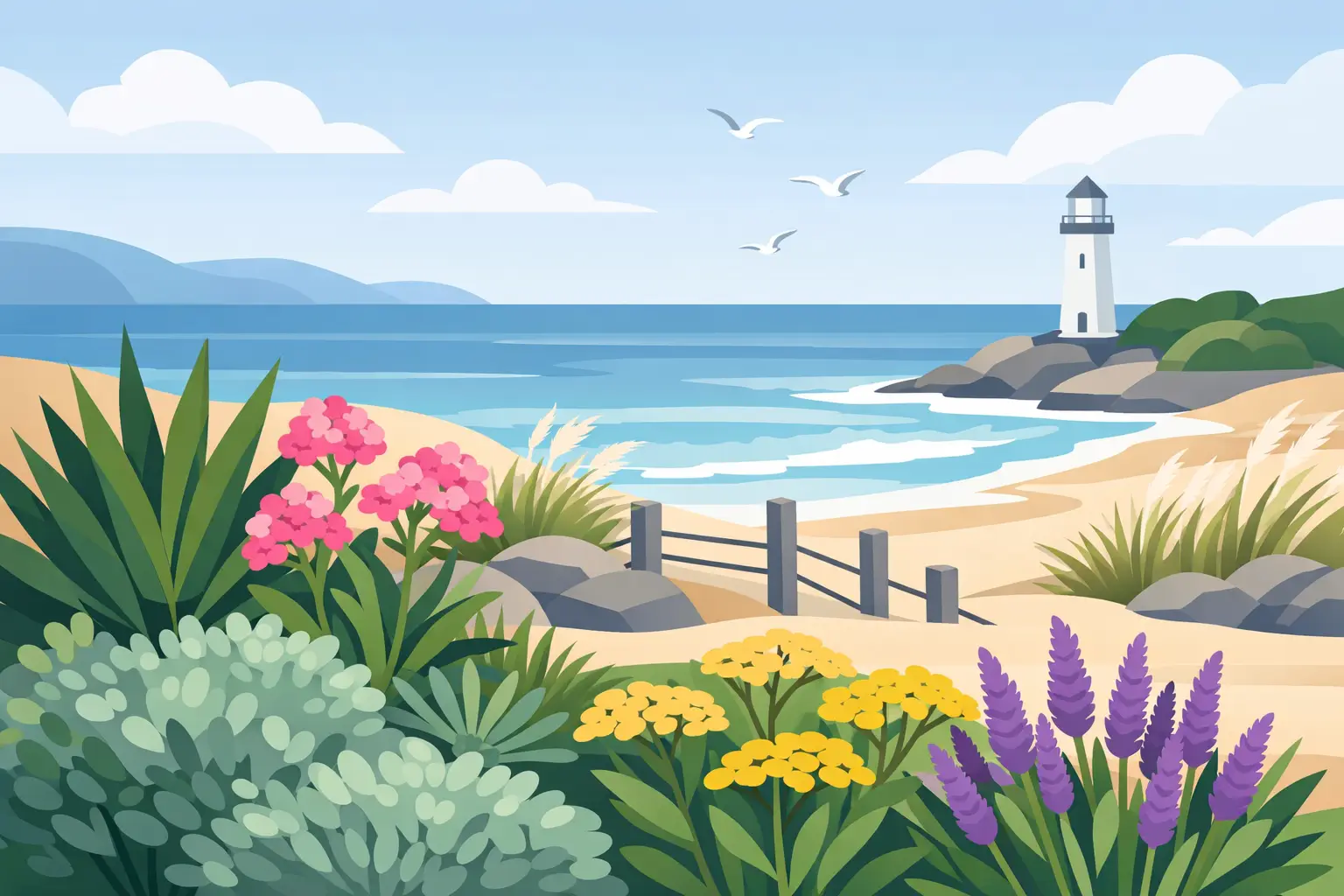
A garden near the coast can look brilliant one month and badly battered the next. Salt-laden wind, sandy soil, strong sun and dry spells can all wear plants down fast. That is why choosing the best plants for coastal gardens is less about following trends and more about picking varieties that can genuinely handle the conditions on your site.
In Hawke’s Bay and other exposed coastal areas, the right plant selection saves time, money and ongoing frustration. A garden that suits the location will establish faster, hold its shape better and need less replacing after rough weather. It also gives you a cleaner, more reliable result if you are aiming for tidy street appeal or a low-fuss outdoor space around a home or commercial property.
What makes coastal gardens harder to plant
Coastal sites usually ask more of a plant than inland gardens do. Wind is often the biggest issue. It strips moisture from leaves, snaps soft growth and can leave plants looking burnt even when the soil is still damp. Salt carried in the air settles on foliage and affects plants that would otherwise perform well in a sunny spot.
Soil is another factor. Many coastal properties have sandy ground that drains quickly and does not hold nutrients for long. That can be useful in winter, because roots are less likely to sit wet, but it also means new planting can dry out sooner than expected. Add reflected heat from paving, fences or light-coloured walls and some areas become very tough planting zones.
That does not mean a coastal garden has to be sparse or plain. It just means the planting plan needs to be practical. Shelter, spacing, mulch and plant choice all matter.
Best plants for coastal gardens that earn their keep
The best-performing coastal gardens usually mix structure plants, flowering shrubs, groundcovers and grasses. That way the space still looks full and balanced even when conditions turn rough.
Lomandra
Lomandra is one of the most reliable choices for coastal planting. It copes well with wind, dry periods and poorer soils, and it keeps a neat, strappy form without demanding much attention. It works well along driveways, around letterboxes, beside paths and in commercial frontage plantings where a tidy finish matters.
There are a number of varieties, from compact forms to larger clumping types. If you want a clean, modern look with low maintenance, this is a strong option.
Westringia
Westringia is a standout coastal shrub because it handles salt wind and pruning better than many softer shrubs. Its grey-green foliage suits seaside settings and the small flowers add colour without making the plant look messy.
It can be clipped into a hedge, used as an informal border or planted in repeated groups for a structured layout. For property owners who want something dependable and presentable year-round, westringia is hard to beat.
Correa
Correa is a practical native shrub for exposed sites. It tolerates coastal conditions well and brings a softer, more natural look than some tightly clipped plants. The bell-shaped flowers are useful for birds and the foliage generally holds up well in wind.
It is a good choice if you want a garden that feels relaxed but still intentional. Some forms stay compact, while others spread wider, so placement matters.
Coastal rosemary
Despite the name, coastal rosemary is not a true rosemary, but it is very useful in seaside gardens. It forms a dense, mounding shrub with fine foliage and small white flowers. It is especially good for slopes, edges and areas where you need a plant to soften hard lines.
This plant responds well to trimming and handles exposed positions better than many ornamental shrubs. It is often used in gardens that need to look polished without becoming high-maintenance.
Agapanthus
Agapanthus remains popular in coastal areas for a reason. It is tough, copes with dry spells once established and produces reliable summer flowers. It works well in mass plantings and can suit long boundaries, roadside edges and difficult strips where other plants struggle.
That said, it does have trade-offs. In some areas it can spread aggressively and become harder to manage over time. If you want the look without the headache, choose sterile or better-behaved varieties and keep it maintained.
Phormium
Phormium, or New Zealand flax, brings strong form and colour to coastal gardens. It handles wind well and suits both contemporary and more natural planting styles. Green forms feel bold and architectural, while bronze and variegated cultivars can add contrast.
It is best used with some thought. Large varieties need room, and older leaves should be removed to keep the plant looking sharp. In the right position, it gives a garden backbone.
Dianella
Dianella is another hardy strappy plant that suits coastal conditions. It is useful where you want a softer alternative to lomandra or phormium, especially around paths and in layered garden beds. The blue-green foliage and small berries add interest without making the space look busy.
It is also a practical filler plant. If a garden feels bare between larger shrubs, dianella can bridge the gap and help the bed look established sooner.
Pigface
For hot, exposed edges and sandy ground, pigface is one of the most useful groundcovers available. It spreads well, helps stabilise soil and brings bright flowers through warmer months. On dunes, banks and low garden fronts, it can perform where fussier plants fail.
Because it stays low, it is ideal where you do not want planting to block views or crowd a path. It also gives a coastal garden a more natural connection to the landscape.
Lavender
Lavender can do very well in coastal gardens if drainage is good and the plant is not sitting in heavy, wet soil. It likes sun, tolerates dry periods and gives both colour and fragrance. Grey foliage also fits naturally into seaside planting palettes.
The main thing is not to overwater it or crowd it. In humid or poorly ventilated spots it can become woody or decline faster. In an open, sunny position, it is a solid performer.
Hebe
Hebe is often a good fit for coastal planting, particularly in milder areas. It provides compact shape, neat foliage and long flowering periods. Lower-growing forms work well in front borders, while medium shrubs can fill out mixed beds.
Not every variety handles severe exposure equally, so selection matters. In very harsh sites, it is smarter to place hebe behind a more wind-tolerant front line of planting.
Gazania
Gazania is useful for bright colour in difficult coastal spots. It likes sun, copes with dry conditions and handles poor soils better than many bedding plants. For low borders and open banks, it can provide coverage and seasonal lift with minimal fuss.
It is not the right choice for every design style, especially if you want a more restrained or native-focused look. But where bold colour is the goal, it does the job well.
Norfolk Island hibiscus and other tough shelter plants
In more exposed coastal properties, the best planting decision is often not the feature plant but the shelter plant. Hardy boundary shrubs and small trees can reduce wind pressure and create better growing conditions for everything behind them.
Depending on the exact site, plants like Norfolk Island hibiscus, pittosporum or casuarina may be useful as part of a layered coastal screen. This is where local advice helps, because the best option depends on salt exposure, available space and how formal you want the result to look.
How to choose the right plant for your exact spot
Not every part of a coastal garden has the same conditions. The front boundary facing sea wind is very different from a sheltered courtyard near the house. A plant that struggles in one area might thrive ten metres away.
It helps to think in zones. Use the toughest, most salt- and wind-tolerant plants on outer edges and exposed corners. Move softer flowering plants into spaces protected by fences, hedging or buildings. This layered approach usually gives a better long-term result than trying to force delicate plants into the harshest position.
Height and maintenance also matter. Large flax and screening shrubs can look excellent, but only if there is enough room for them to mature. Compact grasses and low shrubs are often better near paths, driveways and entry points where a neat shape is easier to maintain.
Planting tips that make coastal gardens work better
Even the best plants for coastal gardens need the right start. Improving the soil with organic matter can help sandy ground hold moisture for longer, while mulch reduces drying from wind and sun. The mulch itself should be heavy enough not to blow away easily.
Watering matters most in the establishment phase. Many coastal plants are drought tolerant once settled in, but they still need consistent watering early on to get roots moving down. Deep, less frequent watering is usually more effective than light daily watering.
A bit of protection in the early stage can also make a big difference. Temporary wind cloth, staking where needed and sensible plant spacing all help new gardens establish faster. Once the planting fills out, the garden becomes more self-supporting.
For larger upgrades, it often pays to look at the whole outdoor area rather than the planting alone. Edging, paths, retaining, lawn preparation and removal of tired or overgrown material all affect how well the finished space performs. A good coastal garden is not just about what looks nice on planting day. It is about how the entire area handles weather, wear and ongoing use.
If your site is exposed, patchy or simply not working the way it should, a practical planting plan can change it quickly. The best coastal gardens are not overloaded with fussy choices. They are built around hardy plants, sensible layout and workmanship that stands up to real conditions. If you start there, the garden has a far better chance of looking good not just after installation, but season after season.