
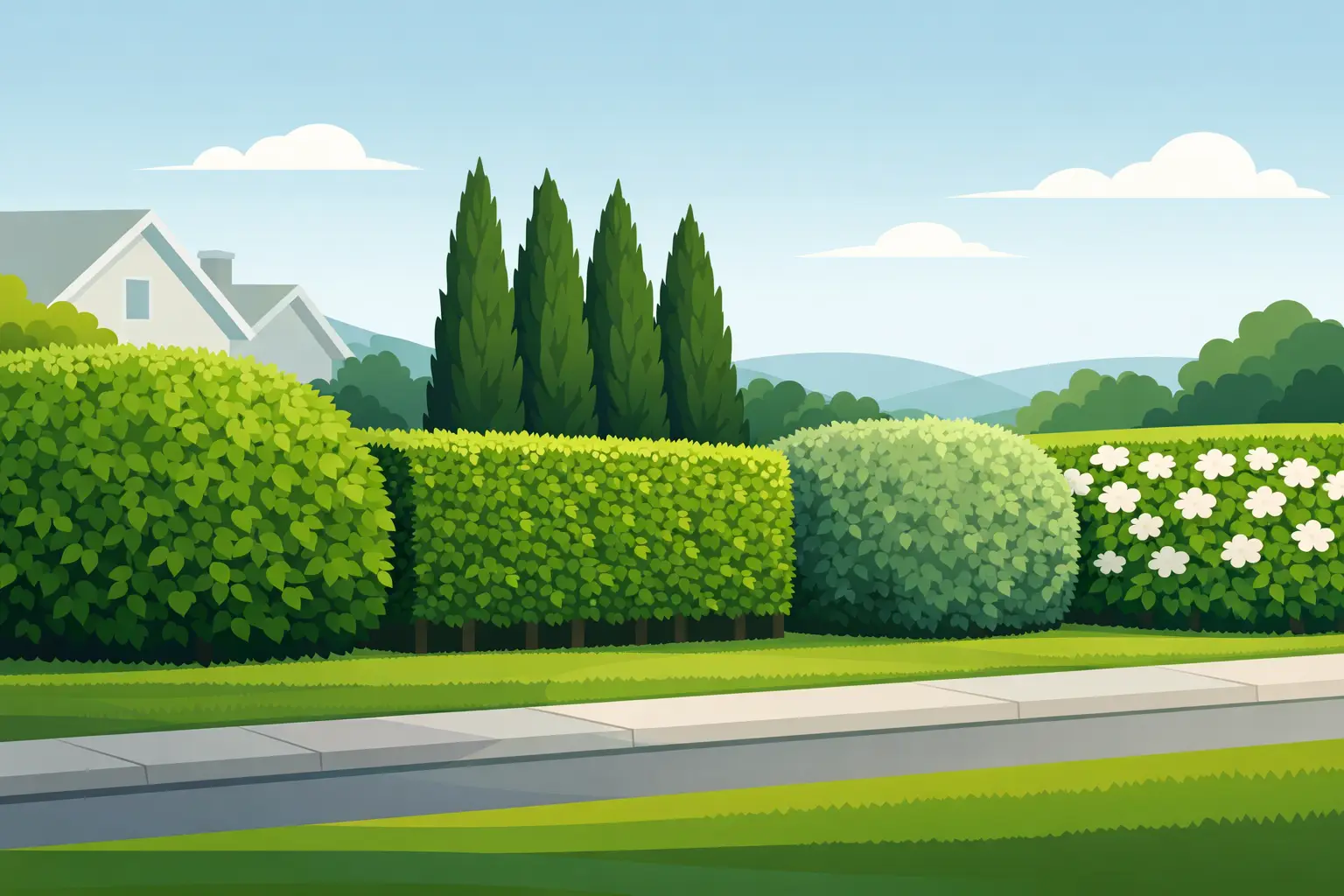
A boundary hedge can make a property feel finished fast. It gives you privacy, softens fences, cuts down wind, and lifts street appeal without the hard edges of timber or block. The challenge is choosing one that will still look good a year or two from now, not just on planting day. If you are looking for the best low maintenance boundary hedges, the right choice comes down to your site, your patience for pruning, and how formal you want the result to be.
In Hawke’s Bay, that matters more than many people expect. A hedge that performs beautifully in a cooler, wetter district can struggle in hotter, drier spots or in exposed coastal conditions. Good hedge selection is less about what is fashionable and more about what will hold its shape, handle the local climate, and stay manageable over time.
What makes a boundary hedge low maintenance?
Low maintenance does not mean no maintenance. Every hedge needs watering while it establishes, some feeding, and occasional trimming. What you want is a plant that grows predictably, responds well to pruning, and does not constantly drop mess, suffer disease, or outgrow the space every few months.
The best low maintenance boundary hedges usually share a few practical traits. They are tough in local conditions, dense enough to screen well, and not so vigorous that they turn into a full-time job. It also helps if they recover well after a tidy-up, because most property owners want a clean line without needing specialist care.
Another point often missed is scale. A plant can be low maintenance in a large rural boundary and high maintenance in a small suburban front yard. If it naturally wants to reach four or five metres and your space suits two, you will be clipping it forever.
1. Lilly Pilly
Lilly pilly is one of the most reliable hedge options for Australian and New Zealand-style landscapes, and for good reason. It grows densely, responds well to pruning, and gives a neat green screen that works in both modern and traditional properties.
For boundary use, it is a strong all-rounder. It can be clipped formal or left slightly softer, and many varieties establish reasonably quickly without becoming unmanageable. New growth often has a bronze or pink flush, which adds a bit of interest without making the hedge look fussy.
The trade-off is that not all lilly pilly varieties behave the same way. Some grow faster and taller than others, and certain sites may see psyllid issues on susceptible types. Choosing the right variety from the start makes a big difference.
2. Griselinia
Griselinia is a favourite for coastal and exposed sites, and it earns its place. It has fresh green foliage, grows into a dense screen, and generally keeps a tidy appearance with relatively modest effort.
It suits people who want a softer, more natural-looking hedge rather than a very hard formal line. It can still be clipped neatly, but it does not demand the same level of shaping to look presentable. In windy areas, that resilience can save a lot of frustration.
It is worth allowing enough width when planting. If griselinia is squeezed too tightly into a narrow strip, it can become harder to keep balanced and healthy.
3. Viburnum
Viburnum is a practical choice when you want quick coverage and a full screen. It is commonly used for privacy hedging because it fills out well and gives a clean, leafy backdrop.
For many properties, it hits a useful middle ground. It is faster than some slow, formal hedging plants, but generally not as demanding as the really vigorous options. It also suits a range of garden styles, from straightforward suburban yards to commercial frontages that need a dependable green border.
The main consideration is growth rate. In rich soil with regular water, viburnum can move along quickly, which is great for screening but may mean more frequent trims than slower-growing choices.
4. Pittosporum
Pittosporum is another solid boundary hedge, especially if you want a tidy finish with a slightly refined look. Its foliage is dense, and many varieties clip up beautifully.
This is often a good option for front boundaries where appearance matters and the hedge needs to stay smart year-round. It can work as a medium to tall screen depending on the variety, and once established it is generally straightforward to maintain.
Where pittosporum can become harder work is when people let it get too tall too quickly. Regular shaping while it is young helps create density lower down and reduces the need for harder corrective pruning later.
5. Portuguese Laurel
Portuguese laurel gives a more formal, classic hedge with dark green leaves and a dense habit. It is a strong pick for boundaries where you want privacy and a more structured look.
It handles clipping well and can make a very effective screen. Once established, it is generally dependable and not overly fussy. For larger sections or properties where a formal hedge suits the style of the house, it can look excellent.
That said, it is not the lightest-looking option. If your space is small or you want something softer and brighter, it may feel a bit heavy. It also needs enough room to develop properly.
6. Buxus alternatives for low borders
If your boundary hedge is more about definition than full privacy, compact hedging plants in the buxus style can work well. In some cases, a lower boundary hedge is the better low-maintenance choice because it is easier to trim, easier to keep even, and less exposed to wind damage.
For many Hawke’s Bay properties, a low formal hedge along a front path, driveway edge, or boundary line creates a polished finish without the upkeep of a tall screen. It will not block neighbours or hide a fence, but it can neatly frame the property and lift presentation.
This is a good example of where the best choice depends on the job. If you want privacy, low hedges will not do enough. If you want structure and kerb appeal with minimal effort, they can be ideal.
7. Escallonia
Escallonia is well worth considering in sunny, coastal, or exposed spots. It is hardy, reasonably dense, and can cope with conditions that knock softer hedging plants around.
It also brings a bit more character than plain green hedges, especially when flowering, but it still works well as a practical boundary plant. For owners who want something tough and serviceable rather than highly manicured, escallonia often performs well.
The compromise is that it can look less crisp than more formal species unless it is clipped regularly. If a sharp architectural edge is your goal, another option may suit better.
8. Feijoa
Feijoa can make an excellent edible boundary hedge, particularly for residential properties. It is hardy, attractive, and useful, which is a strong combination for people who want their planting to do more than one job.
The foliage has a pleasant grey-green tone, and the hedge can provide screening while also producing fruit. It generally handles pruning well and suits the dry, sunny conditions common in many local gardens.
The shape is naturally a little looser than very formal hedging plants, so it is best for people happy with a hedge that looks neat but not rigidly clipped.
How to choose the best low maintenance boundary hedges for your property
Start with the purpose. If the hedge needs to block views from neighbours, you need density and height. If it is there to mark a boundary and improve presentation, a lower or softer option may be more practical.
Then look at exposure. Wind, salt, dry soil, and hot afternoon sun all affect performance. A hedge that looks simple on paper can become high maintenance if the site constantly stresses it. That is why plant choice should match the conditions, not just the photo you liked online.
Growth rate matters too. Faster is not always better. Quick-growing hedges fill gaps sooner, but they often need more trimming to stay neat. Slower-growing plants can save work long term, provided you are happy to wait a bit longer for the finished look.
Spacing is another big one. Plants set too close can compete and become uneven. Too far apart, and you are left looking at gaps for longer than you want. Proper spacing, soil preparation, and early pruning make more difference than most people realise.
Getting the planting and upkeep right
Even the easiest hedge will struggle if it goes into poor ground. Good soil preparation, sensible plant spacing, mulch, and a watering plan during establishment are what turn a hedge from patchy to reliable.
Pruning is best done little and often, especially in the early stages. Light shaping encourages density and keeps the base from thinning out. When hedges are left too long between trims, they often need harder cuts that leave them looking rough for a while.
For property owners who want a clean result without trial and error, getting the hedge planted properly from the start is usually the smartest move. A well-chosen hedge can save years of unnecessary work and make the whole boundary feel more finished.
The best hedge is not always the fastest grower or the most popular one. It is the one that suits your boundary, your conditions, and the amount of upkeep you are actually willing to do. Get that balance right, and the hedge will do its job quietly for years while the rest of the garden looks better around it.