
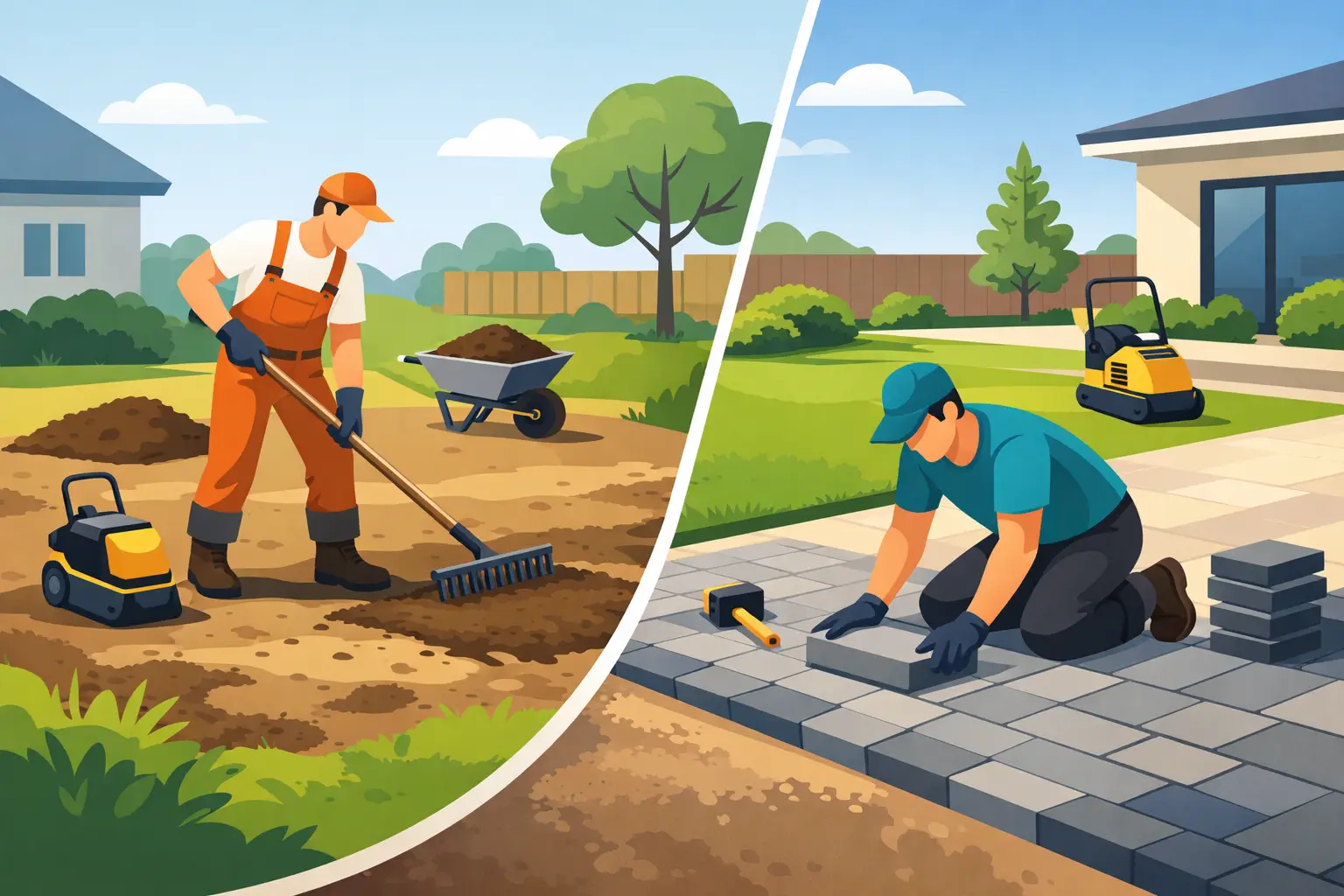
A paved area can look spot on on day one and still fail within a year if the ground underneath has not been prepared properly. That is why yard levelling before paving matters so much. Whether you are planning a driveway, path, patio or bin area, the finish is only as good as the base below it.
For many property owners, the paving itself gets all the attention. The line of the pavers, the colour choice and the final layout are easy to picture. What is less visible, but far more important, is how the yard is shaped, compacted and graded before a single paver goes down. Get that stage right, and the paved area looks better, drains better and lasts longer.
Why yard levelling before paving matters
Uneven ground creates problems that paving cannot hide for long. Low spots can collect water, high spots can throw off the finished level, and soft patches can lead to movement after rain or regular use. Over time, that can mean puddling, loose pavers, cracked edges and sections that sink.
Proper levelling creates a stable platform and sets the fall of the area so water moves away from buildings and usable spaces. It also helps the finished paving sit neatly against lawns, garden beds, edging, steps and existing structures. On residential properties, that means a tidier look and fewer maintenance headaches. On commercial sites, it often means better safety and a more professional finish.
There is also a practical cost issue. If the yard is not levelled correctly first, repairs later can be more expensive than doing the preparation properly from the start. Lifting and relaying paving is avoidable in many cases when the base work is handled with care.
What proper yard levelling before paving involves
Levelling a yard is not just about making everything flat. In fact, fully flat is often the wrong result. Most paved areas need a controlled slope so water runs off rather than sitting on the surface.
The first step is assessing the existing ground. That includes checking how the site currently drains, where the high and low points are, what type of soil is present and how the paved area will connect with nearby features. Clay-heavy soil, for example, behaves differently from sandy ground. Tree roots, old garden edging, buried rubble and previous fill can all affect the job.
Next comes excavation and shaping. The amount removed depends on the type of paving, the depth of the base needed and the final height required. This stage must account for the pavers themselves, the bedding layer and the compacted base underneath. If there is not enough depth, the paved area may sit too high and cause water to run where it should not.
After excavation, the base material is installed and compacted in layers. That compaction is critical. A site can look level to the eye and still settle badly later if the material below has not been compacted properly. For driveways or areas with vehicle traffic, base preparation is even more important because the load is much greater than on a garden path.
Flat does not always mean correct
One of the most common misunderstandings is that a paved area should be perfectly level in every direction. In reality, paving usually needs a slight fall. The goal is to make it look level while still directing water away from the house, garage, retaining walls or outdoor living spaces.
A patio that appears neat but holds water after every shower is not a good result. The same goes for a driveway that channels runoff towards a building or neighbour boundary. Good levelling work balances appearance with function. That takes planning, not guesswork.
This is also where experience matters. The right fall for one area may not suit another. A footpath through a garden, a courtyard entertaining space and a commercial entry all have different practical needs. The shape of the site, nearby drainage points and intended use all affect the final levels.
Drainage is part of the job, not an extra
If water already sits in your yard after rain, paving over the area without correcting the levels will not solve the problem. In some cases, it can make it worse by reducing how much water soaks into the ground and increasing runoff.
That is why levelling and drainage need to be considered together. Sometimes a simple regrade is enough. In other cases, the site may also need drainage channels, gravel zones, soak pits or changes to surrounding garden beds. It depends on the property and how water moves across it.
In Hawke’s Bay, where dry periods can be followed by heavy downpours, outdoor surfaces need to cope with both ends of the weather. A well-prepared base and sensible grading help paved areas stay usable through those changes. It is not just about avoiding puddles. It is about protecting nearby lawns, plantings and structures as well.
Signs a yard needs levelling before paving
Some sites make the need obvious. You might see water pooling near the house, patches of lawn that stay boggy, exposed roots, erosion or old paving that has shifted. On other properties, the issues are less noticeable until work begins.
A professional site check often picks up problems that are easy to miss. Small rises can affect finished heights. Hidden debris can compromise compaction. Existing edging may not line up once the new surface is installed. Catching those details early helps avoid changes halfway through the job.
If your yard has been filled in the past, has old stump areas, or has had heavy machinery over it, the ground conditions may be inconsistent. That does not mean paving cannot be done. It simply means the preparation needs to suit the site.
Can you level a yard yourself?
For a very small path in a straightforward area, some property owners may attempt the groundwork themselves. But for most paving projects, especially driveways, patios and areas near buildings, there is little room for error.
The challenge is not just moving soil. It is setting the right depth, checking levels accurately, choosing suitable base material and compacting it properly. If the fall is wrong by even a small amount, the finished surface can drain poorly. If the base is inconsistent, the paving may move.
There is also the issue of access and equipment. Excavation and compaction are labour-intensive, and the finish depends on precision. What looks fine during installation can show faults after the first decent rain or several months of use.
For many homeowners and property managers, it is more cost-effective to have the site prepared correctly from the start rather than fixing a failed result later.
What to expect from a professional paving preparation
A proper preparation process should begin with a clear look at the site and an honest discussion about what the area needs. That includes checking levels, talking through drainage, confirming the intended use and setting realistic expectations for the finish.
From there, the work should be methodical. Existing vegetation, loose material or old structures are removed as needed. The area is excavated to the correct depth, shaped to suit drainage requirements and compacted in stages. If extra work is needed because of soft ground or access limitations, that should be explained plainly.
Good workmanship shows up in the details. Finished paving should sit neatly within the space, align with adjacent features and feel solid underfoot. You should not be left wondering where water will go or whether the surface will shift after a season.
That practical, end-to-end approach is what makes the difference. At Kandu Gardens, the goal is not just to leave a paved area looking clean on handover day. It is to create an outdoor space that works properly and keeps looking good with use.
The value of getting the ground right
Paving is one of those jobs where the unseen work matters most. The pavers may be the visible finish, but the levelling underneath determines how that surface performs over time. A rushed preparation can lead to drainage issues, movement and avoidable repairs. A well-prepared site gives you a cleaner finish, better usability and a result that holds up.
If you are planning paving, treat the ground preparation as the foundation of the whole job, because that is exactly what it is. A tidy, long-lasting surface starts below ground level, long before the first paver is laid.